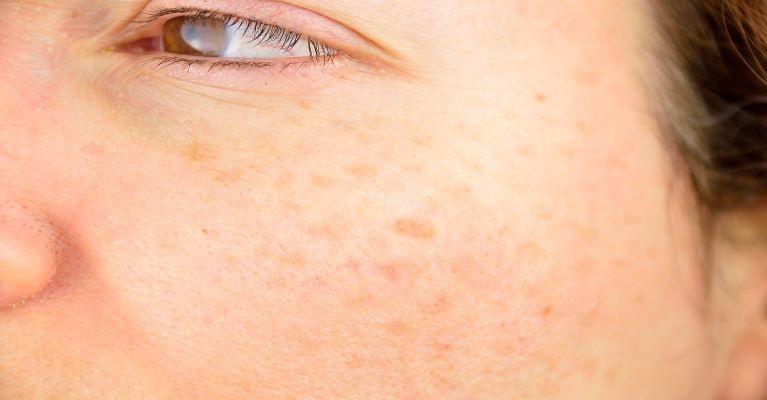
You may have noticed the presence of small spots on your skin, slightly darker than your skin tone. According to doctors, this is called hyperpigmentation, or in other words, pigmentation spots.
What are pigmentation spots?
These occur when there is an overproduction of melanin, the pigment that determines skin color.
Pigmentation spots are characterized by the appearance of dark spots on the skin’s surface, due to aging or prolonged sun exposure.
Even though hyperpigmentation is not harmful, it can be a symptom of a medical condition.
Skin color is also referred to as phototype, which represents the amount of melanin in the tissues. You should know that melanin is secreted additionally when exposed to the sun and comes in two types:
- Eumelanin, which produces the brown and black colors of the skin, meant to protect against UV radiation;
- Feomelanin, found in people with very light skin, redheads, and those with freckles, who do not adequately protect themselves against UV radiation.
To get rid of dark spots, incorporate a skincare routine that includes ingredients aimed at reducing their appearance. To prevent the appearance or darkening of spots, use sun protection, wear protective clothing, and seek shade during the hours when the sun is strongest.
How can you prevent the appearance of pigmentation spots?
Avoid prolonged sun exposure
Since solar radiation is the main factor that causes the appearance of pigmentation spots and can influence the intensity of brown spots on the skin, it is recommended to avoid prolonged sun exposure. Moreover, it is advisable to avoid sun exposure during the hours when the sun’s rays are strongest, specifically between 10:00 AM and 4:00 PM.
Use sun protection products
In a previous sun exposure guide, we discussed the importance of sun protection for the skin. In this regard, specialists recommend using sun protection products with a minimum SPF of 30 to prevent the appearance of pigmentation spots or the intensification of their color. We have already talked about what SPF is and how to choose the right one for your skin, so you know the advantages of high sun protection in the case of prolonged sun exposure.
Wear clothing that covers the skin
Additionally, along with the regular application of sunscreen, to prevent the appearance of brown spots on the skin, it is advisable to wear clothing that covers prone areas during the warm season, such as shoulders, neck, or back. Opt for lightweight and loose materials that allow the skin to breathe. Furthermore, a wide-brimmed hat and oversized sunglasses to protect the sensitive skin around the eyes are ideal accessories during sun exposure.
Avoid skin injuries and inflammations
It is true that you cannot completely prevent the appearance of acne or wounds, but you can avoid injuring the skin by breaking the skin or repeatedly tearing off scabs from the surface of skin lesions.
Moreover, skin traumas, such as acne, eczema, insect bites, scratches, and cuts can trigger inflammatory reactions. In turn, these inflammations increase melanin production, implicitly leading to the appearance of pigmentation spots. Therefore, avoid injuring the skin to prevent the result from being a brown spot on the skin.
Always use dermatocosmetic products
Always use high-quality products in your skincare routine, preferably from the range of dermatocosmetic products. Additionally, products designed for skin with hyperpigmentation, based on ingredients that reduce the number of melanocytes and inhibit the transport of melanin from melanocytes to the skin’s surface, are recommended.
How to treat pigmentation spots with natural remedies
1. A paste made from a well-peeled and crushed potato and a tablespoon of honey. Leave it on the face for 20 minutes.
2. Cucumber juice and a tablespoon of oatmeal. The application is the same as the previous recipe; leave it on the face for 20 minutes.
3. Egg white, brewer’s yeast, and a tablespoon of honey. Apply the mixture on the brown spots up to ten times. Then the effect will appear.