Did you know that there are over 400 different viruses that can cause infections, including the common cold, flu, hepatitis, mononucleosis, and HIV?
Today, many people choose to get vaccinated against the flu, but research shows that it is not always effective due to mutant strains of the flu virus.
Fortunately, there are a number of powerful antiviral herbs that strengthen the immune system, reduce inflammation, and fight against infections.
What is a virus?
A virus is a small infectious agent that can only replicate inside the living cells of other organisms. Viruses can infect all types of life forms: humans, animals, plants, and microorganisms, including bacteria and archaea. They are found in almost every ecosystem on Earth and are the most abundant type of biological entity.
Viruses have actually been described as organisms at the edge of life because they carry genetic material, reproduce, and evolve through natural selection, but they lack cellular structure, which is generally required to be considered alive.
There are many ways in which a virus spreads. Some viruses, such as the flu virus, spread through coughing and sneezing.
Viruses like viral gastroenteritis (infectious diarrhea) are transmitted via the fecal-oral route (resulting from poor hygiene) and can spread from person to person through contact or enter the body through food and water.
What are antiviral plants?
Antiviral plants inhibit the development of viruses. Many of the best antiviral plants strengthen the immune system, allowing the body to attack viral pathogens. This can be even better than targeting specific pathogens for which antiviral medications are designed, as pathogens mutate over time and become less sensitive to treatment.
Antiviral herbs not only fight against viral infections, strengthen the immune system, and act as natural remedies against the flu, but they also have a range of other health benefits, such as cardiovascular, digestive, and anti-inflammatory support.
Top Antiviral Herbs
1. Echinacea
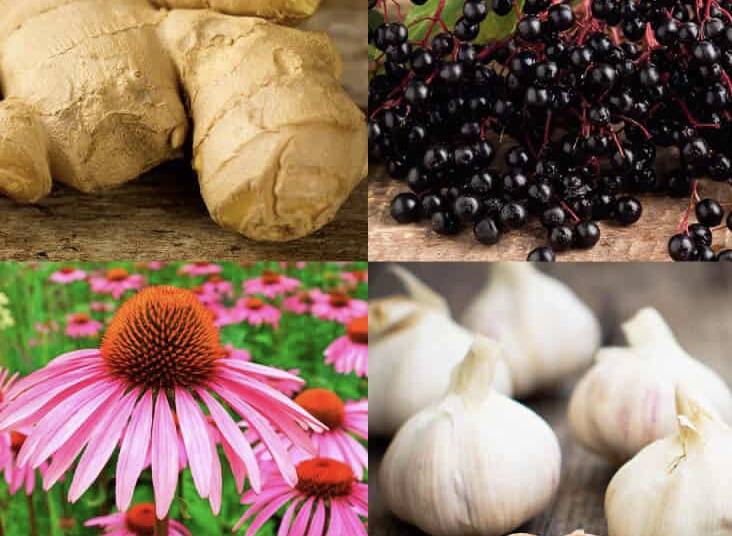
Echinacea has become one of the best-selling medicinal plants of all time; this is because regular use of echinacea is beneficial for immune support and overall health. There is considerable evidence suggesting that the phytochemicals in echinacea have the ability to reduce viral infections and tumors.
Echinacea is one of the strongest natural antivirals against human viruses. It contains a compound called echinacein that prevents bacteria and viruses from entering healthy cells. This greatly reduces the risks of contracting any type of infection while consuming echinacea.
Other benefits of echinacea include its ability to alleviate pain, reduce inflammation, improve skin issues, treat upper respiratory problems, and enhance mental health.
2. Elderberry
Elderberry has powerful antiviral properties that stimulate the immune system. Several studies conclude that elderberry can help shorten the duration of cold symptoms. There is also research indicating that daily elderberry extract works to diminish flu symptoms.
Elderberries are rich in antioxidant and anti-inflammatory compounds. They also contain an immune-stimulating compound called anthocyanidins.
3. Garlic
Experiments have shown that garlic—or specific chemical compounds found in garlic—is very effective in killing numerous microorganisms responsible for some of the most common as well as rare infections, including tuberculosis, pneumonia, canker sores, and herpes.
Not only is it one of the best antiviral plants for herpes, but its properties also help treat eye infections and act as a natural remedy for ear infections.
Other benefits of raw garlic include its ability to reduce cancer risk, control high blood pressure, boost cardiovascular health, and fight against breast cancer.
To make a garlic oil infusion at home, crush garlic cloves and add them to a carrier oil (such as olive oil). Let the mixture sit for about five hours, then strain out the garlic pieces and store the oil in a jar with a lid. This infusion can also be used as an antiviral remedy for cold sores when applied topically.
You can also eat a clove of raw garlic; you may need to cut it in half if it is too large. Chew it once to release allicin; then swallow it with water like a pill.
4. Astragalus Root
Astragalus root, another powerful antiviral plant, has been used in traditional Chinese medicine for centuries, and its main use is to strengthen the immune system of the body. Scientific studies have shown that astragalus has antiviral properties and stimulates the immune system, suggesting it may help remedy the common cold or flu.
It is one of the most effective antiviral plants for HSV. One study evaluated the effects of astragalus on the herpes simplex virus type 1 and found that the plant has significant inhibitory efficacy.
Another study published in the Chinese Medical Sciences Journal concluded that astragalus is capable of inhibiting the growth of coxsackie B virus in mice.
Not only does it work as a natural treatment for viral infections, but astragalus also has antibacterial and anti-inflammatory properties and is used topically for wound care. It is also one of the adaptogenic plants that help reduce cortisol levels.
5. Licorice Root
Licorice root is emerging as a prominent player in the treatment and prevention of diseases such as hepatitis C, HIV, and the flu.
The Chinese Journal of Virology published a review confirming the antiviral activity of licorice root due to its content of triterpenoids. Another publication notes the antioxidant, free radical scavenging, and immune-stimulating effects of licorice.
Other benefits of licorice root include:
Rapid relief for sore throat
Natural remedy for cough
Protection against signs and symptoms of leaky gut
Reduces adrenal fatigue
Analgesic
6. Olive Leaf
Olive leaf has antiviral properties, giving it the ability to treat the common cold, including symptoms of candida, meningitis, pneumonia, chronic fatigue syndrome, hepatitis B, malaria, gonorrhea, and tuberculosis; it also treats dental, ear, and urinary tract infections and is a natural treatment for shingles.
Research shows that extracts from olive leaves effectively fight against a number of microbes that cause diseases, including some viruses that cause the flu and other respiratory infections. The powerful compounds found in olive leaves destroy invading organisms and prevent viruses from replicating and causing an infection.
In fact, olive leaf is so beneficial for our health that treatment with olive leaf extracts has reversed many changes associated with HIV-1 infection in a study conducted at New York University School of Medicine.
7. Oregano
Oregano is a powerful antiviral agent.
The benefits of oregano oil have been shown to be superior to some antibiotics, without the harmful side effects. This is because oregano contains two powerful compounds, carvacrol and thymol, which have strong antibacterial and antifungal properties.
8. Sage
Sage is an essential ingredient in traditional Chinese medicine and Ayurvedic medicine. Herbal medicine appreciates sage for its ability to help combat infections and improve a range of ailments.
Research illustrates that sage has antiviral, antioxidant, and anti-inflammatory effects. Studies show that the diterpenes in sage help combat viral infections.
One of the best ways to use it is to drink sage tea. It has soothing and healing properties and can be made at home.
How to Use
Herbal Tea
Teas are an excellent way to obtain the antiviral benefits of herbs every day. Steep a tablespoon of herbs in hot water for 5-10 minutes. Echinacea, for example, is a popular herbal tea that is sold in most grocery stores, so the work is already done for you.
Herbal Infusion
Herbal infusions are stronger than teas because they require a larger amount of herbs. To make your own herbal infusion, steep a cup of antiviral herbs in water for about 7 hours.
Store the infusion in an airtight jar and drink it cold or warm. Because infusions are potent, do not drink more than one cup per day.
Infused Oil
An infused oil is when you heat the plant in a carrier oil for several hours. You can use the oven to heat the mixture or try to leave it in a warm, sunny place for 12 hours. Use about 1/2 cup of antiviral herbs (you can use one plant or a mixture) and add it to 1 cup of coconut, olive, or jojoba oil.
If you heat the mixture in the oven, it should be in an oven-safe container for 3 hours at 200 degrees. If you decide not to use the oven, place the mixture in an airtight jar and leave it in a sunny spot for about 12 hours.
Once the herbs are infused in the oil, strain out the leaves and store the oil in a jar. You can use the oil topically to relieve pain and eliminate infections.
Essential Oils
Many of these plants are sold as essential oils; make sure to purchase organic and pure essential oils from a reputable company.
To use the benefits of essential oils, such as their antiviral properties, diffuse 3-5 drops in your home, add 2-3 drops to warm bath water, or mix 1-2 drops with a carrier oil and apply the mixture directly to the skin.
Massaging essential oils into the feet, abdomen, and chest is helpful when fighting against fever or flu symptoms.