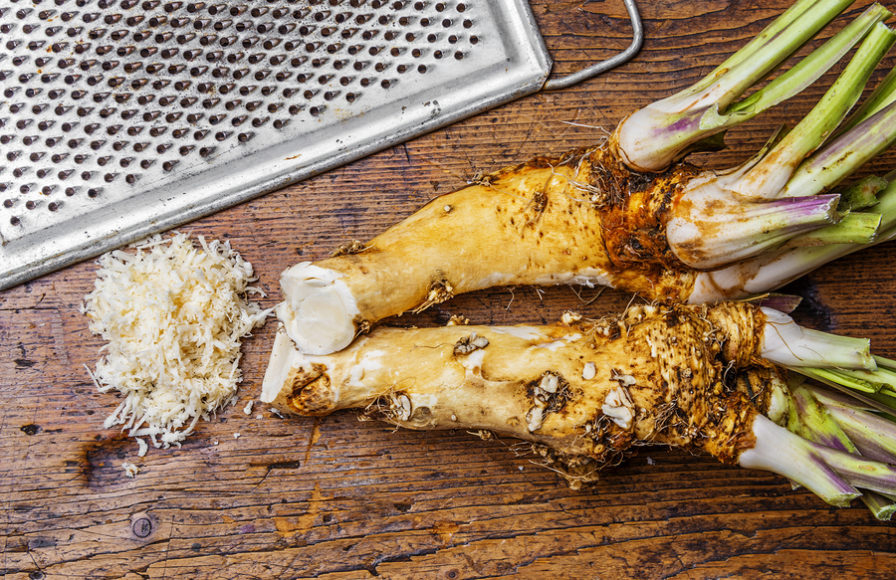
With so many unhealthy sauces on the market, it can be hard to find something that spices up your favorite sandwiches and dishes without adding extra calories and less healthy ingredients to your diet. Well, let me introduce you to horseradish root, a vegetable packed with antioxidants and important nutrients.
Emerging research has revealed a number of powerful benefits associated with this incredible ingredient, reporting that it may protect against bacterial infections, promote healthy digestion, reduce inflammation, and much more.
What is horseradish root?
Horseradish is a root, most commonly used as a condiment. Known primarily for its strong flavor, it has become a popular topping for meats and dishes.
The entire horseradish plant has a long history in folk medicine and can help prevent and treat a number of common ailments. It falls into the category of cruciferous vegetables, which are known for their plant compounds called glucosinolates.
It is also rich in antioxidants and a variety of enzymes, including horseradish peroxidase. Due to the presence of these compounds, it can prevent the growth of bacteria, fight diseases, and provide a healthy mix of vitamins and minerals to help complete a balanced diet.
Although it originally comes from Southeast Europe, this popular root vegetable is now found all over the world. In the Middle Ages, both the leaves and roots of horseradish were used as medicine.
It is known as a natural diuretic, a treatment for respiratory diseases, and even urinary tract infections.
It has a pungent flavor similar to wasabi root, which is also known as Japanese horseradish. Both belong to the same plant family, and wasabi paste is often used as a substitute for horseradish.
Aside from the obvious differences in color and appearance, there are also a few unique differences between wasabi and horseradish.
Most notably, wasabi tends to have a richer, more complex flavor. It is also much harder to find fresh and is more difficult to grow and cultivate.
Nutritional Information
Horseradish is low in calories and contains a high amount of vitamin C and folic acid. One tablespoon (approximately 15 grams) of prepared horseradish contains approximately:
7.2 calories
1.7 grams of carbohydrates
0.2 grams of protein
0.1 grams of fat
0.5 grams of dietary fiber
3.7 milligrams of vitamin C (6% DV)
8.6 micrograms of folate (2% DV)
In addition to the nutrients listed above, each serving also contains a small amount of calcium, magnesium, potassium, zinc, manganese, vitamin B6, and selenium.
Health Benefits of Horseradish
1. Has Cancer-Fighting Properties
The glucosinolate compounds found in this root are responsible for its spicy flavor and are powerful agents in the fight against cancer. In the plant world, glucosinolates protect plants from toxic or harsh environments.
Impressively, horseradish contains 10 times more glucosinolates than broccoli, so even in small amounts, it offers a lot of benefits.
Numerous studies, including one from the University of Illinois, have shown examples where this vegetable root helps increase the human body’s resistance to cancer. Research provides preliminary evidence that it may help kill cancer cells related to stomach and colon cancer, as well as prevent oxidative damage related to free radicals.
As more research emerges, the possibilities of using glucosinolates as chemopreventive agents continue to expand. One study also showed that processing and preparing the root actually enhances its anticancer abilities (which is quite unusual for vegetables).
2. Rich in Antioxidants
Free radicals can cause significant damage to the body, and consuming a diet rich in antioxidants can help eliminate or prevent this damage. Horseradish root contains a variety of phytochemicals, antioxidants that are beneficial for human health.
Some of the antioxidants found in the root are antimutagenic. This means they protect the body’s cells from mutagens that can cause permanent damage.
There is evidence that mutations are responsible for heart diseases and several other common degenerative disorders. Interestingly, an in vitro study showed that horseradish extract was able to reduce DNA damage caused by zeocin, an antibiotic that induces oxidative stress.
3. Protects Against Microbes and Bacteria
The oil responsible for the pungent taste of horseradish, wasabi, and mustard is called allyl isothiocyanate. This colorless oil is an antimicrobial that fights a wide range of pathogens.
Many studies have demonstrated the profound antimicrobial and antibacterial capabilities of horseradish root.
There was a study conducted using essential horseradish oil to preserve roasted beef and prevent spoilage. Beef with added horseradish restricted the growth of most bacteria to prevent spoilage.
Horseradish root has positive effects on phagocytes, which are a type of cell in the body that absorbs bacteria. A study on this showed that horseradish improved the antimicrobial functions of phagocytes to help combat infections and diseases.
4. Reduces Symptoms of Respiratory Diseases
Due to the antibiotic properties of horseradish, it has been used for many years in traditional medicine to treat bronchitis, sinusitis, cough, and the common cold.
In a German study, a herbal medication containing this root was tested against conventional antibiotics. Incredible findings showed a comparable result in treating acute sinusitis and bronchitis with natural extract compared to conventional treatments.
The reality is that many antibiotics used to treat respiratory diseases often worsen the underlying cause and only suppress the symptoms of the disease.
The pungent smell of this cruciferous vegetable also helps to eliminate mucus from the upper respiratory system to prevent infection. When consuming this root for sinus issues, you might feel like you are producing excess mucus, but this can actually be beneficial. After a day or two, your body will start to eliminate the mucus, which is a major step in preventing infection.
5. Helps Treat Urinary Tract Infections
Due to the ability of horseradish root to fight microbes and reduce bacterial growth, it is very successful in treating acute urinary tract infections better than conventional antibiotic treatments, which often involve a series of unpleasant side effects. Sinigrin glycoside, which is also found in the root, is known to prevent water retention and acts as a natural diuretic, which can help prevent kidney and urinary tract infections.
The presence of allyl isothiocyanate, expelled through urine, has proven capabilities against bladder cancer and can help combat infections.
6. Acts as a Digestive Aid
Horseradish contains enzymes that stimulate digestion, regulate intestinal flora, and reduce constipation. Bile helps eliminate excess cholesterol, fats, and other waste and supports a healthy digestive system.
This root contains a substance that stimulates bile production in the gallbladder to aid digestion.
7. Alleviates Inflammation and Pain
Horseradish has been used by people in ancient Greece as a natural analgesic to help relieve back pain. It has also been used in other types of traditional medicine to reduce pain and inflammation associated with headaches.
While more research is needed, horseradish is often applied topically to areas of the body with pain caused by injuries, arthritis, or inflammation. This may be due to the anti-inflammatory properties found in the numerous beneficial compounds it contains.
8. Supports Weight Loss
Low in calories but high in fiber, this flavorful condiment is a great addition for you if you want to lose weight. Unlike other calorie-rich or sugar-laden condiments, such as barbecue sauce, ketchup, or salad dressings, horseradish can add flavor to your meals in a healthy way.




