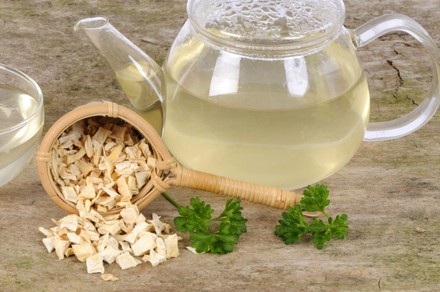
Parsley root tea is often overlooked as a remedy, but it has remarkable therapeutic potential, especially in supporting kidney function. While parsley is primarily known as a culinary ingredient, its root contains bioactive compounds with diuretic, detoxifying, and anti-inflammatory effects, significantly impacting kidney health.
Benefits of Parsley Root Tea for Kidneys
1. Stimulates Diuresis and Toxin Elimination
Parsley root tea promotes urine production, helping the kidneys eliminate toxins and excess salts more efficiently. This effect is mainly due to the compounds apiol and myristicin, which act as natural diuretics. By increasing urine volume, the risk of kidney stone formation and urinary infections is reduced.
Increased diuresis also helps decrease water retention, thus supporting the proper functioning of the urinary system. Moreover, this process can contribute to lowering blood pressure, an important risk factor in chronic kidney diseases.
2. Helps Cleanse the Kidneys and Prevent Stones
By stimulating urine flow, parsley tea aids in the elimination of substances like oxalates or uric acid, which can form kidney stones in high concentrations. The high flavonoid content also helps reduce inflammation that can promote mineral accumulation.
Additionally, folic acid and vitamin C present in parsley root contribute to maintaining a more alkaline environment in the urine, which reduces the risk of forming acidic stones.
3. Reduces Inflammation in the Urinary Tract
Parsley has anti-inflammatory properties due to its content of luteolin and apigenin, two powerful antioxidants. These compounds help reduce inflammation in the urinary tract, which can occur due to infections or irritations.
By soothing tissues and supporting cellular regeneration, parsley tea can be beneficial as an adjunct in recurrent urinary infections or in recovery after kidney lithiasis.
4. Supports Detoxification of the Body
The kidneys are essential organs for eliminating toxins from the body, and parsley tea supports them in this function. Its combined diuretic, antioxidant, and detoxifying action helps purify the blood and eliminate metabolic waste.
This property is particularly useful during periods of kidney overload, such as after intensive medication treatments or excessive consumption of processed foods.
Preparation Method
To benefit from the properties of parsley root tea, follow this recipe:
Ingredients:
- 1 tablespoon of dried or freshly grated parsley root
- 250 ml boiling water
Preparation Method:
- Place the root in a cup.
- Pour boiling water over it and cover.
- Let it steep for 10-15 minutes.
- Strain and consume warm.
You can drink a cup in the morning on an empty stomach for 7-10 days, after which a break should be taken.
Contraindications
- Consumption is not recommended during pregnancy or breastfeeding, as parsley may stimulate uterine contractions.
- Individuals with severe kidney conditions (e.g., acute or chronic kidney failure) should avoid self-medication with diuretic herbs without medical advice.
- It may interact with diuretic or anticoagulant medications.
- Excessive consumption can lead to urinary irritations or excessive loss of electrolytes.
- Avoid long-term administration without breaks.
Studies and Research
Another study from BMC Complementary Medicine and Therapies (2020) evaluated the effect of parsley extract on kidneys in rats with damage induced by high doses of gentamicin. The animals treated with the extract showed significantly lower levels of creatinine and urea compared to the untreated group. This suggests a clear renal protective effect.
Additionally, an analysis conducted by Phytotherapy Research (2015) highlighted the role of flavonoids in parsley in reducing renal inflammation and combating oxidative stress, essential aspects in preventing chronic kidney diseases.
Sources:
- Journal of Ethnopharmacology Diuretic and antiurolithiatic effect of Petroselinum crispum
- BMC Complementary Medicine and Therapies Parsley extract protects against gentamicin-induced nephrotoxicity
- Phytotherapy Research Flavonoid content and antioxidant capacity of parsley extract: renal protective effect




