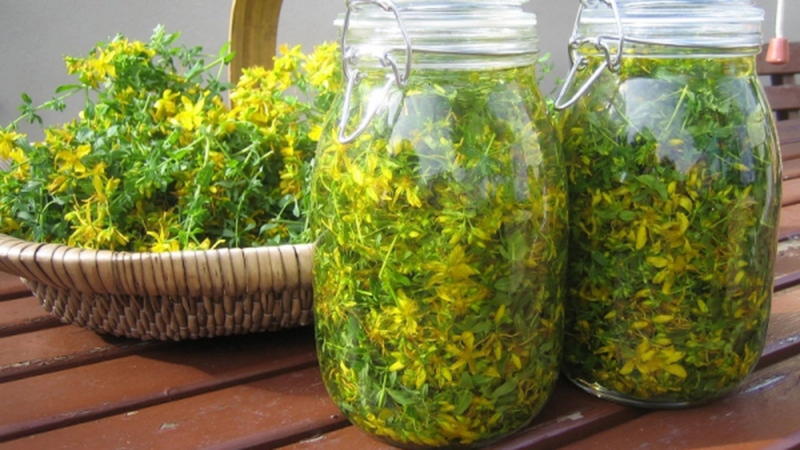
St. John’s Wort oil is well-known in natural medicine for its calming, healing, and antidepressant effects. However, few are aware that this natural remedy can interact with an impressive list of medications, sometimes with dangerous effects. For this reason, its use should be approached with maximum caution, especially in the case of individuals undergoing long-term medication treatments.
Benefits of St. John’s Wort Oil
1. Reduces Skin Inflammation and Accelerates Healing
When applied locally, St. John’s Wort oil has anti-inflammatory, healing, and regenerative effects. It is successfully used for minor burns, cuts, insect bites, or irritations. The content of hypericin and flavonoids stimulates skin regeneration and reduces inflammation.
A study published in Phytomedicine (2018) demonstrated the effectiveness of St. John’s Wort oil in treating atopic dermatitis and eczema, due to its anti-inflammatory and antimicrobial effects.
2. Alleviates Muscle and Rheumatic Pain
Massages with St. John’s Wort oil can reduce muscle tension, cramps, and joint pain. It is often combined with essential oils (such as mint and lavender) for a synergistic effect.
3. Supports Mental Well-being
Due to its content of hyperforin and hypericin, St. John’s Wort has a mild antidepressant and anxiolytic effect. When used externally, the oil has a calming effect on the peripheral nervous system, being used in relaxation massages and somatherapy.
Warnings and Drug Interactions
Although beneficial, St. John’s Wort oil is recognized for its ability to interfere with the metabolism of certain medications by inducing enzymes from the cytochrome P450 family, particularly CYP3A4. This effect can reduce the concentration and effectiveness of essential treatments, and in some cases, may cause dangerous side effects.
Medications that St. John’s Wort Oil Interacts Negatively With:
- Antidepressants (SSRIs) – may increase the risk of serotonin syndrome.
- Oral contraceptives – reduces effectiveness, increased risk of pregnancy.
- Anticoagulants (warfarin) – may reduce effect and increase the risk of thrombosis.
- Immunosuppressants (cyclosporine, tacrolimus) – significantly reduces effectiveness, major risk in transplants.
- HIV medications (protease inhibitors) – affects absorption and effectiveness.
- Statins (simvastatin, atorvastatin) – reduces serum concentration and cardioprotective effectiveness.
- Epilepsy medications – reduces the effectiveness of antiepileptics.
- Digoxin (for heart failure) – lowers serum levels of the medication.
The European Medicines Agency (EMA) warns about these interactions and recommends avoiding St. John’s Wort during treatments with the aforementioned medications.
Contraindications
- Not recommended for internal use or prolonged application in children under 12 years old.
- Avoid sun exposure after applying the oil to the skin – it contains photosensitizing compounds that can cause burns or spots.
- Contraindicated for individuals undergoing hormonal treatments (including in vitro fertilization).
- Not to be used during pregnancy and breastfeeding without medical approval.
Recommendations for Safe Use
- If you are taking any type of medication long-term, consult a doctor or pharmacist before using St. John’s Wort oil, even externally.
- For cosmetic and topical use, test on a small area of skin and avoid application before sun exposure.
- Do not use internally St. John’s Wort oil without medical advice – it may have cumulative effects on the liver and nervous system.
Studies and Sources
- Phytomedicine St. John’s Wort Extract for the Treatment of Skin Inflammation
- Journal of Clinical Psychopharmacology Herb-Drug Interactions with St. John’s Wort: A Clinical Perspective
- EMA Public Statement on the Use of Herbal Medicinal Products Containing St. John’s Wort
- Harvard Health Publishing Interactions Between St. John’s Wort and Medications




