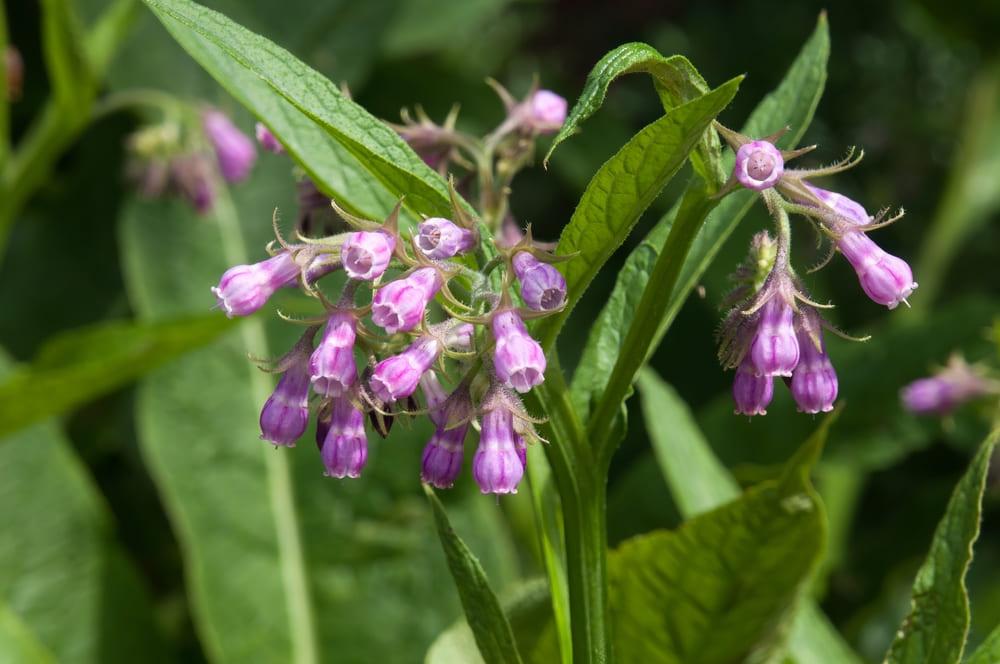
Comfrey (Symphytum officinale) is one of the oldest medicinal plants in European phytotherapy, particularly valued for its ability to regenerate tissues and reduce inflammation. In recent decades, researchers have also focused on the potential anticancer effects of this plant, especially due to some active compounds found in its roots.
But can this plant truly support oncological treatment? What do studies say and what is the opinion of specialists?
Composition of Comfrey and Compounds with Anticancer Potential
Comfrey contains:
-
Allantoin stimulates cellular regeneration and tissue repair;
-
Polyphenols and rosmarinic acid are powerful antioxidants;
-
Mucilages have an emollient effect;
-
Tannins have astringent and anti-inflammatory action;
-
Pyrrolizidine alkaloids are substances with potential toxicity, but also notable effects on cell division, which is why they have been researched in an oncological context.
What Do Studies Say About Comfrey and Cancer?
1. Antitumor Effects In Vitro
A study published in International Journal of Molecular Sciences (2013) showed that extracts from comfrey can inhibit the proliferation of certain cancer cell lines, due to the polyphenolic compounds and alkaloids present in the roots. The plant’s high antioxidant activity could help in limiting oxidative stress, an essential factor in cancer development.
Partial conclusion: Hydroalcoholic extracts of comfrey have shown moderate cytotoxic effects on tumor cell lines, but only under controlled laboratory conditions.
2. Stimulation of Tissue Regeneration
Comfrey is already used in complementary oncology in Germany and Austria for regenerating tissues affected by radiotherapy or oncological surgery. Creams containing allantoin, derived from comfrey, are used locally to soothe the skin and restore the epithelium.
3. Cautions Regarding Internal Use
However, pyrrolizidine alkaloids are hepatotoxic and can affect the liver if consumed in large quantities or for long periods. For this reason, many international organizations recommend using comfrey only externally or using special extracts with alkaloids removed (PA-free).
How is Comfrey Used in Adjunct Therapies?
1. Externally for Tissue Regeneration After Oncological Treatments
-
Poultices with crushed roots: Applied locally to affected areas (post-radiotherapy burns, inflammations).
-
Comfrey ointments: Available in pharmacies or homemade; applied twice a day.
2. Tinctures without Alkaloids (PA-free) – only on medical recommendation
Certain laboratories produce standardized extracts from comfrey without pyrrolizidine alkaloids, intended for internal use, but only under strict controlled conditions and in small doses.
Contraindications and Precautions
-
Do not administer internally without strict medical advice;
-
Contraindicated in liver diseases, pregnancy, breastfeeding, children under 12 years;
-
Do not apply on open and deep wounds or in cases of severe infections;
-
Do not use for more than 4 consecutive weeks externally.
Important: Due to the content of pyrrolizidine alkaloids, self-medication with comfrey internally is not recommended. The use of the plant should only be for adjunctive purposes, under medical supervision.
What Do Specialists Say?
Dr. Uwe Gräber, expert in complementary oncological medicine:
Comfrey is not a treatment for cancer, but topical extracts are useful in skin recovery and reducing local inflammation after harsh treatments.
Prof. Dr. Peter M. Krisper, medical toxicologist, Austria:
Research on pyrrolizidine alkaloids in comfrey continues, but the hepatotoxic risks limit internal use. We recommend only external forms or extracts without PA.
Comfrey is not a remedy against cancer, but it may have a supportive external role, especially in tissue recovery and soothing inflammation associated with oncological treatments. Some laboratory studies have demonstrated a possible antitumor effect, but this potential remains experimental. Internal use is risky without medical supervision due to hepatotoxicity.
Sources:
-
International Journal of Molecular Sciences Comfrey (Symphytum officinale): A Review of Its Anti-inflammatory and Wound Healing Properties
-
European Medicines Agency Public Statement on the use of herbal medicinal products containing pyrrolizidine alkaloids
-
Journal of Ethnopharmacology Cytotoxicity of medicinal plants used in cancer treatment in traditional medicine
-
German Commission E Monographs Symphytum officinale External Use Only




