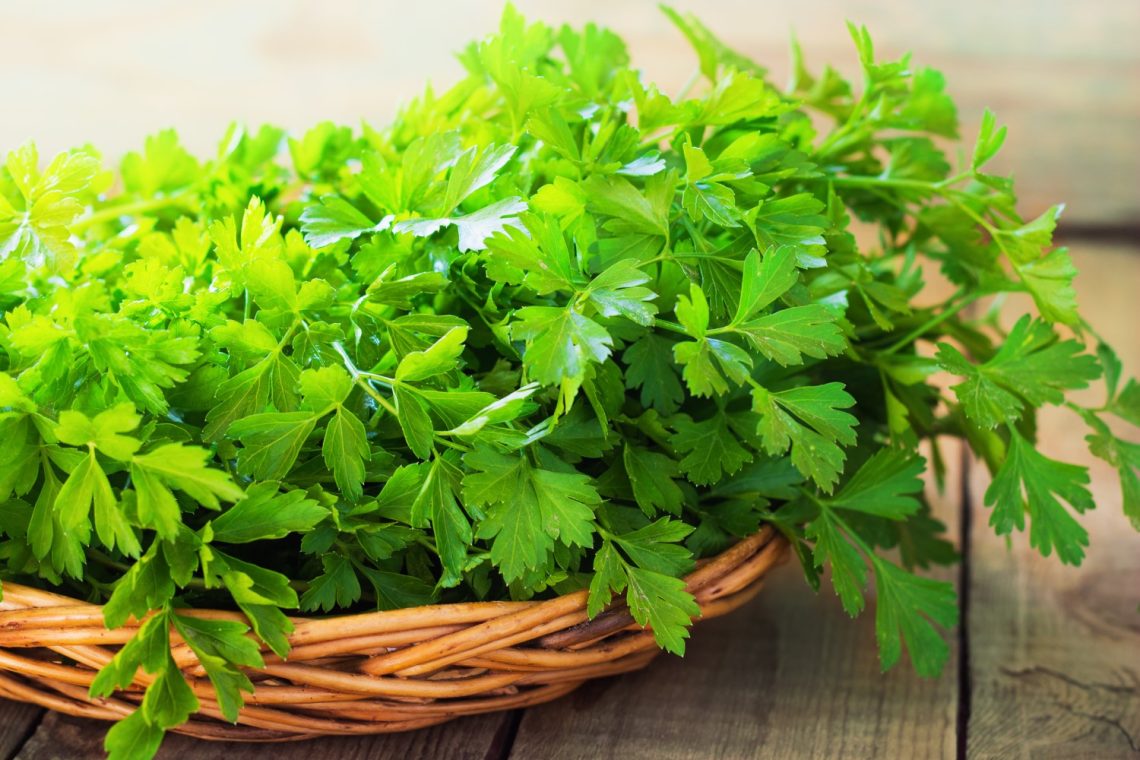
Often seen merely as a garnish or decoration on a plate, parsley hides an impressive healing power. Its intensely aromatic green leaves are a true concentrate of active substances with strong detoxifying, anti-inflammatory, remineralizing, and regenerative effects. In natural medicine, parsley has been used for centuries in treatments for the kidneys, liver, skin, eyes, digestive system, and hormonal balance. Modern science increasingly confirms these uses.
Detailed Explanation of the Benefits of Parsley Leaves
Cleanses the Blood and Kidneys
Parsley leaves contain apiol and myristicin, compounds with strong diuretic effects. They stimulate kidney function, helping to eliminate urea, uric acid, and toxins from the body. In detoxification regimens, tea made from parsley leaves is essential.
Supports Liver Health
The chlorophyll and flavonoids in the leaves (especially luteolin) reduce liver inflammation and protect liver cells. Studies show that extracts from parsley leaves can lower elevated liver enzyme levels, having a hepatoprotective effect.
Regulates Menstrual Cycle and Hormonal Balance
Apiol has emmenagogic action, favoring the regulation of the menstrual cycle. It is useful in cases of dysmenorrhea (painful menstruation) and oligomenorrhea (infrequent menstruation).
Strengthens the Immune System
The high content of vitamin C (four times more than lemon) and provitamin A helps stimulate immunity. Parsley leaves are a natural support in colds, infections, and convalescence.
Supports Vision and Skin Health
Beta-carotene and zeaxanthin in the leaves protect the retina and help maintain skin elasticity. Zeaxanthin also has an antioxidant role at the ocular level, being recommended in the prevention of macular degeneration.
Combats Bad Breath
Chewing raw parsley leaves neutralizes volatile compounds responsible for halitosis. It acts quickly and naturally.
Supports Digestion and Reduces Bloating
The enzymes and essential oils in the leaves stimulate the secretion of gastric juices, reduce intestinal fermentation, and promote the rapid digestion of proteins.
Chemical Composition of Parsley Leaves
-
Vitamins C, A, K, B9 (folic acid)
-
Chlorophyll
-
Flavonoids (luteolin, apigenin)
-
Apiol, myristicin
-
Iron, calcium, magnesium, potassium
-
Digestive enzymes (myrcene, eugenol)
-
Polyphenolic antioxidants
Ways to Use
Parsley Leaf Tea (for kidneys and liver):
-
1 tablespoon of chopped fresh leaves
-
250 ml boiling water
-
Infuse for 10 minutes, strain
Drink 1-2 cups a day, for a maximum of 7 days
Parsley Juice (for detoxification and immunity):
-
Fresh leaves blended with a little water
-
Consume 2 tablespoons/day for 5-7 days
Parsley Tincture:
-
20 g crushed leaves
-
100 ml of 40% alcohol
-
Macerate for 10 days, strain
Take 20 drops, 3 times a day
Facial Mask with Parsley Leaves (for spots and toning):
-
Crushed leaves + natural yogurt
-
Apply for 15 minutes on the face, rinse with cold water
Contraindications
-
Not to be administered during pregnancy (uterotonic effects)
-
Avoid in cases of severe kidney insufficiency
-
May interact with anticoagulants (contains vitamin K)
-
Excessive consumption may irritate the gastric mucosa
-
Long-term use is not recommended without medical supervision
Relevant Studies and Research
-
Protective effect of parsley extract on liver damage induced by carbon tetrachloride in rats Journal of Ethnopharmacology, 2003: confirms the hepatoprotective effect of parsley leaves.
-
Parsley as a functional food Journal of Food Science, 2015: highlights the high antioxidant capacity of the leaves, as well as their role in immunity and detoxification.
-
The effects of parsley on menstrual cycle regulation Phytotherapy Research, 2021: a study supporting the effects of apiol in regulating the menstrual cycle.
Sources
-
Journal of Ethnopharmacology Protective effect of parsley extract on liver damage induced by carbon tetrachloride in rats
-
Journal of Food Science Parsley as a functional food
-
Phytotherapy Research The effects of parsley on menstrual cycle regulation




