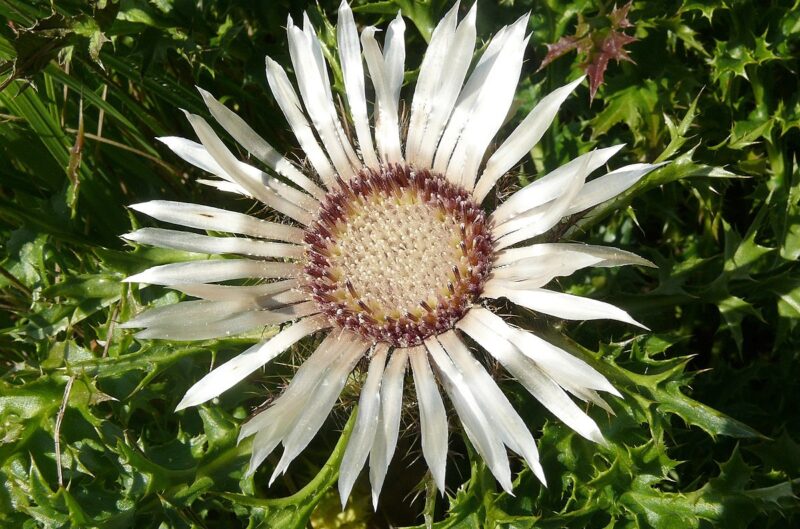
The Fairy Thistle, scientifically known as Carlina acaulis, is a rare medicinal plant found in the spontaneous flora of the sub-Carpathian region of Romania. Easily recognized by its shiny silver flower, which is almost flat against the ground, this plant was considered a true treasure with magical properties in ancient times. The popular name fairy thistle comes from this aura of mystery and healing, passed down from generation to generation.
Today, Carlina acaulis is regaining the attention of herbalists, being intensively studied for its detoxifying, anti-infectious, and digestive effects. It is used in the form of tea, tincture, or powder, especially in blood cleansing treatments and in supporting liver function.
Botanical Description
- Scientific Name: Carlina acaulis
- Family: Asteraceae
- Common Names: Fairy thistle, cake, wild artichoke, sky thistle, heaven’s thorn
- Habitat: Mountain clearings, alpine meadows, rocky hills
- Characteristics: Perennial plant with a short or almost nonexistent stem, spiny leaves, and large, silver flowers close to the ground
Chemical Composition
The main active substances in Carlina acaulis include:
- Essential oils (carlinone, germacrene, alpha-pinene)
- Inulin (important prebiotic)
- Tannins and resins
- Phenolic acids and flavonoids
- Natural antimicrobial substances (broad spectrum)
Therapeutic Benefits
1. Powerful Hepatic Detoxifier
How it works:
The fairy thistle stimulates bile production and supports bile flow, a vital mechanism in eliminating toxins and metabolizing fats. The content of essential oils (especially carlinone and sesquiterpene lactones) acts directly on liver cells (hepatocytes), increasing their capacity to process and eliminate toxins.
How to use:
Recommended in the form of tea or tincture in 7-14 day courses, in spring and autumn. It can be combined with celandine and artichoke for a synergistic effect.
Scientific support:
The study “Hepatoprotective effect of Carlina acaulis” (Journal of Ethnopharmacology) shows that extracts from the root protect the liver from chemically induced toxic damage, significantly reducing transaminase levels (ALT, AST).
2. Blood and Lymph Cleansing
How it works:
The root of Carlina acaulis has a purifying effect, promoting the elimination of metabolic waste and toxins from the blood and lymph. Tannins and phenolic acids contribute to balancing blood composition, reducing the inflammatory burden on the body.
How to use:
Administered in the form of powder twice a day on an empty stomach, in courses of 10-20 days. It can be combined with nettle leaves and burdock root.
3. Expectorant and Respiratory Antibacterial
How it works:
The volatile principles and resins in the fairy thistle have a decongestant effect on the respiratory tract. They stimulate mucus thinning and elimination, especially in cases of bronchitis, dry cough, or viral infections. The essential oils exhibit antibacterial activity against streptococci and staphylococci, according to chromatographic analyses conducted in Austria.
How to use:
Warm tea from the root, one cup in the morning and one in the evening, for 5 days. Inhalations with concentrated decoction can also be done for nasal congestion or sinusitis.
4. Digestive Stimulant and Choleretic
How it works:
The fairy thistle stimulates the secretion of gastric and bile juices, aiding digestion, especially after fatty or heavy meals. Inulin also plays a prebiotic role, supporting the growth of beneficial bacteria in the intestine (lactobacilli, bifidobacteria).
How to use:
1 tablespoon of tincture diluted in water before main meals. It can replace classic mint or chamomile teas in cases of chronic dyspepsia.
5. Intestinal Antiparasitic (Vermifuge)
How it works:
It has an effect on certain intestinal parasites such as Ascaris lumbricoides (roundworms) and Oxyruris (pinworms). The phenolic acids and tannins have astringent and irritating properties for the parasitic mucosa.
How to use:
Root powder, 1 g on an empty stomach for 7 days. After each administration, drink a cup of wormwood or thyme tea for increased effectiveness.
Note: Effectiveness as an antiparasitic is mentioned in German folk medicine treatises from the 19th century, but more current clinical studies are needed.
6. Healing and Antiseptic for the Skin
How it works:
Aqueous extracts from the fairy thistle have a local antibacterial effect, aiding in the healing of wounds, skin ulcers, and mild infections. It is believed that the action is due to the synergy between resins, volatile oils, and flavonoids.
How to use:
Apply warm poultices made from boiled root on the affected skin, covered with gauze. Local washes with decoction can also be done twice a day.
7. Natural Immunostimulant
How it works:
Due to its purifying and digestive action, the plant indirectly supports the immune system. A body with a clean liver and a healthy intestinal flora has a more efficient immune response. The inulin in Carlina has a prebiotic effect, while tannins reduce chronic inflammation.
How to use:
Periodic courses with tea (1 cup/day, 10 days/month), especially in cold months or during seasonal changes.
8. Light Adaptogen and Tonic Action
How it works:
Although less known for this effect, the fairy thistle supports the body’s adaptation to physiological stress by regulating bile and digestive secretions. A body with balanced digestion and liver has a more stable metabolism, positively influencing mental state.
Ways to Use
Tea (Infusion)
Ingredients:
- 1 tablespoon of dried fairy thistle root (finely grated)
- 250 ml boiling water
Let it steep for 10 minutes, strain, and consume one cup per day for 7-10 days. Ideal in spring or autumn detox courses to strengthen immunity.
Tincture
Preparation:
- 50 g dried root
- 250 ml 40% food alcohol
Let it macerate for 10 days, shaking daily, then strain. Administer 20-30 drops 2-3 times a day, diluted in a little water. Recommended for supporting digestion and in mild liver conditions.
Powder (internal use)
The dried root is finely ground with a coffee grinder. Take 1 g of powder (the tip of a teaspoon) twice a day before meals. The course lasts for 2 weeks.
Poultices (external use)
For wounds or abscesses: Boil the root and apply the soft pulp, warm, to the affected areas, covered with gauze. Change every 4 hours.
Contraindications
- Pregnant or breastfeeding women due to potential intense choleretic effects.
- Children under 12 years especially in tincture form.
- People with gallstones may experience biliary colic due to stimulated bile evacuation.
- Hyperacid gastritis or active gastric ulcer the stimulating effects on gastric secretion may exacerbate symptoms.
Recommendation: Consult a doctor or herbalist before use.
Sources:
- Journal of Ethnopharmacology – Hepatoprotective activity of Carlina acaulis extract in toxin-induced liver damage in mice
- Plants for a Future – Carlina acaulis profile
- Fitoterapia – Medicinal Plants and Their Applications – Ed. Medical
- German Commission E Monographs – Carlina Root
- Statements from Dr. I. Popescu, herbalist (interview 2021, magazine Plants with Power)




