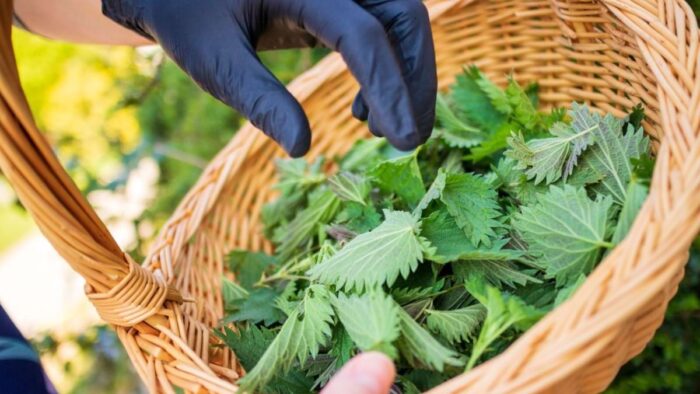
At first glance, it seems unbelievable: who would intentionally want to be stung by a plant that causes burning and stinging? Yet, this seemingly painful practice has a long history in folk medicine, and today it is attracting more and more interest from science. Behind the temporary discomfort lie natural healing mechanisms that can help with joint pain, inflammation, and even detoxification. So, is it good to get stung by nettles? The answer might surprise you.
What does it mean to get stung by nettles?
The practice consists of deliberately touching the skin with fresh stems of stinging nettle (Urtica dioica). The fine hairs of the plant cause a mild local inflammatory reaction, accompanied by a burning sensation, stinging, and redness. This method, also known as urticotherapy, has been used for centuries in Europe for various ailments, especially joint-related ones.
Benefits of nettle stinging – what does science say?
Stimulation of local circulation
When the skin is stung, the capillaries dilate to transport more blood to the affected area. This blood influx accelerates the elimination of toxins and reduces local inflammation. It is the same principle used by some ointments for joint pain.
Study: An article published in Journal of the Royal Society of Medicine (2000) showed that applying nettle leaves to joints affected by osteoarthritis significantly reduced pain in patients compared to placebo.
Antirheumatic and analgesic effect
Local stinging can relieve rheumatic pain and pain caused by gout. The irritating substances in nettle leaves (histamine, formic acid, serotonin) trigger a process called counterirritation – the superficial pain cancels out the deeper pain.
Statement from herbalist Dr. H. Brauer: The external application of fresh nettles has effects similar to acupuncture stimulation – it reactivates circulation and reduces the intensity of chronic pain.
Detoxification through the skin
Through the inflammatory reaction, nettle stinging supports the elimination of toxins through local sweating and activates lymphatic flow in the respective area. It is a natural aid for toxin drainage and cellular metabolism.
What do recent studies say?
A 2013 study published in Planta Medica analyzed the anti-inflammatory properties of nettle extract and concluded that nettle has therapeutic potential for autoimmune diseases and chronic inflammation, including through external application. These effects are amplified when the plant is fresh.
Contraindications and precautions
Although it is a natural method, nettle stinging is not without risks:
- Severe allergies – individuals with sensitive skin or allergies to histamine may have exaggerated reactions (extensive rashes, edema).
- Dermatological conditions – not recommended for individuals with eczema, psoriasis, or severe dermatoses.
- Children and pregnant women – not indicated in these cases.
- Individuals with coagulation disorders – the risk of excessive inflammation or bleeding is increased.
Daily stinging or on large areas of the body is not recommended. A local application of 1-2 times a week on the affected areas is sufficient.
How to perform nettle stinging correctly?
- Gather fresh nettles by hand, ideally in the morning.
- Gently tap the painful areas (back, knees, elbows) with the stems.
- Let it act for 10-15 minutes.
- Rinse gently with warm water (not hot), then a calming oil can be applied (e.g., sunflower oil).
Do not apply to skin with lesions, wounds, or infections!
Sources:
- Journal of the Royal Society of Medicine Nettle stings and osteoarthritis pain
- Planta Medica Anti-inflammatory effects of Urtica dioica L. extract
- Healthline The Healing Power of Nettle: Traditional Uses and Modern Research
- Fitoterapia Urtica dioica: mechanisms of action and clinical implications




