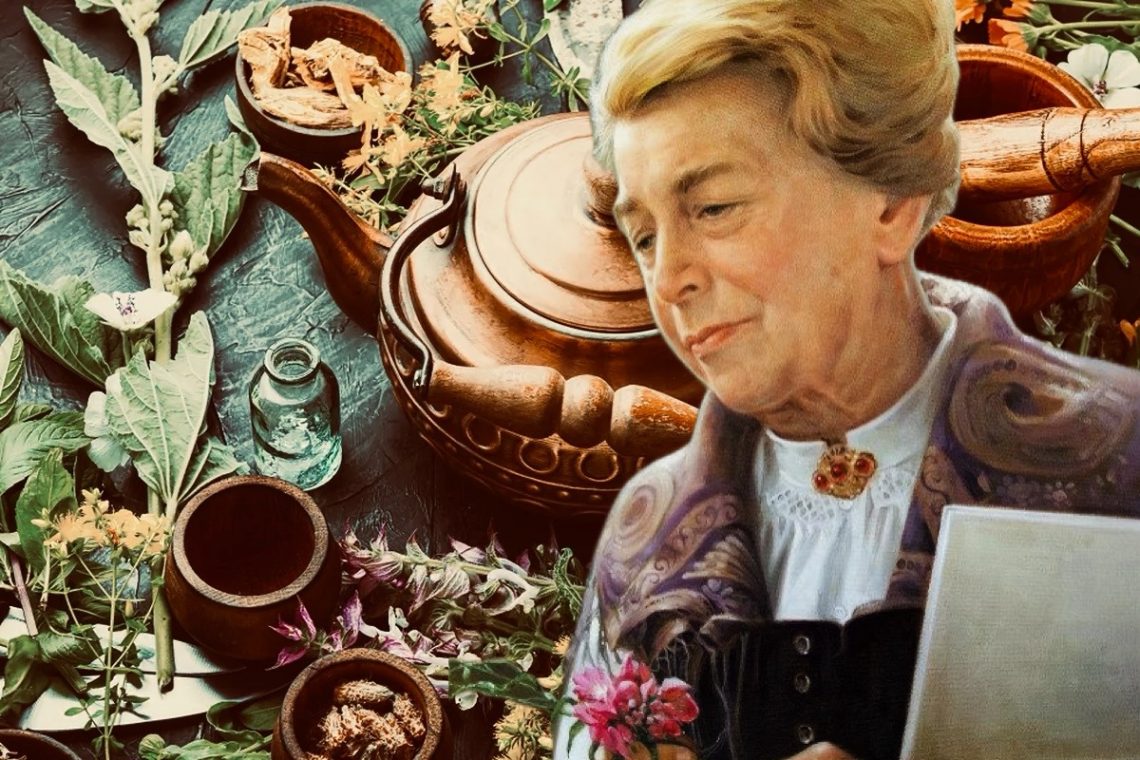
The Swedish Elixir (also known as Schwedenbitter) is one of the most well-known and effective natural remedies, rediscovered and promoted in the 20th century by the renowned Austrian author Maria Treben. In her famous book Gesundheit aus der Apotheke Gottes (translated into Romanian as Sănătate din farmacia Domnului), Maria Treben included an old recipe, passed down from generation to generation, which has healed thousands of people.
This recipe is not a personal creation of Maria Treben, but was taken by her from a manuscript of a Swedish doctor, Dr. Claus Samst, who lived in the 17th century and, according to sources, died at the age of 104 following a horse accident. Treben was the one who brought the recipe to the attention of the modern world and confirmed its effectiveness in multiple ailments.
Original Recipe of the Swedish Elixir
Source: Maria Treben, Gesundheit aus der Apotheke Gottes / Sănătate din farmacia Domnului, Christophorus Publishing
All the plants and substances are placed in a large bottle with a wide mouth and left for 14 days in the sun or near a heat source. Shake daily. After that, strain and store in small, well-sealed bottles, protected from light.
Maria Treben, 1980
Ingredients for 1 liter of elixir:
- 10 g Aloe (or alternatively, gentian, if aloe is not available)
- 5 g Myrrh
- 0.2 g Saffron
- 10 g Senna leaves
- 10 g Natural camphor
- 10 g Angelica root
- 10 g Rhubarb root
- 10 g Venetian theriac (a complex mixture with tonic and detoxifying effects)
- 10 g Cardamom seeds
- 10 g Zedoary root
- 10 g Anise seeds
- 1 liter of natural brandy (3840, without additives)
Preparation Method:
- Mix all the dry ingredients in a large glass container (ideally brown or opaque).
- Pour 1 liter of brandy over them.
- Let it macerate for 14 days in a warm place, away from direct light.
- Shake the container daily.
- After 14 days, strain and store the liquid in dark-colored glass bottles, well sealed.
Perfect! Below you have the benefits section for the Swedish Elixir (Schwedenbitter), as prepared according to the original recipe from the book Sănătate din farmacia Domnului by Maria Treben. I have included all known and documented benefits, explained in detail, with an emphasis on how they act in the body, supported by traditional clinical uses or recent research.
Benefits of the Swedish Elixir (Schwedenbitter)
1. Stimulates digestion and regulates intestinal transit
The Swedish Elixir has a strong bitter action, due to plants such as wormwood, gentian, angelica root, or aloe, which stimulate the production of gastric and bile juices. This improves digestion, reduces bloating, cramps, and the feeling of heaviness after meals. Bitterness activates the taste receptors responsible for digestive secretions, including pancreatic enzymes.
Recommended in cases of slow digestion, lack of appetite, intestinal colic, or chronic dyspepsia.
2. Supports liver and gallbladder function
Due to the content of bitter and detoxifying plants (wormwood, angelica root, and rhubarb root), the elixir stimulates bile secretion and helps eliminate toxins accumulated in the liver. It contributes to the fluidization of bile, preventing the formation of gallstones and alleviating symptoms of sluggish liver.
Useful in hepatic steatosis, biliary dyskinesia, hepatic congestion, jaundice, or biliary migraines.
3. Purifies the blood and detoxifies the body
Plants with depurative action such as buckthorn, rhubarb, or senna promote the elimination of toxins through the colon and urine. Thus, the Swedish Elixir is an excellent adjunct in spring or autumn detoxification cures.
Recommended for blood cleansing and preventing chronic ailments caused by toxin accumulation.
4. Strengthens the immune system
The general tonicity provided by this remedy stimulates immunity, especially in convalescents or weakened individuals. It contains natural antimicrobial and antifungal ingredients (myrrh, saffron, camphor), which support the body in fighting infections.
Useful in frequent colds, flu, recurrent infections, or weakened immune systems.
5. Alleviates rheumatic and muscular pain (external use)
The elixir can be applied externally in the form of rubs or compresses for joint pain, rheumatism, sciatica, bruises, or sprains. It has anti-inflammatory, soothing, and decongestant effects.
Traditionally used by Maria Treben for massaging the legs, neck, back, or in cases of neuralgia.
6. Improves peripheral circulation
Through its stimulating and warming effect on tissues (especially when applied externally), the bitter can help improve peripheral circulation and combat the feeling of cold hands and feet.
7. Adjunct in skin conditions (external use)
Applied locally, the elixir helps heal wounds, irritations, acne, boils, insect bites, and rashes. It acts antiseptically, cicatrizing, and soothing.
Recommended by Maria Treben even for infected wounds or eczema.
8. Improves general condition and mental tone
It is considered a general tonic, restoring vitality and balance during periods of overwork, stress, spring asthenia, digestive disorders of nervous origin, or mild insomnia.
9. Helps in cases of migraines and dizziness
The elixir aids in liver cleansing, which in natural medicine is often linked to migraines and headaches. Additionally, the effect of regulating blood pressure may contribute to reducing feelings of dizziness.
10. May support the elimination of intestinal parasites
The bitter components (such as wormwood and gentian) are known for their antiparasitic action, supporting the natural elimination of pinworms or other intestinal worms.
11. Adjunct in irritable bowel syndrome
By regulating secretions and intestinal transit, the bitter can be useful in episodes of irritable bowel, excessive bloating, and chronic abdominal discomfort.
12. May support kidney function
Through its diuretic and anti-inflammatory action (rhubarb, buckthorn), it supports kidney function and promotes the elimination of excess fluids.
13. May contribute to reducing blood sugar (mild hypoglycemic effect)
Some of the plants included in the elixir, such as gentian and aloe, may have a beneficial effect on blood sugar regulation, although it is not recommended as a primary treatment.
Administration Method
Intern:
- 1 tablespoon diluted in a glass of water or tea, 1-3 times a day, 30 minutes before meals.
- In acute cases (flu, nausea), small doses can be taken at any time, with breaks.
Extern:
- Apply to the affected area in the form of a compress (soak the gauze in the elixir, apply to the skin, cover with plastic wrap, and then with a warm towel).
- Leave on for 30 minutes to several hours, depending on the problem.
Contraindications
1. Pregnancy and breastfeeding
The elixir contains plants with uterotonic or strong laxative effects (such as wormwood, senna, buckthorn), which can stimulate uterine contractions. Additionally, its alcohol content makes it completely contraindicated during pregnancy and breastfeeding.
Complete avoidance during these periods is essential.
2. Children under 12 years
Due to the high alcohol content and the strong effects of bitter plants, it is not suitable for young children. Even in older children, administration should only be done at the recommendation of a herbalist or doctor.
Not to be administered under 12 years without medical supervision.
3. Active gastric or duodenal ulcer
Bitter plants stimulate gastric secretion, which can worsen ulcer symptoms. Additionally, the alcohol content can irritate an already affected gastric mucosa.
Contraindicated in active ulcers or severe gastritis.
4. Colitis, chronic diarrhea, sensitive intestine
Buckthorn, senna, and rhubarb have a pronounced laxative effect. In individuals with intestinal sensitivity, irritable bowel, or chronic diarrhea, these plants can exacerbate symptoms.
Internal use should be avoided or done with caution and very low dosage.
5. Allergy to one or more plants in the composition
The elixir contains numerous ingredients (wormwood, angelica, aloe, gentian, saffron, etc.), each with potential allergenic properties. Individuals with known allergies to medicinal plants or excipients should read the composition carefully.
Preliminary testing (external use) is recommended in case of sensitivity.
6. Severe liver disease (cirrhosis, acute hepatitis)
Although the elixir supports liver function, the alcohol present in the tincture can negatively affect an already damaged liver. In severe liver conditions, it is recommended to avoid alcoholic tinctures.
Medical consultation is mandatory before use in these cases.
7. Treatment with anticoagulants or hepatotoxic medications
Some ingredients in the elixir (such as angelica or wormwood) may interact with anticoagulants, increasing the risk of bleeding. Additionally, bitter plants can influence the absorption of medications and may overburden the liver.
Not to be administered without the doctor’s approval in the case of chronic treatments.
8. Very low blood pressure (hypotension)
Some individuals may experience a slight decrease in blood pressure after using the elixir, especially if combined with other diuretic or detoxifying remedies.
Caution is recommended in cases of chronic hypotension.
9. Epilepsy or severe neurological disorders
The alcohol in the tincture can influence the threshold of cerebral excitability. Additionally, some plants (e.g., wormwood) in high doses may have neurotoxic effects.
Contraindicated without neurological advice in these cases.
10. Alcoholism or history of addiction
The alcohol content (approximately 38-40%) makes the elixir completely contraindicated for individuals who suffer from or have suffered from alcoholism. It is not recommended even for external use for these individuals.
Seek alternatives to alcohol (e.g., decoctions or aqueous macerates).
11. Prolonged administration (over 4 weeks) without breaks
Prolonged use of laxative and bitter plants can irritate mucous membranes, affect intestinal flora, and lead to decreased nutrient absorption.
Cures of 2-3 weeks are recommended, with breaks of at least 10-14 days between them.
Sources:
- Maria Treben, Sănătate din farmacia Domnului, Christophorus Publishing




