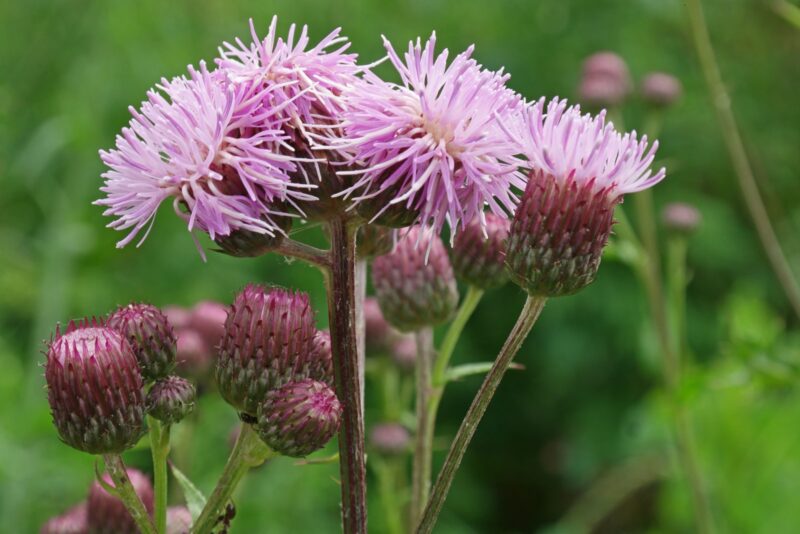
The skin is a reflection of our internal health. When the liver or lymphatic system is overburdened, toxins can manifest as acne, eczema, spots, or irritations. In this context, thistle (Cirsium arvense), a plant often overlooked, becomes an important ally for detoxifying the skin from the inside out.
What is Thistle?
Thistle (commonly known as field thistle) is a perennial plant with spiny leaves and purple flowers, belonging to the Asteraceae family. Although considered a weed, recent research has confirmed its rich content of active principles with beneficial effects on liver and skin detoxification.
Important active components:
- Flavonoids (luteolin, apigenin)
- Polyacetylenes
- Tannins
- Bitter substances
- Chlorogenic acid
How It Affects Skin Burdened by Toxins
1. Supports Liver Function
The liver is the main detoxifying organ. Thistle stimulates bile secretion and liver regeneration, helping to eliminate toxins from the blood that would otherwise reflect on the skin.
A study published in the Journal of Ethnopharmacology (2020) shows that thistle extracts have a choleretic effect (stimulating bile secretion) and antioxidant properties, protecting liver cells from toxic damage.
2. Reduces Skin Inflammation
Flavonoids and polyphenolic compounds have anti-inflammatory effects on the skin tissue. This is useful in cases of inflammatory acne, dermatitis, or irritations.
3. Supports Lymphatic Drainage
Through its mild diuretic and depurative action, thistle helps cleanse the lymphatic system, leading to clearer, brighter skin with fewer impurities.
4. Skin Antioxidant
It protects skin cells against oxidative stress caused by pollution, unhealthy diet, or sun exposure.
Recipes and Usage Methods
Detoxifying Infusion with Thistle
- 1 tablespoon of dried plant in 250 ml of boiling water
- Let it steep for 10 minutes, drink twice a day for 2 weeks
Recommended during detoxification cures in spring and autumn.
Thistle Tincture
- Take 20-30 drops in a little water, three times a day, before meals
- Can be used in combination with dandelion or celandine tinctures for a synergistic effect
Poultice for Irritated Skin
- Crushed fresh leaves, applied directly to the affected areas (caution: only if there is no sensitivity)
- Leave for 15-20 minutes, rinse with warm water
Contraindications
Pregnancy and breastfeeding: insufficient safety data, avoid internally.
Inflammatory bowel diseases: may overly stimulate digestive functions.
Anticoagulant treatment: flavonoids may interfere with the action of medications.
Allergy to plants in the Asteraceae family: test initially in small doses.
Sources:
- Journal of Ethnopharmacology – Phytochemical and hepatoprotective properties of Cirsium arvense
- Planta Medica – Anti-inflammatory flavonoids from Cirsium species
- European Medicines Agency – Assessment report on herbal substances: Cirsium arvense




