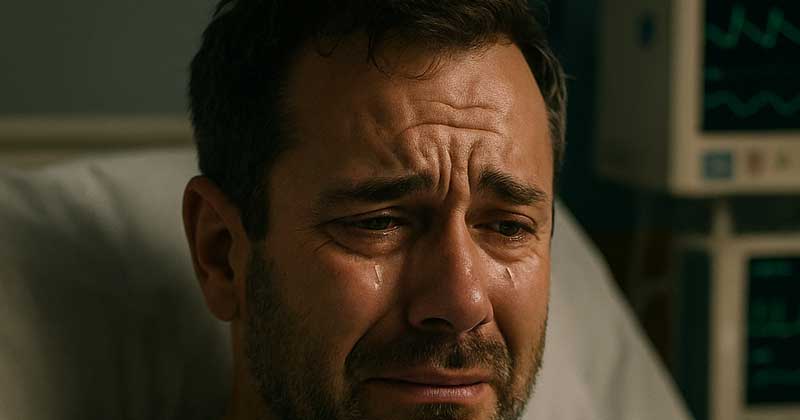
When he returned home to Romania, his body still weak, Daniel did not think for a moment about continuing the same life. He had left behind his office in Miami, but in his mind, the accounts remained open. He moved back to his hometown, where the streets were the same as in his childhood, where neighbors greeted each other with “God help us,” and where, in the evening, the church bells could still be heard ringing over the hills.
At first, everyone thought he had returned for peace. But no one knew what plans were brewing in his soul.
Daniel found his balance among simple people, at gatherings where women still spun wool and men told stories about the hard years in the fields. However, every night, after the village fell asleep, he would turn on his laptop. His fingers raced across the keyboard, erasing traces, transferring funds, setting in motion a network that even renowned lawyers from Bucharest would have looked at with fear.
Meanwhile, his family had returned from the Bahamas, smiling, with photos from sunny beaches. They thought they would find him at home, full of gratitude for still being alive. But they found silence. Daniel had disappeared. He left them only a short message, placed on the dining table: “Now you will find out how well life is without me.”
Carolina, used to the comfort that Daniel provided, found herself on the brink of ruin within a few weeks. The joint accounts were empty, the house mortgaged, and debts appeared one by one, as if someone had intentionally unearthed them.
Neighbors had started to gossip. In the village, nothing remains hidden. A deserted woman and two restless children had become the subject of judgment at the church gate. Carolina felt for the first time the burden that Daniel had carried for years.
Meanwhile, Daniel wandered through the village orchards, listening to the rustling of apple leaves, smelling the scent of freshly cut hay. It was a peace he had not known for many years. He knew that his revenge was not just about money, but about showing them what it meant to lose the foundation on which they stood without appreciating it.
One Sunday, he entered the church where he had been baptized. The candles burned gently, the icons shone in the soft light. Daniel sat in a pew and felt all his pains gather in his eyes. He was not crying for himself, but for the love he had given in vain.
There, between the thick stone walls, he understood that true revenge did not lie solely in Carolina’s material losses, but in his absence. In the absence of the man she had taken for granted, to the point of indifference.
When Carolina came, after months of humiliation and troubles, trying to find him, Daniel did not look up. He was on the porch of the old house, with a mint tea in hand, watching the sunset. She tried to plead with him, but her words faded before they reached him.
“You wished for a life without me,” Daniel said calmly. “Now you have it.”
And at that moment, he closed the door behind her, not out of hatred, but out of liberation. His revenge was complete. Not through destruction, but through the freedom to live for himself, where hearts still beat in unison with the earth.
For the first time in a long time, Daniel felt peace. And the entire village felt it along with him.
This work is inspired by real events and people, but has been fictionalized for creative purposes. Names, characters, and details have been changed to protect privacy and enhance the narrative. Any resemblance to real persons, living or dead, or actual events is purely coincidental and not intended by the author.
The author and publisher do not assume responsibility for the accuracy of events or the portrayal of characters and are not liable for any misinterpretations. This story is provided “as is,” and any opinions expressed belong to the characters and do not reflect the views of the author or publisher.


