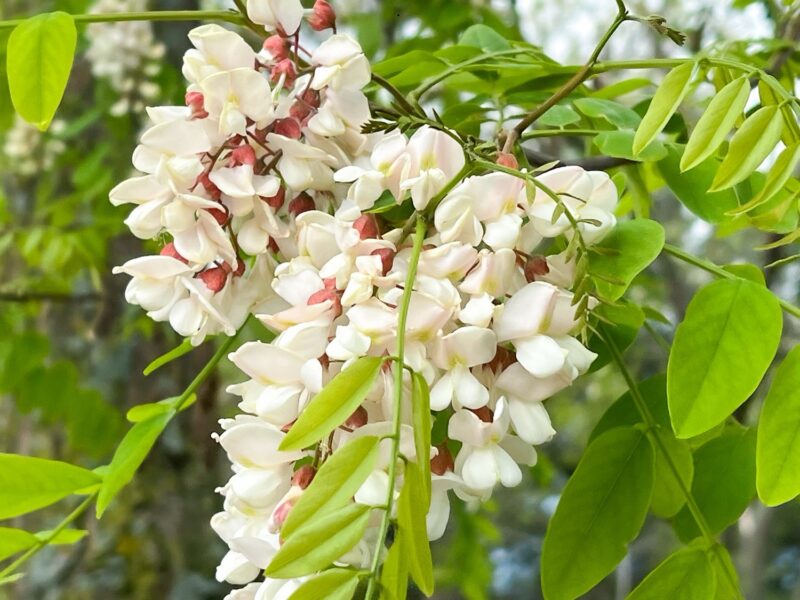
Simple and Authentic Recipes with Acacia Flowers
1. Calming Tea from Acacia Flowers
- Ingredients: 1 tablespoon dried flowers, 250 ml water
- Preparation method: Boil the water, add the dried flowers, cover, and let steep for 10-15 minutes. Drink warm, unsweetened or with a little honey, twice a day.
- Recommended for: anxiety, sleep disturbances, digestive cramps.
2. Acacia Flower Syrup for Preservation
- Ingredients: 100 g fresh flowers, 1 l water, 700 g honey or 500 g brown sugar, 1 lemon
- Preparation method: Boil the flowers with water and sliced lemon for 10 minutes. Let it macerate for 24 hours. Strain and add honey or sugar. Boil for another 10 minutes, then bottle in sterilized containers.
- Usage: 1 tablespoon in water, for calming or cold relief.
3. Raw Flowers: A Delight in Salads
- Yes, acacia flowers can be consumed raw. They can be added to fruit or vegetable salads for flavor and decoration. They are edible and have a sweet, subtly vanilla taste. It is recommended to consume in moderation (1-2 flowers per day), only if they are well washed and picked from unpolluted areas.
4. Calming Tincture
- Ingredients: 100 g dried flowers, 500 ml 40% food-grade alcohol
- Preparation method: Let it macerate for 10 days in a dark place, shaking daily. Strain and store in dark glass bottles.
- Usage: 20 drops twice a day in water, for nervous strain, insomnia, or stomach pain due to stress.
Benefits
1. Calming the Nervous System:
Acacia flowers contain flavonoids, essential oils, and compounds with mild sedative effects. The infusion or tincture acts gently on the central nervous system, reducing irritability, anxiety, and promoting restful sleep.
2. Combating Gastric Burns and Hyperacidity:
They have alkalizing and emollient action, recommended in cases of gastritis, acid reflux, or stomach pain caused by stress. Acacia tea has a protective effect on the gastric mucosa.
3. Regulating Blood Sugar and Sweet Cravings:
Studies show that the polyphenols and fibers in acacia flowers can positively influence blood sugar levels. Additionally, syrups or infusions can reduce sweet cravings due to their naturally mild sugary taste.
4. Antitussive and Soothing Properties for the Throat:
The mucilaginous substances and essential oils in the flowers soothe dry cough, throat irritations, and hoarseness.
5. Mild Laxative and Detoxifying Effect:
Regular consumption (in the form of tea or diluted tincture) can help gently eliminate toxins and regulate intestinal transit.
Contraindications
- Excessive consumption (more than 2-3 cups of tea per day or more than 30 ml of syrup/day) may cause drowsiness, decreased blood pressure, or digestive disturbances.
- Individuals with pollen or tree flower allergies should test consumption in small quantities initially.
- Pregnant or breastfeeding women should consult a herbalist.
- Do not combine with sedatives or antidepressants without medical advice.
Sources:
- Acacia Flowers: Nutritional Composition and Medicinal Properties Journal of Medicinal Plants Studies
- Sedative and antispasmodic effects of Robinia pseudoacacia flower extract Fitoterapia
- The protective role of flavonoids in gastrointestinal inflammation Digestive Diseases and Sciences
- Traditional Uses and Pharmacological Properties of Acacia Species International Journal of Herbal Medicine
- Floral extracts in food and health: The case of black locust (Robinia pseudoacacia) Phytotherapy Research




