I entered the house again, holding the box tightly to my chest. All the guests looked on curiously, and my mother-in-law, perched at the head of the table like a true queen, raised her eyebrows.
– Oh, what a surprise, she said with a false smile. Another gift for me?
I placed the box in front of her, and the room filled with murmurs. The children gathered around, curious to see what the colorful wrapping contained. My mother-in-law unwrapped the ribbon with a triumphant air, sure she would find something expensive inside.
But when she lifted the lid, she was left speechless. Inside was neither jewelry, nor perfume, nor fine china. It was a box full of colorful plastic plates, disposable cutlery, and napkins printed with children’s designs.
I said loudly, so everyone could hear:
– Because this is a place for celebration, not shame. And if someone thinks a child doesn’t deserve to sit at the table, then let’s all eat with children’s dishes, to understand what their joy means.
A wave of laughter and applause swept through the room. Neighbors and a few relatives nodded in approval, and the children clapped their hands. My mother-in-law turned red but didn’t say a word.
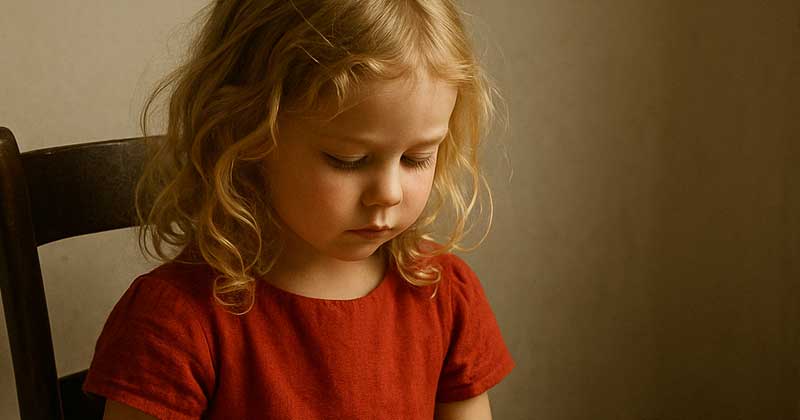
I took the plate with the dried sausage from my daughter’s arms and placed it back at the table, right among the other children. I set a platter full of salad and pastries in front of her.
– This is your place, I told her.
My daughter smiled widely, and her eyes lit up with happiness. For her, that gesture meant more than any gift.
The rest of the evening unfolded differently. The atmosphere changed. People began to talk more freely, joke, and sing. An uncle took out an accordion, and a few women started humming folk songs, just like at country parties. The children danced among the tables, and my daughter was in the middle of them, forgetting her earlier sadness.
My mother-in-law remained withdrawn, watching in silence. Perhaps for the first time, she understood that it is not power and etiquette that make a celebration beautiful, but the love and joy of the people.
When we left, my daughter took the hand-drawn card and handed it to her grandmother again. My mother-in-law sighed deeply, looked at the colorful paper, and in a softer voice said:
– Thank you.
Perhaps it was the beginning of a change. Or maybe just a fleeting moment. But for me, that gesture meant I had won the battle for my child’s dignity.
And I promised myself something: no matter who is around, no matter how big the celebration, I will never let anyone humiliate a child again. Because in our culture, at true tables, everyone has a place. From the smallest to the largest.
And that is the true lesson I wanted to impart. Not just to my mother-in-law, but to everyone who has forgotten what family means.
This work is inspired by real events and people, but has been fictionalized for creative purposes. Names, characters, and details have been changed to protect privacy and enhance the narrative. Any resemblance to real persons, living or dead, or actual events is purely coincidental and not intended by the author.
The author and publisher do not assume responsibility for the accuracy of events or for how characters are portrayed and are not liable for any misinterpretations. This story is provided “as is,” and any opinions expressed belong to the characters and do not reflect the views of the author or publisher.


