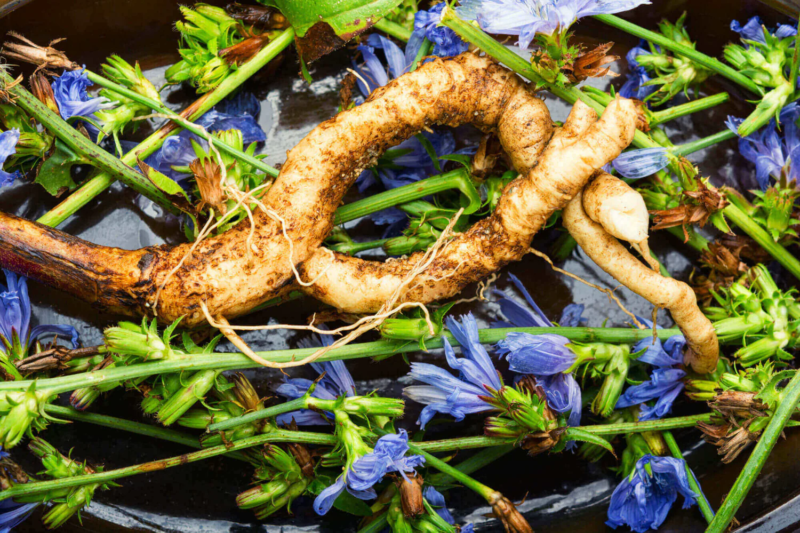
Considered an exceptional hepatic tonic, chicory root (Cichorium intybus) has been used for centuries for liver detoxification, regulating digestion, and balancing blood sugar levels. Its bitter taste is a treasure for the liver and gallbladder, stimulating the body’s natural healing processes.
Active Ingredients
Chicory root contains:
- Inulin – a prebiotic fiber that supports intestinal flora and reduces blood sugar levels
- Bitter substances (lactucopicrin) – stimulate hepatic and biliary secretions
- Tannins and flavonoids – with antioxidant and anti-inflammatory roles
- Vitamin C, zinc, and manganese – support the immune system and liver function
What Studies Say
Journal of Medicinal Plants Research (2010): Chicory extracts showed evident hepatoprotective effects in animals with liver damage.
Phytotherapy Research (2014): Inulin from chicory improves insulin sensitivity and reduces hepatic steatosis (fatty liver).
Iranian Journal of Basic Medical Sciences (2016): Chicory reduces elevated liver enzymes (ALT, AST) and protects the liver from oxidative stress.
Chicory Root Tea Recipe
Ingredients:
- 1 tablespoon of dried and crushed chicory root
- 250 ml water
Preparation:
- Boil the root in water for 10-12 minutes.
- Let it steep for another 5 minutes, then strain.
- Consume 1-2 cups/day, 30 minutes before meals.
Recommended course: 14-21 days, with a 7-day break.
Chicory Tincture (for liver and digestion)
Ingredients:
- 100 g dried root
- 500 ml 40% food-grade alcohol
Preparation Method:
- Place the root in a jar and cover it with alcohol.
- Let it macerate for 14 days, shaking daily.
- Strain and store in a dark glass bottle.
Administration: 20-30 drops in a little water, twice a day, before meals.
Effects on the Body
Stimulates bile secretion and liver regeneration
Regulates blood sugar and reduces sweet cravings
Supports digestion, combats bloating and constipation
Reduces inflammation in the liver and gallbladder
Harvesting: When and How
- Period: Autumn (September-October), when the plant dries, and the root concentrates active substances
- Extraction: Use a spade, clean it well from the soil, and cut it lengthwise
- Drying: In the shade, in a well-ventilated place, for 7-10 days
- Store in jars or paper bags, protected from moisture. Shelf life: 1 year
Precautions and Contraindications
- Contraindicated for individuals with active gastric ulcers
- May interact with diabetes medications – monitor blood sugar levels
- Not recommended during pregnancy without medical advice
- The bitter taste is normal – it is exactly what stimulates the liver




