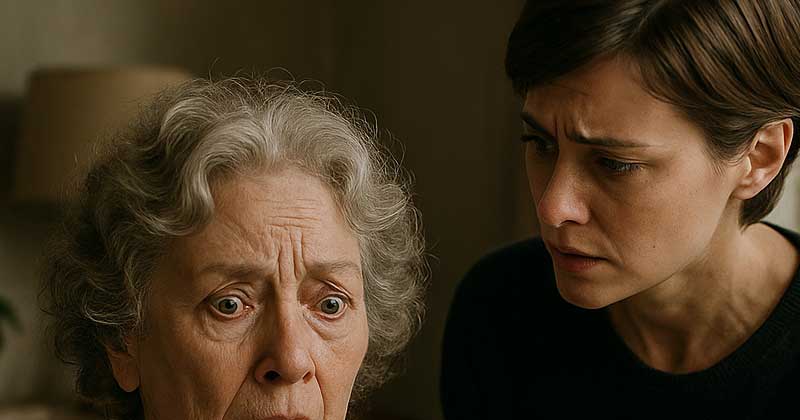
Her words tore me apart more than the loss of my husband. I packed my little bag and began to look for something, anything, that would bring me some money. I was ashamed, but also afraid: what if I had to knock from door to door? What if people laughed at me?
At first, I tried the market, helping a neighbor sell greens. Then I washed staircases, cleaned people’s yards. It wasn’t easy for a woman over sixty, but I swallowed my pride and moved on. Every evening I remembered my daughter’s words and vowed that I would never forget the humiliation.
Years passed. Slowly, I gained strength. I started sewing for neighbors, then for the whole neighborhood. At first, patches on pants, then tablecloths, towels, and even traditional costumes for children at school celebrations. Over time, my work began to be appreciated. A teacher from the art school asked me if I would like to come and show the children the craft.
That’s when I felt my life regain meaning. I showed the children how to sew a traditional blouse, how to weave the thread, and in their eyes, I saw admiration. I, the “useless” woman, suddenly became someone.
With the money I saved, I bought a small house in the village, with a garden and a plum tree in the middle. I worked the land and wove at the loom, and people came to buy from me. Gradually, I began to be invited to folk fairs. I even made it to Bucharest, where my work was praised and written about in a newspaper.
And then, one autumn, when the leaves were gathering on the street, I saw my daughter’s car stopping in front of the gate. Lenuta got out, pale and shy. Her children clung to the hem of her dress.
— Mom…, she began, her voice trembling. I’ve heard about you… everyone is talking. I’m sorry for what I said back then.
I looked at her for a long time, and my heart beat like a church bell. For so many years I had struggled to forget, but the wound was still fresh. Still, I remembered the words of the old priest’s wife from the village: “You cannot carry the burden of unfulfilled forgiveness.”
— Come in, I told her. I have soup, but know that you are no longer the little girl who asks, but the woman who must understand.
Her eyes filled with tears. She entered the house, sat down on a chair, and burst into tears. And then I felt that everything was falling into place. I was no longer the helpless widow, but the woman who had learned to carve her path with empty hands and dignity.
I chose to forgive, but not to forget. Because from that wound, my strength was born. And now, when I look at the sunset over the plum tree in the yard, I know that every harsh word, every hesitant step brought me here: to a place where I no longer beg for love, but receive it for who I am.
And if there is a lesson, it is this: never underestimate your power. Even when loved ones turn their backs on you, you can rise from your own ashes. And when you rise, you lift with you your entire story.
This work is inspired by real events and people, but has been fictionalized for creative purposes. Names, characters, and details have been changed to protect privacy and enhance the narrative. Any resemblance to real persons, living or dead, or actual events is purely coincidental and not intended by the author.
The author and publisher do not assume responsibility for the accuracy of events or for how characters are portrayed and are not liable for any misinterpretations. This story is provided “as is,” and any opinions expressed belong to the characters and do not reflect the views of the author or publisher.


