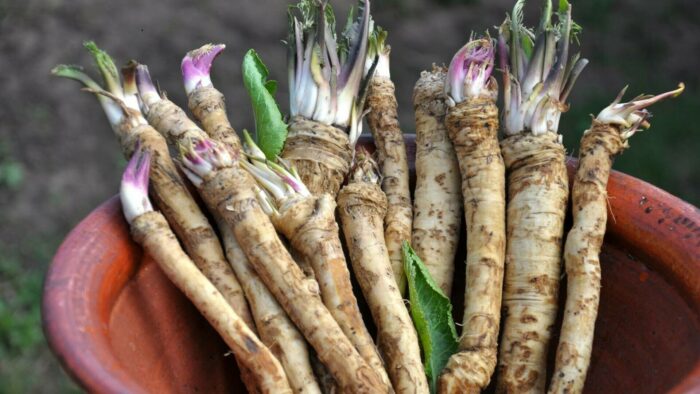
Horseradish (Armoracia rusticana) is a perennial plant with a strong and spicy taste, known not only in gastronomy but also in traditional medicine due to its therapeutic properties. Although it is frequently used in the form of sauce, horseradish can be consumed raw, in the form of tincture, syrup, or tea.
Horseradish Cultivation: A Robust Plant, Easy to Maintain
Adaptability and Growing Conditions
Horseradish is an extremely resilient plant, capable of surviving temperatures as low as -30°C. Due to its well-developed root system, it adapts to dry periods, but excess water should be avoided to prevent root rot.
For optimal development, horseradish prefers loamy-sandy soils with a pH between 7 and 7.5. Fertilizing with manure is recommended to obtain quality roots, and the soil should be well leveled to avoid water accumulation.
Planting and Maintaining the Crop
- It is planted in spring, using cuttings from the central part of the root, stored over winter in sand.
- The distance between plants should be 30-60 cm for proper development.
- Periodic weeding is recommended to prevent weeds and ensure a rich harvest.
Health Benefits of Horseradish
Fighting Infections and Boosting Immunity
Horseradish contains active compounds such as glucosinolates and isothiocyanates, which have antimicrobial and anti-inflammatory effects. It helps combat harmful bacteria (E. coli, Salmonella, H. pylori) and is beneficial in preventing respiratory infections, having decongestant and expectorant effects.
Protection Against Cancer
The bioactive substances in horseradish can inhibit the proliferation of cancer cells, especially in the case of colon cancer. They contribute to detoxifying the body and protect cells from oxidative damage.
Improving Digestion
Horseradish stimulates the secretion of gastric juices and supports intestinal transit. Regular consumption prevents bloating, constipation, and combats intestinal parasites due to its vermifuge effect.
Benefits for Skin and Rheumatism
- Applied externally, horseradish tincture alleviates joint and muscle pain, being useful in treating rheumatism.
- Horseradish poultices stimulate blood circulation and help treat necrotic wounds.
Detoxification and Energizing
Due to its high content of vitamin C and antioxidants, horseradish supports the detoxification of the body, stimulates metabolism, and combats chronic fatigue.
Nutritional Values (per 100 g of horseradish)
- Water: 85.08 g
- Protein: 1.18 g
- Fat: 0.69 g
- Carbohydrates: 11.29 g
- Fiber: 3.3 g
- Sugars: 7.99 g
- Calcium: 56 mg
- Iron: 0.42 mg
- Magnesium: 27 mg
- Vitamin C: 24.9 mg
- B Vitamins: 0.5 mg
Ways to Use Horseradish
Horseradish Tincture
- Prepared from grated horseradish and white food-grade alcohol (80).
- Let it macerate for 8 days, then take a tablespoon 3-4 times a day for coughs and colds.
- Applied externally, it reduces rheumatic pain.
Horseradish Syrup
- Obtained by mixing grated horseradish with honey.
- Let it macerate for a few minutes, strain, and consume to soothe coughs.
Horseradish Flower Tea
- Used for preventing and treating flu and colds.
Horseradish is not just a spicy ingredient but also a true natural medicine, with multiple health benefits. Easy to cultivate and utilized in various forms, horseradish remains a valuable plant for strengthening the body and preventing ailments. Due to its healing properties, it is considered a true treasure from the garden.




