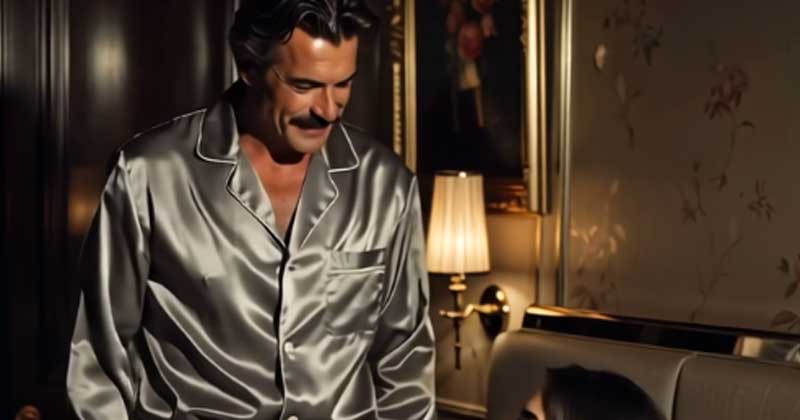
On the bed, amidst the white sheets, there was nothing we expected. There was no blood, nor any sign of violence. There were only banknotes. Dozens, hundreds of banknotes scattered, as if someone had hurriedly thrown a sack of money over them. The bride, frightened, tried to gather them, while my father-in-law trembled, clutching a few hundred lei notes to his chest.
“Where did this money come from?!” my husband asked, wide-eyed, unsure whether to be happy or scared.
The young woman looked up, her cheeks flushed and eyes teary. “It’s mine. I wanted to be honest on the wedding night. I didn’t marry for money, but I couldn’t come empty-handed. I worked, I saved, I hid… and now I want you to know that I am not just a girl looking for wealth.”
We all stood speechless. In our culture, the bride’s dowry was once a sacred tradition. Girls would bring chests full of fabrics, carpets, jewelry, or animals. She had brought a different kind of dowry: money earned with her own hands.
My father-in-law let the banknotes fall and, with an unexpected move, knelt before her. “You didn’t bring wealth into my home; you brought honor. And for that, I will thank you until my last day.”
The neighbors, who were still celebrating outside, were soon called to witness the miracle. People entered one by one, some giggling, others making the sign of the cross. The village elders shook their heads and whispered, “Look how the world is changing! Girls no longer come with pillows and carpets, but with money like at the bank!”
But in everyone’s eyes, respect was evident. The girl was no longer just “the young woman who married an old man.” She was the girl who brought her dowry, not as an obligation, but as a testament to her dignity.
The next day, at dawn, the village was filled with whispers. That the bride was not only beautiful but also worthy. That the old man had not lost his mind but had found a treasure. And that, perhaps for the first time in many years, tradition was being rewritten before our eyes.
In the yard of the house, my father-in-law sat on a bench, his hunched back, but his eyes shining. The bride had placed a cup of warm milk and a slice of sweet bread on his lap. People passed by on the road and greeted him, and he responded with a wide smile, like a newlywed young man.
The wedding night did not end in shame, as we had feared, but with a lesson. A lesson about love, about dignity, and about how people can still surprise, even at 70 years old.
And then I truly understood: it is not age that brings shame or honor, but actions. And our village, which had come prepared for gossip, left home with full hearts and a story to tell further.
A story that, in its own way, will remain like a Romanian fairy tale told at gatherings, among sweet bread, walnuts, and winter stories. Because sometimes, the miracle is not in youth or old age, but in the courage to love and to give truly.
This work is inspired by real events and people, but has been fictionalized for creative purposes. Names, characters, and details have been changed to protect privacy and enhance the narrative. Any resemblance to real persons, living or dead, or to real events is purely coincidental and not intended by the author.
The author and publisher do not assume responsibility for the accuracy of events or for the portrayal of characters and are not liable for any misinterpretations. This story is provided “as is,” and any opinions expressed belong to the characters and do not reflect the views of the author or publisher.


