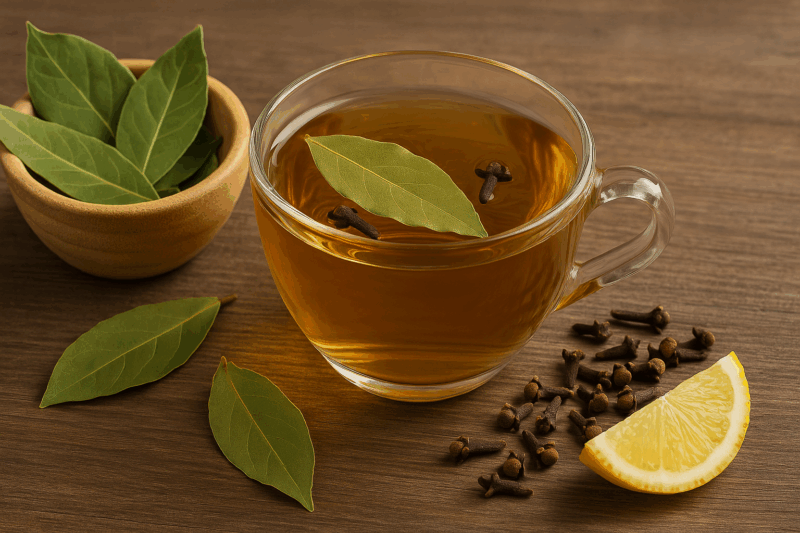
An apparently simple combination, but with profound effects on the body: bay leaves and cloves can together form an infusion with remarkable properties for digestion, blood sugar levels, and joint inflammation. This recipe has been rediscovered in recent years in European natural medicine, being increasingly appreciated for its effectiveness and ease of preparation.
Benefits of Bay Leaf and Clove Infusion
1. Reduces bloating and abdominal discomfort
Bay leaves have carminative properties, meaning they help eliminate intestinal gas. Cloves, in turn, stimulate digestive secretions and reduce spasms. The combination of these two ingredients can quickly alleviate the feeling of bloating, especially after heavy meals or the consumption of hard-to-digest foods.
By relaxing the intestinal muscles and stimulating digestive enzymes, the infusion accelerates intestinal transit and reduces fermentation in the colon. It is useful in dyspepsia, irritable bowel syndrome, and slow digestion.
People who frequently experience a bloated abdomen or pain after meals can benefit from a short course with this infusion.
The effect is noticeable after a few days of administration, especially if accompanied by a balanced diet.
It is a natural alternative to antacids or anti-bloating medications.
2. Helps balance blood sugar levels
Bay leaves contain active compounds such as polyphenols and flavonoids that can improve insulin sensitivity.
Studies suggest that regular administration of bay leaf infusion can reduce blood sugar levels in people with prediabetes or type 2 diabetes.
Cloves contain eugenol, a powerful antioxidant that contributes to the regulation of glucose metabolism.
The bay leaf-clove combination has a synergistic effect on the pancreas and carbohydrate metabolism.
This infusion should not be considered a substitute for antidiabetic treatment, but it can be an effective adjunct under medical supervision.
3. Combats joint pain and chronic inflammation
Both bay leaves and cloves are rich in substances with anti-inflammatory action.
The infusion can reduce pain and stiffness associated with conditions such as arthritis, osteoarthritis, or rheumatism.
Cloves inhibit the release of prostaglandins, compounds responsible for inflammation and pain.
Regular consumption can contribute to lowering systemic inflammation levels in the body.
It is especially recommended in the cold season when rheumatic symptoms worsen.
What do studies say?
1. Study published in Journal of Clinical Biochemistry and Nutrition (2009)
A study conducted on patients with type 2 diabetes showed that the administration of 13 g of bay leaves per day for 30 days led to a significant reduction in blood sugar and cholesterol levels.
The authors concluded that bay leaves can be useful in diabetes management by improving insulin function.
Participants also showed slight decreases in triglycerides and total cholesterol.
No significant adverse effects were recorded during the study.
The study supports the use of bay leaves as an adjunct in metabolic control.
2. Study on the anti-inflammatory effects of eugenol (cloves)
Researchers from the University of Kerman (Iran) demonstrated that eugenol from cloves has effects comparable to those of anti-inflammatory medications, but without their adverse effects.
Clove extract reduced inflammation induced in experimental models by over 60%.
Inhibition of enzymes involved in inflammation, such as COX-2, was also observed.
This action explains the effectiveness of cloves in rheumatic or joint pain.
The study recommends the use of cloves in natural preparations with anti-inflammatory roles.
Recipe: How to prepare the infusion
Ingredients:
-
4 bay leaves
-
6-7 cloves
-
500 ml water
Preparation method:
-
Bring the water to a boil.
-
When it starts to boil, add the bay leaves and cloves.
-
Let it simmer on low heat for 10 minutes.
-
Remove from heat, cover, and let it steep for another 10 minutes.
-
Strain and consume warm, plain or with a slice of lemon.
Recommended dosage:
-
1 cup per day, in the morning or 30 minutes before meals.
-
Can be consumed for 7-10 consecutive days, followed by a break.
Contraindications and precautions
-
Pregnant women and those who are breastfeeding should avoid daily consumption without medical advice.
-
May interact with antidiabetic medications; blood sugar monitoring is necessary.
-
Not recommended in the case of active gastric ulcers.
-
People allergic to cloves or bay leaves should avoid the infusion.
-
Excessive consumption is not recommended; it may cause digestive irritation or a sudden drop in blood pressure or blood sugar.




