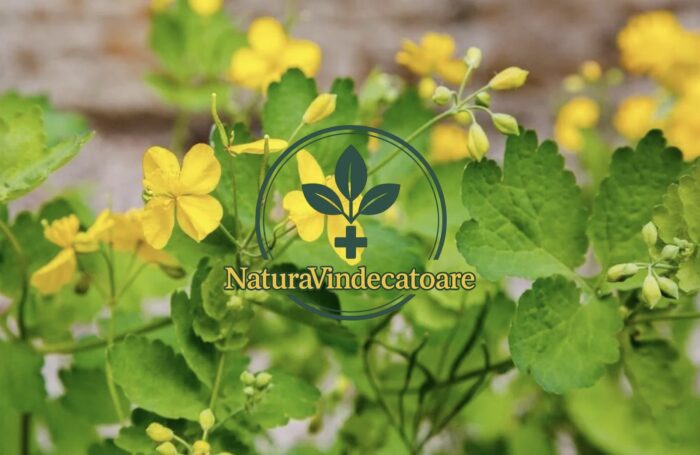
Greater celandine leaves (Chelidonium majus) are known for their powerful properties, but also for the risks associated with improper use. When used in small doses, with caution and in the correct form, greater celandine can help with various ailments, but its leaves can become toxic if prepared or dosed incorrectly.
Benefits of Greater Celandine Leaves (in Controlled Doses)
1. Supports Liver Detoxification
Greater celandine leaves contain alkaloids such as chelidonine and berberine, compounds with choleretic and cholagogue effects, meaning they stimulate bile secretion and evacuation. This helps prevent bile stagnation, one of the causes of hepatic steatosis or biliary dyskinesia. Through its hepatoprotective effect, greater celandine leaves contribute to the elimination of metabolic toxins from the liver. Some herbalists recommend using it as a weak infusion, but not for more than 7 consecutive days. Long-term use can have the opposite effects and lead to liver toxicity.
2. Relieves Digestive Cramps
Greater celandine has spasmolytic properties due to its content of isoquinoline alkaloids. These substances can relax the smooth muscle of the intestines and reduce painful spasms associated with colic. It is used in traditional medicine to combat stomach pain and intestinal cramps. The leaves, especially in dried form, can be successfully used in infusions, but in small amounts, usually 1 g per 250 ml of water, no more than one cup per day. A high dose or the use of fresh raw leaves can lead to poisoning.
3. Antimicrobial and Antiviral Effects
In vitro studies have shown that extracts from greater celandine (including from the leaves) can inhibit the growth of pathogenic bacteria such as Staphylococcus aureus and E. coli. Additionally, berberine and sanguinarine are recognized for their antiviral action against herpes viruses. Preparations from greater celandine can help with skin infections, but direct application of the leaf juice on the skin should be avoided due to its potential irritant properties. Only diluted extracts or standardized preparations are considered safe for such uses.
4. Alleviates Joint Pain
Greater celandine leaves are used externally, in the form of poultices or local applications, for their anti-inflammatory effect. The active substances can easily penetrate the skin and reduce mild joint inflammation. In folk medicine, an infusion of leaves was added to bath water to soothe rheumatism. However, direct application of fresh leaves on the skin is not recommended, as the yellow-orange juice can cause dermatitis or burns. The effects are only observed in mild cases and in short-term treatments.
5. May Help Reduce Warts and Skin Tags
In traditional medicine, the leaves and stems of greater celandine were used to remove warts by applying the yellow juice directly to the lesion. This effect is attributed to the alkaloids that can destroy cells infected with the HPV virus. Although many users confirm the effectiveness of this method, it is not without risks. Daily application of raw juice can lead to chemical burns, especially on sensitive skin. Such methods should be performed with great caution, only locally and for a limited time.
Relevant Studies on the Toxicity and Composition of Greater Celandine Leaves
Study 1: Hepatotoxic Potential of Chelidonium majus L. Published in the Journal of Ethnopharmacology
This study analyzed the effect of greater celandine extracts (including from leaves) on the liver, using animal models and clinical reports. It was found that high doses or prolonged consumption can lead to changes in transaminases and liver damage. Cases of acute hepatitis were reported in patients who consumed greater celandine tea for an extended period. The authors emphasize that the doses used in traditional medicine are often uncontrolled, which increases the risk of toxicity. Researchers recommend cautious use of the leaves and monitoring liver function during administration. The study supports that beneficial effects exist, but are only valid in very small doses and for limited durations. Additionally, it was observed that standardized extracts have a lower risk compared to homemade preparations. The results were validated through histological and biochemical analyses. Thus, greater celandine remains a plant with therapeutic potential, but extremely sensitive to dosing.
Contraindications and Important Warnings
- Pregnant or breastfeeding women should not use greater celandine in any form as the active compounds can cross the placenta and affect fetal development.
- Individuals with liver conditions (hepatitis, cirrhosis, severe steatosis) should completely avoid this plant, even in small doses.
- Children under 12 years old should not consume greater celandine leaves, either internally or externally.
- Drug interactions: greater celandine can interfere with hepatotoxic medications, anticoagulants, or antidepressants.
- Symptoms of poisoning: nausea, vomiting, abdominal pain, jaundice, confusion, or excessive drowsiness. If such symptoms occur after consuming greater celandine, immediate medical attention is necessary.
- Direct local application of the leaf juice can cause burns, dermatitis, or severe allergic reactions.
Composition Table (Dried Greater Celandine Leaves, Estimated per 1g)
| Active Substance | Estimated Quantity |
|---|---|
| Chelidonine | 0.1-0.3 mg |
| Berberine | 0.2-0.5 mg |
| Sanguinarine | 0.1 mg |
| Flavonoids | 0.5-1 mg |
| Volatile Oils | <0.1 mg |
| Organic Acids | 0.2 mg |
| Tannins | 0.3 mg |
The values are indicative and may vary depending on growing, drying, and harvesting conditions.
Greater celandine leaves are a double-edged sword: they can help with certain ailments, but can become dangerous if not used correctly. The dose, method of preparation, and duration of administration are essential. The leaves should never be consumed raw or in large quantities, and treatments with greater celandine should not exceed 7 days. Always consult a specialist before using this plant.




