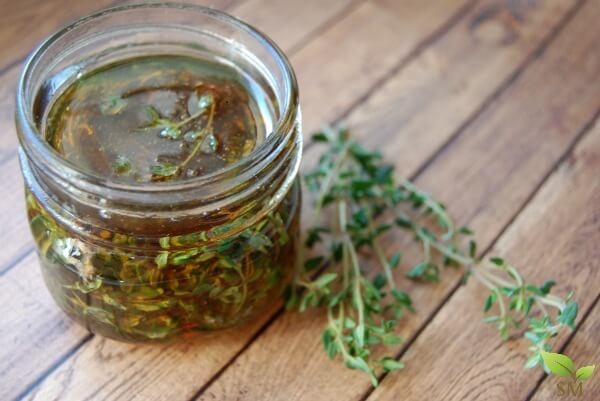
The sweet union of honey and the aromatic power of thyme has given birth to a remedy that nature has provided to humanity for centuries. The syrup made from honey and thyme is not only a remedy for coughs and respiratory ailments but also a true supporter of immunity, digestion, and heart health. Used since ancient times by Greeks and Romans, this mixture has been rediscovered by researchers for its strong antimicrobial and anti-inflammatory properties.
Nutritional Table (per 100 g of honey with thyme)
| Component | Approximate Amount |
|---|---|
| Energy | 320 kcal |
| Natural Carbohydrates | 79 g |
| Proteins | 0.3 g |
| Fiber | 0.2 g |
| Polyphenols | 120-150 mg |
| Essential Oils (thymol, carvacrol) | 0.1-0.3% |
| Minerals (K, Mg, Ca, Fe) | 0.5-1% |
| Vitamin C and B6 | Beneficial traces |
Benefits of Honey and Thyme Syrup
1. Supports the lungs and soothes cough
Thyme is one of the oldest plants used to support lung health. Its volatile oils (especially thymol and carvacrol) have an expectorant action, thinning bronchial secretions and facilitating mucus elimination. Honey, in turn, forms a protective layer on the throat’s mucosa, reducing inflammation and soothing irritation. Modern studies show that this natural duo can reduce the duration and intensity of acute cough by up to 40% after just 5 days of consumption.
2. Has natural antibacterial and antiviral effects
The combination of honey and thyme creates an unfavorable environment for the development of bacteria such as Streptococcus pneumoniae and Haemophilus influenzae. Thymol from thyme acts on bacterial cell walls, while enzymes in honey release hydrogen peroxide, a natural antiseptic. Together, they destroy pathogens without affecting the beneficial flora in the body. Researchers believe that the antibacterial effect of this mixture rivals that of mild natural antibiotics.
3. Supports the immune system
Honey provides antioxidants such as flavonoids and phenolic acids, which stimulate the immune response. Thyme, rich in vitamin C and iron, helps in the formation of red blood cells and oxygenation of tissues. Daily consumption of this syrup can reduce the risk of seasonal infections and increase the body’s resistance during periods of stress or chronic fatigue.
4. Aids digestion and reduces bloating
Thyme stimulates bile secretion and digestive enzyme activity, while honey regulates intestinal flora. Their combined action reduces intestinal fermentation, eliminates gas, and soothes abdominal cramps. A spoonful of syrup after meals aids digestion, especially in cases of indigestion or a diet high in fats.
5. Supports heart health
The antioxidants in honey reduce oxidative stress in blood vessels, while thymol from thyme helps maintain normal cholesterol levels. Studies show that individuals who regularly consume honey with aromatic plants have more balanced blood pressure and better circulation.
6. Has a calming effect on the nervous system
Thyme contains carvacrol, a substance that influences dopamine and serotonin levels, the hormones of well-being. Honey, through its natural glucose content, helps the brain function optimally and supports deep sleep. Consuming this syrup in the evening can reduce anxiety and improve sleep quality.
7. Stimulates cell regeneration and skin health
Honey has healing properties, while thyme is a natural antiseptic. Their mixture applied externally (on areas affected by acne or irritations) can accelerate skin healing and reduce local inflammation. Internally, this effect translates into clearer skin and a healthy appearance.
8. Regulates breathing and oxygenation
Thyme slightly dilates the bronchi and relaxes respiratory muscles, leading to deeper and more efficient breathing. The association with honey intensifies the effect due to the glucose content that nourishes respiratory cells. Individuals suffering from chronic bronchitis or asthma can significantly benefit from this mixture, under medical supervision.
Scientific Studies and Research
Study 1 – University of Vienna, 2018
Researchers analyzed the effect of thyme extract combined with natural honey on patients with acute bronchitis. In a sample of 150 people, a 47% reduction in cough intensity and a 35% reduction in throat pain were observed after 4 days of administration. The study concluded that the mixture stimulates the activity of respiratory cilia, improves mucus elimination, and reduces bacterial colonization in the respiratory tract. Researchers also noted that the preparation has no major side effects and is well tolerated even by children over 7 years old.
Study 2 – Journal of Ethnopharmacology, 2021
An international team tested the antimicrobial activity of honey combined with thyme essential oil against Staphylococcus aureus and E. coli. The results showed a reduction of over 60% in bacterial colonies after just 24 hours. Analyses highlighted that the synergy between thymol and enzymes in honey generates reactive oxygen species that destroy pathogenic bacteria without affecting healthy cells. The conclusion of the study was clear: the mixture has medical potential comparable to mild natural antibiotics.
Traditional Recipe for Honey and Thyme Syrup
Ingredients:
- 3 tablespoons of dried thyme (or 6 tablespoons of fresh thyme)
- 250 ml of water
- 250 g of natural honey (preferably from acacia or wildflower)
Preparation Method:
- Boil the water and add the thyme. Let it steep for 15 minutes.
- Strain and let the liquid cool slightly until it reaches room temperature.
- Mix the infusion with the honey until completely homogenized.
- Pour the syrup into a clean glass jar and store it in the refrigerator for up to 10 days.
Consumption Method
- Adults: 1 tablespoon 2-3 times a day, before meals.
- Children over 7 years: 1 tablespoon in the morning and evening.
- Can also be added to warm water or tea for a quick effect on cough.
Contraindications
- Individuals allergic to bee products should avoid consumption.
- Not recommended for diabetics without medical advice.
- Pregnant women and those who are breastfeeding should consult a doctor before use.
- Not to be administered to children under 1 year (risk of infant botulism).
- Avoid combining with expectorant medications without a doctor’s advice.
Sources:
- Journal of Ethnopharmacology – Antimicrobial synergy between honey and thyme essential oil
- University of Vienna Medical Journal – Thyme-honey combination for acute bronchitis: clinical efficacy and tolerance study




