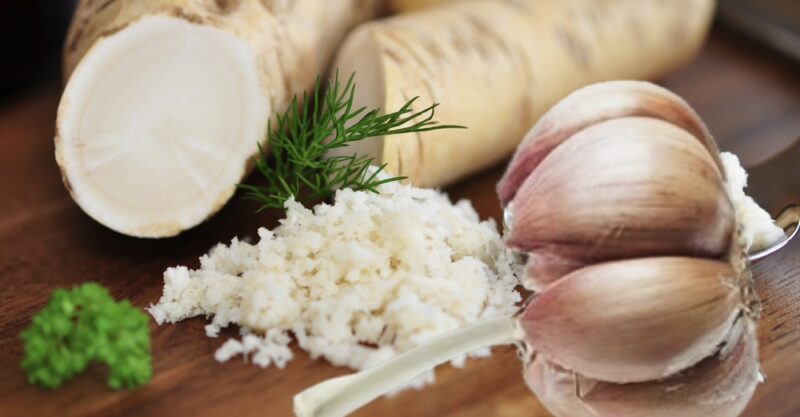
Nasal congestion, headaches in the forehead area, and a feeling of pressure around the eyes are well-known symptoms for those suffering from sinusitis or recurrent respiratory infections. A commonly used natural remedy in folk medicine is the mixture of garlic and horseradish—two ingredients with strong antibacterial and decongestant effects. This mixture can help drain sinus secretions and reduce inflammation of the mucous membranes. In the following sections, you will discover how this combination works, how to prepare it, and what science says about its effectiveness.
Benefits of Garlic and Horseradish for Sinuses
1. Stimulates Sinus Drainage
Horseradish has a natural decongestant effect due to its sulfur-containing volatile compounds, which stimulate the nasal glands to eliminate accumulated mucus. This leads to a rapid improvement in breathing and a decrease in pressure felt in the head and cheeks. When inhaled or consumed, horseradish creates a feeling of nasal clearance, which can help in the early stages of a sinus infection. Regular (but controlled) consumption can reduce the occurrence of acute episodes. The effect is temporary but can be an important support in combination with other methods.
2. Reduces Mucosal Inflammation
Garlic is known for its natural anti-inflammatory effect, due to the active compound called allicin. It acts on the inflamed tissues of the sinuses, reducing swelling and irritation that contribute to congestion. Inflammation is often a reaction to infection or exposure to allergens, and garlic helps diminish this reaction by reducing the activity of certain inflammatory mediators. This effect can accelerate recovery after an episode of rhinitis or sinusitis. Additionally, it supports faster recovery of the affected mucosa.
3. Helps Combat Infections
Both garlic and horseradish have proven antibacterial and antiviral actions in several studies. They can help combat the bacteria that cause recurrent sinus infections, especially when consumed at the first signs of symptoms. Allicin from garlic has been studied for its ability to stop the multiplication of bacteria such as Streptococcus pneumoniae or Haemophilus influenzae. Horseradish, through isothiocyanates, has a similar action, making the combination extremely effective in preventing the worsening of infections. In mild cases, their effect can sometimes replace antibiotics, but only under medical supervision.
4. Supports Respiratory Immunity
Both ingredients contribute to strengthening the immune system, essential for preventing and managing sinus infections. Garlic stimulates the production of T cells and macrophages, key elements in the fight against viruses and bacteria. Horseradish is rich in vitamin C and other antioxidants that protect cells from oxidative stress caused by repeated inflammation. With this support, the body is better prepared to respond to respiratory aggressions. A supported immune system reduces the risk of sinusitis recurrence.
5. Relieves Sinus Headaches
Prolonged congestion often leads to localized headaches in the forehead, temples, and under the eyes. Through its decongestant effect and reduction of pressure in the sinuses, this mixture can significantly reduce these symptoms. Horseradish stimulates local blood circulation, while garlic reduces inflammation—both contributing to the relaxation of tissues. The effect can be felt quickly, sometimes within 10-15 minutes after administration. It does not replace analgesics in severe cases but can reduce the need for them in mild forms. It is an effective solution for those who prefer natural alternatives.
Relevant Studies
Study: Antimicrobial properties of allicin from garlic Microbes and Infection Journal
This study investigated the effect of allicin on bacteria commonly involved in sinus infections. It was shown that allicin inhibits the development of over 10 bacterial strains, including Staphylococcus aureus and Streptococcus pneumoniae. The authors concluded that garlic can be considered a potential natural adjunct in the treatment of respiratory infections. Additionally, researchers noted that allicin also has an indirect anti-inflammatory effect by reducing the exacerbated immune response. The study used freeze-dried garlic extract and liquid solutions, suggesting that raw consumption may have similar effects. In vitro tests showed a comparable efficacy to certain mild antibiotics. Although it does not substitute conventional therapy, the research supports its use as a supportive measure.
Study: Horseradish root as a natural expectorant and sinus cleanser Journal of Herbal Pharmacotherapy
The research focused on the expectorant and decongestant action of horseradish root in patients with chronic sinusitis. Subjects received capsules with horseradish extract or placebo for 14 days. The group that received horseradish showed a significant decrease in congestion, reduced secretions, and an improvement in nasal breathing. Additionally, 70% of participants reported a decrease in facial pain associated with sinus issues. It was concluded that horseradish acts by stimulating mucous glands and opening blocked nasal passages. Side effects were minor (mild heartburn). The study supports the use of horseradish as an adjunct in treatments for recurrent sinusitis.
Natural Recipe with Garlic and Horseradish
Ingredients:
- 3 cloves of finely chopped garlic
- 1 tablespoon of grated horseradish (raw)
- 2 tablespoons of honey (optional)
- 1 tablespoon of lemon juice
- 100 ml of warm water or herbal tea
Preparation:
- Crush the garlic and let it sit for 10 minutes to activate the allicin.
- Grate the fresh horseradish and add it over the garlic.
- Add the honey and lemon juice, mixing well.
- Pour warm water/tea over the mixture to obtain a tonic beverage.
- Store for a maximum of 48 hours in the refrigerator in a glass jar.
How to Consume
- 1 tablespoon (or 10 ml) 2-3 times a day, before meals.
- Can be added to a cup of warm tea and consumed as a tonic.
- Used for 3-5 days during periods of sinus discomfort or at the onset of a cold.
- Not recommended to be taken on an empty stomach, especially for those with gastric sensitivity.
Contraindications and Precautions
- Contraindicated in gastric ulcer, gastritis, gastroesophageal reflux.
- Not to be administered to children under 6 years or pregnant women without medical advice.
- May interact with anticoagulants (e.g., warfarin), anti-inflammatories, or antibiotics.
- Individuals allergic to garlic, onion, horseradish, or other plants in the Liliaceae family should avoid this remedy.
- Does not replace treatments for acute or severe chronic sinusitis.




