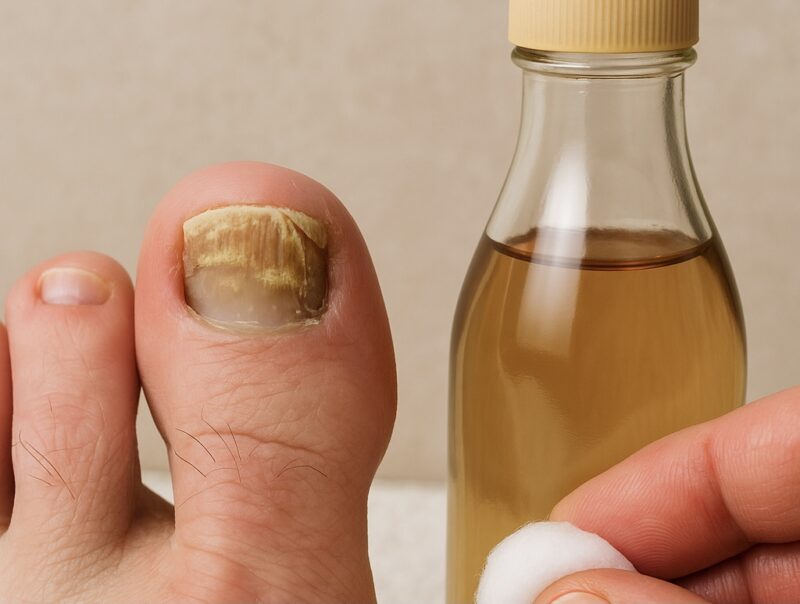
Nail fungus (onychomycosis) is a common infection that affects both fingernails and, more commonly, toenails. Vinegar, due to its antifungal properties and its ability to alter the skin’s pH, is considered an effective natural remedy for slowing down or even eliminating this issue.
How Vinegar Works
Vinegar contains acetic acid, a substance that alters the environment in which the fungus thrives, making it hostile to its survival and reproduction. Essentially, consistent application can reduce discomfort, slow the spread of the infection, and support the gradual regeneration of healthy nails.
Methods of Use
1. Foot Soak with Vinegar
-
Mix one part vinegar (white or apple cider) with two parts warm water.
-
Soak your feet for 15-20 minutes daily.
-
After soaking, dry your feet thoroughly to avoid moisture, which promotes fungus.
2. Direct Application on the Nail
-
Using a cotton ball or swab, apply a few drops of vinegar directly onto the affected nail.
-
This procedure should be done 2-3 times a day, allowing the vinegar to act and dry naturally.
3. Vinegar with Baking Soda
-
After the vinegar soak, the nail can be dusted with baking soda.
-
This has an alkaline effect and helps neutralize the environment favorable for fungi.
4. Vinegar Compresses
-
Soak a piece of gauze or a cotton pad in vinegar and apply it to the affected nail.
-
Secure it with a bandage and let it act for 30-60 minutes.
Studies and Research
A report published in the Journal of Food Science showed that acetic acid has antifungal and antibacterial properties, demonstrating its effectiveness against several strains of fungi. Additionally, research on the use of apple cider vinegar in foot hygiene has confirmed its ability to reduce the incidence of fungal infections. However, clinical studies specifically dedicated to onychomycosis are limited, which means that the remedy works best as an adjunct, not as a standalone treatment.
Contraindications and Warnings
-
Vinegar should not be used on open wounds or irritated skin, as it can cause stinging and inflammation.
-
People with sensitive skin may dilute the solution further or test it first on a small area.
-
If the infection is advanced (darkened nail, completely discolored, with pain), dermatological consultation is necessary.
-
Vinegar is a supportive remedy, but it does not replace antifungal treatments prescribed by a doctor.
Vinegar can be a simple and accessible aid in the fight against nail fungus, especially in the early stages. When used consistently, in soaks, local applications, or compresses, it helps slow the spread of the infection and supports the natural healing of the nail. However, for severe cases, it is essential to combine it with the treatment recommended by a doctor.




