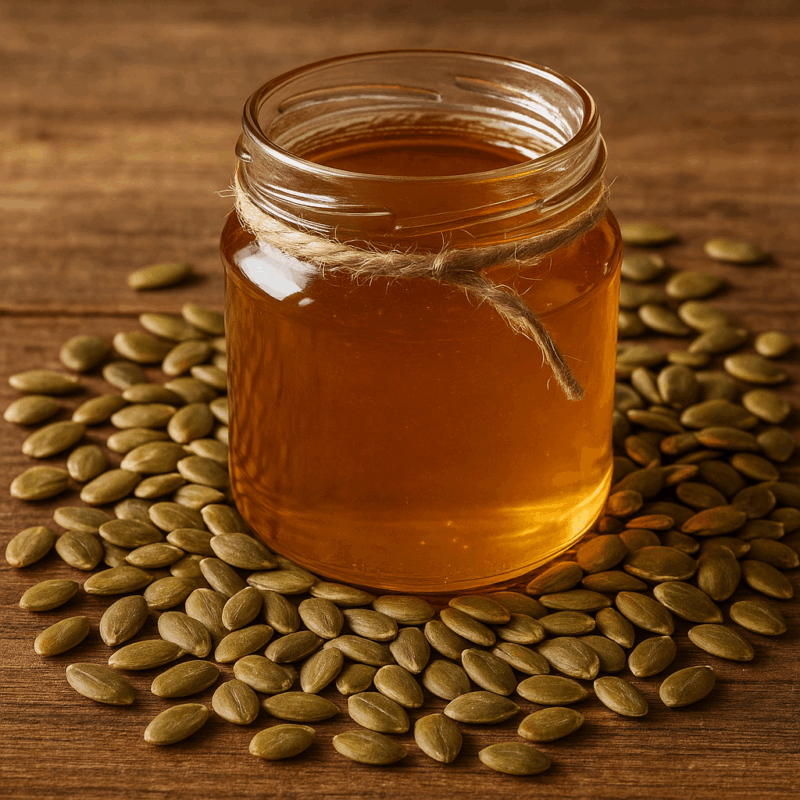
Intestinal parasite infections continue to be a problem ignored by many people, even though symptoms such as chronic fatigue, bloating, abdominal pain, and weight loss can have parasitic causes. In folk medicine, one of the most effective natural remedies has been the combination of raw pumpkin seeds and honey—a simple yet extremely powerful mixture against pinworms, roundworms, and tapeworms. Although forgotten by many, this recipe is being rediscovered today by nutritionists and herbalists.
Benefits of Pumpkin Seeds for Eliminating Parasites
Documented Vermifuge Action
Pumpkin seeds contain a compound called cucurbitacin, which paralyzes the nervous system of intestinal worms. They become unable to cling to the intestinal walls and are naturally expelled from the body. This action is recognized by herbalists and is documented in natural medicine treatises. This effect is gentle on the human body but extremely aggressive towards parasites.
Effective Remedy for Children and Adults
Compared to synthetic antiparasitic medications, pumpkin seeds do not attack the intestinal flora, making them safe for children, pregnant women (with a doctor’s approval), and elderly individuals. Their repeated use does not produce resistance, and their pleasant taste makes them easy to administer. Therefore, they can also be used in preventive cures, not just as an active treatment.
Rich Nutritional Content that Supports the Immune System
While acting against parasites, pumpkin seeds nourish the body. They are rich in zinc, iron, magnesium, healthy fats, and proteins, helping to repair tissues and strengthen immunity. This is essential during the elimination of parasites when the body needs additional nutritional support.
Combats Intestinal Inflammation Caused by Parasites
Parasites can cause damage and inflammation to the intestinal mucosa. Pumpkin seeds, through their content of unsaturated fats and antioxidants, reduce inflammation and accelerate healing. This benefit is especially important for individuals who frequently experience bloating, cramps, and abdominal discomfort.
Prebiotic and Intestinal Regenerative Effect
In addition to their antiparasitic effect, pumpkin seeds have a mild prebiotic effect, supporting beneficial intestinal flora. Thus, an unfavorable environment for the development of future parasites is created, and the intestine is helped to regain balance after the cure.
Benefits of Honey in This Mixture
Increases Absorption of Active Substances from Seeds
Honey acts as an ideal vehicle for cucurbitacin, increasing the bioavailability of the active substance. It reaches the intestine more quickly and in higher concentration, where it is needed. Thus, honey amplifies the antiparasitic effect of the seeds.
Helps in the Elimination of Parasites through a Mild Laxative Effect
Natural honey, especially linden or multifloral honey, has a gentle laxative effect, helping the body to more easily eliminate paralyzed parasites. It also prevents constipation, which could delay the healing process of the intestine.
Contributes to the Repair of Intestinal Tissues
Due to its content of enzymes, vitamins, and flavonoids, honey helps soothe and regenerate the intestinal mucosa affected by parasites. It is a good digestive protector, especially when combined with other anti-inflammatory ingredients.
Classic Recipe: Pumpkin Seeds with Honey
Ingredients:
-
100 g raw, unroasted, and unpeeled pumpkin seeds (or peeled if administered to children)
-
1-2 tablespoons of natural honey (ideally linden or multifloral)
Preparation Method:
-
Grind the pumpkin seeds in a blender or mortar until they become a fine paste.
-
Add the honey and mix until a homogeneous paste is obtained.
-
Consume in the morning on an empty stomach for 5-7 consecutive days.
For Children: 40-50 g of seeds + 1 tablespoon of honey can be used. The dose should be adjusted according to age and weight, with a doctor’s approval.
Studies and Scientific Evidence
A study in Journal of Ethnopharmacology (2012) confirmed the efficacy of pumpkin seeds against Hymenolepis nana (tapeworm) in children. In a group of 115 infected children, the rate of parasite elimination was over 75% after 3 days of administering the seeds.
The journal Parasitology Research (2013) published an experimental study demonstrating that pumpkin seed extract has effects comparable to the drug praziquantel in combating intestinal parasites in mice, but without side effects.
Another study in International Journal of Molecular Sciences (2016) analyzed the compounds of cucurbitacin in pumpkin seeds and concluded that they act by inhibiting the muscle motility of helminths, which explains their rapid elimination efficacy.
In BMC Complementary Medicine and Therapies (2020), researchers highlighted that pumpkin seed extracts can be an effective natural alternative for controlling helminth infections in areas with limited access to medications.
Contraindications and Precautions
Pumpkin seeds can cause abdominal discomfort, bloating, or nausea if consumed in excess.
Individuals allergic to pumpkin or bee products should avoid this remedy.
Honey should not be administered to children under 1 year old.
Those with diabetes should use the recipe with caution or consult a doctor beforehand.
In severe cases of infestation, the remedy does not replace the medication prescribed by a specialist.




