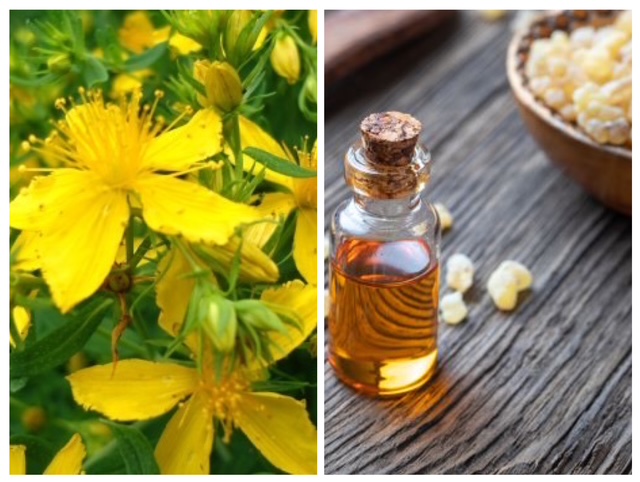
In the monasteries of Romania and the Orthodox space, healing has not been viewed merely as a medical act, but as a sacred work, where prayer and natural remedies intertwine. Monks and nuns, guardians of knowledge about plants and remedies, have developed over the centuries formulas for healing oils. One of the most appreciated is St. John’s Wort and Frankincense Oil, known for its anti-inflammatory, healing, and relaxing effects. The recipe combines the solar force of St. John’s Wort flowers with the sacred aroma of frankincense, creating a remedy that soothes bodily pains and brings peace to the soul.
Authentic Monastic Recipe
Ingredients:
- 200 ml cold-pressed oil (olive or sweet almond)
- 50 g fresh or dried St. John’s Wort flowers
- 10 g natural frankincense (Boswellia serrata), finely ground
- 1 tablespoon of pine resin (optional, for enhanced effect)
- 1 dark glass jar, sterilized
Preparation Method:
- Place the St. John’s Wort flowers in the sterilized jar.
- Add the ground frankincense and pine resin.
- Pour the cold-pressed oil until it completely covers the plants and resins.
- Let it macerate in the sun for 40 days, shaking the jar once every 2 days.
- After maceration, strain through clean cheesecloth and store in dark glass bottles in a cool place.
Usage Instructions
- Therapeutic Massage: apply to painful areas and massage for 5-10 minutes.
- Skin Care: use for superficial burns, scratches, and irritated skin.
- Relaxation: massage the temples and neck before bedtime.
Benefits
1. Relieves Muscle and Joint Pain
St. John’s Wort oil penetrates tissues and reduces the sensation of pain, while frankincense acts as a natural anti-inflammatory. Hypericin and hyperforin from St. John’s Wort affect peripheral nerves, reducing sensitivity to pain. Boswellic acid from frankincense inhibits inflammatory mediators. Massage with this oil is recommended after intense physical effort. Regular use can reduce joint stiffness.
2. Supports Skin Regeneration
St. John’s Wort is recognized for its healing effect, while frankincense stimulates collagen production. The oil protects and hydrates the skin, speeding up the healing of superficial lesions. It can be used after sun exposure to soothe the skin. It restores elasticity and a healthy appearance. Consistent application evens out skin texture.
3. Reduces Local Inflammations
Boswellic acid has an anti-inflammatory effect comparable to some medications, without their side effects. Hyperforin inhibits the development of microorganisms that cause inflammation. The oil applied locally reduces redness and swelling. It is useful for sprains, strains, or bruises. The calming effect is felt shortly after massage.
4. Alleviates Nervous Tension
The aroma of frankincense induces relaxation, while St. John’s Wort helps balance mood by influencing serotonin levels. Evening massage with this oil can improve sleep quality. It is beneficial for individuals with chronic stress. In monastic tradition, this oil was used in prayers for soothing the soul. This psychological effect is also confirmed by modern studies.
5. Protects Against Skin Infections
St. John’s Wort has proven antibacterial action, while frankincense is antiseptic. The oil prevents small wounds from becoming infected. It is beneficial in warm seasons when the risk of scratches or insect bites is increased. It can be applied preventively before exposure in high-risk environments. The combination of the two ingredients acts synergistically.
6. Improves Peripheral Circulation
Massage with this oil stimulates blood flow. Frankincense promotes vasodilation, while St. John’s Wort enhances tissue oxygenation. It is useful for individuals with cold extremities. It can prepare muscles before physical effort. In monasteries, it was used for the recovery of tired pilgrims.
7. Reduces Scars and Pigmentation Spots
Collagen stimulated by frankincense smooths the skin, while St. John’s Wort evens out color. Consistent application diminishes post-acne spots. It is also effective for post-surgical scars. It can be used long-term without major risks. Results are visible within a few months.
8. Supports Healing of Chronic Wounds
The oil has beneficial effects on varicose ulcers and wounds that heal slowly. It reduces inflammation and stimulates cellular regeneration. Gentle massage around the wound improves circulation. Daily use can shorten recovery time. Monastic tradition recommends it for such difficult cases.
Relevant Studies and Research
- Study published in Phytomedicine (2014) showed that St. John’s Wort extract has anti-inflammatory effects by inhibiting prostaglandins. In animal model tests, the reduction of inflammation was comparable to ibuprofen, but without gastrointestinal side effects. Analysis of the composition identified hyperforin as the main active compound. Researchers concluded that oily extracts are even more effective than tinctures. The study recommended local application in combination with massage for maximum effect.
- Research in Journal of Ethnopharmacology (2016) evaluated the effect of frankincense on joint pain in patients with osteoarthritis. The group treated with Boswellia serrata extract reported reduced pain and improved mobility within 8 weeks. Biochemical analyses confirmed the reduction of inflammatory markers. The authors emphasized the very good tolerability of the extract. They recommended its use combined with other anti-inflammatory plants. This supports the traditional combination with St. John’s Wort.
- Clinical study in Complementary Therapies in Medicine (2019) investigated the effects of St. John’s Wort oil massage on patients with chronic lower back pain. After 4 weeks, pain intensity decreased by 50%, and spinal mobility significantly increased. Participants also reported improved sleep quality. The authors concluded that the effects are cumulative, requiring consistent use. The study validated the traditional use of St. John’s Wort in massage.
Contraindications
- Do not apply to open or deep wounds or severe infections.
- Individuals allergic to St. John’s Wort or resins should avoid this oil.
- St. John’s Wort may increase skin sensitivity to sunlight (photosensitivity).
- Pregnant or breastfeeding women should consult a doctor before use.
- Do not apply immediately after intense sun exposure.
Indicative Nutritional Table (per 100 ml olive oil with St. John’s Wort and frankincense extract)
| Component | Approximate Amount |
|---|---|
| Energy Value | 884 kcal |
| Total Fats | 100 g |
| Saturated Fatty Acids | 14 g |
| Monounsaturated Fatty Acids | 73 g |
| Polyunsaturated Fatty Acids | 11 g |
| Vitamin E | 14 mg |
| Phytonutrients from St. John’s Wort and frankincense | variable |




