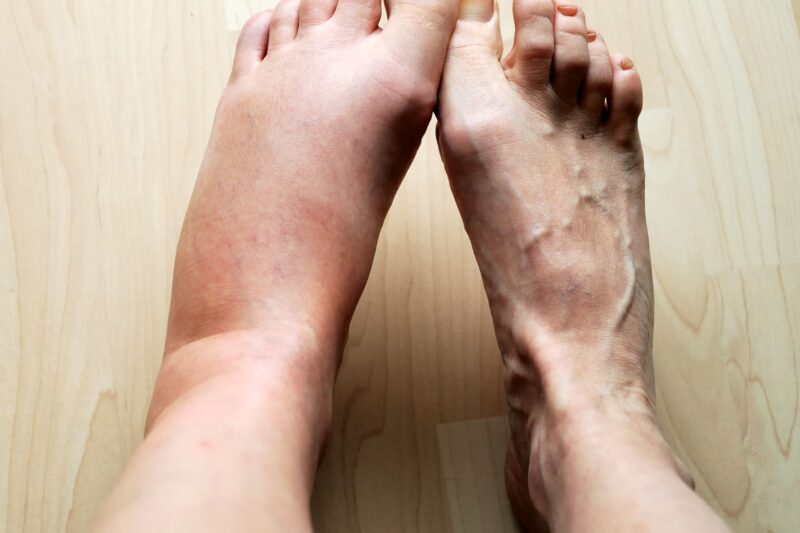
Swollen feet are a common issue that occurs in both active and sedentary individuals. Edema in the feet can be caused by fluid retention, circulatory problems, venous insufficiency, kidney issues, or even prolonged standing or sitting. Doctors emphasize that it is not just an aesthetic problem but a warning signal that the body is not functioning properly. Beyond medical treatments, there are also natural remedies that can be very helpful.
Frequent Causes of Swollen Feet
-
Fluid and salt retention in the body
-
Poor circulation or venous insufficiency
-
Kidney or heart problems
-
Pregnancy
-
Prolonged standing or sitting
-
Side effects of certain medications
The Best Natural Remedies for Swollen Feet
1. Parsley Tea
Parsley has a strong diuretic effect, helping to eliminate excess water from the body. Preparation is simple: one tablespoon of dried leaves in 250 ml of boiling water, infused for 10 minutes. Drink 2-3 cups a day.
2. Cherry Stem Infusion
Cherry stems stimulate the kidneys and eliminate excess fluids. Use one tablespoon of the plant in 250 ml of water, consumed twice a day.
3. Foot Baths with Sea Salt
Sea salt helps relax the muscles and reduce edema. Warm baths are recommended for 15-20 minutes in the evening.
4. Dandelion Tea
Dandelion is known for its diuretic and detoxifying effect. Prepare it from one tablespoon of dried leaves in 250 ml of hot water.
5. Compresses with Apple Cider Vinegar
Apply a compress soaked in diluted apple cider vinegar (1:1 with water) on the feet. It stimulates circulation and reduces inflammation.
6. Peppermint or Lavender Oil for Massage
A gentle massage with a few drops of essential oil, diluted in a carrier oil (almond, olive), reduces the feeling of heaviness and improves circulation.
7. Hydration and Reducing Salt Intake
Sufficient water and a low-sodium diet help prevent fluid retention.
Studies and Research
-
A study published in Journal of Ethnopharmacology (2018) showed that parsley has diuretic properties comparable to synthetic medications, without major side effects.
-
Research in Phytomedicine (2019) highlighted the role of dandelion in reducing edema by stimulating the kidneys.
-
An analysis in International Journal of Molecular Sciences (2020) confirmed that sea salt baths reduce inflammation and peripheral edema.
-
Clinical studies in Journal of Herbal Medicine (2021) showed that cherry stem tea improves fluid elimination and supports kidney health.
Contraindications
-
Individuals with severe kidney or heart diseases should consult a doctor before using natural diuretics.
-
Pregnant women should not consume large amounts of diuretic plants without medical advice.
-
Individuals taking diuretic or blood pressure medications should avoid overlapping with diuretic teas.
-
Compresses with apple cider vinegar should not be applied to irritated or wounded skin.
Nutritional Table for Parsley (100 g fresh)
| Nutrient | Amount |
|---|---|
| Calories | 36 kcal |
| Water | 88% |
| Protein | 3 g |
| Fiber | 3.3 g |
| Vitamin C | 133 mg |
| Vitamin K | 1640 µg |
| Potassium | 554 mg |
| Iron | 6.2 mg |




