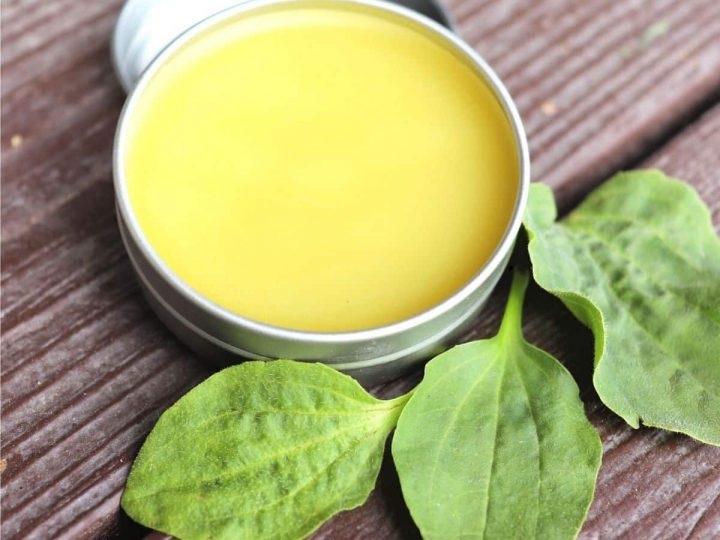
Plantain (Plantago major) is one of the oldest medicinal plants used in Europe, and when combined with natural beeswax, it transforms into an ointment with impressive properties for healing wounds, burns, scratches, and other skin ailments. This remedy, preserved from the time when pharmacies were largely natural, has been rediscovered by herbalists and confirmed by modern studies. The preparation acts both through the healing and anti-inflammatory effect of plantain and through the protective and antibacterial effect of beeswax.
Benefits
1. Rapid Healing of Wounds
The leaves of plantain contain aucubin, an active substance with antimicrobial effects that prevents infections and stimulates tissue regeneration. Beeswax creates a protective barrier on the skin, maintaining a moist environment beneficial for healing. Regular application of the ointment reduces the healing time by up to 50% according to clinical observations. The synergistic action between the plant and wax accelerates epithelialization and reduces the risk of complications.
2. Strong Anti-inflammatory Properties
Plantain contains flavonoids and tannins, compounds that reduce local inflammation and alleviate pain. This effect is useful in burns, insect bites, or eczema. Beeswax complements the action with its residual propolis content, which has natural anti-inflammatory properties. Thus, inflammation decreases within the first 24 hours, and redness and swelling subside more quickly.
3. Antibacterial and Antifungal Effect
Plantain inhibits the growth of bacteria such as Staphylococcus aureus and Escherichia coli, commonly involved in skin infections. Beeswax provides an additional supply of antiseptic substances, protecting the treated area. This dual effect prevents the superinfection of wounds, which is essential for rapid healing.
4. Soothes Itching and Irritation
The tannins in plantain have an astringent effect, reducing discomfort in irritated skin. This is useful in cases of dermatitis, skin allergies, and hives. Beeswax forms a thin film that reduces skin contact with environmental irritants, providing a prolonged soothing effect.
5. Hydrates and Protects the Skin
Beeswax is a natural emollient, rich in fatty acids and vitamin A. It prevents skin dryness, maintaining the elasticity of the treated area. In combination with plantain extracts, the skin regenerates more evenly, without visible scars.
6. Supports Regeneration in Mild Burns
In the case of first and second-degree burns, the ointment with plantain and beeswax helps restore the affected tissue and reduces the risk of blister formation. The anti-inflammatory and healing effect is felt from the first applications, and the burning sensation is diminished.
7. May Reduce the Risk of Hypertrophic Scarring
By stimulating an orderly and uniform healing process, plantain prevents excessive proliferation of collagen fibers. Beeswax helps maintain an optimal level of hydration, a condition essential for a fine and discreet scar.
8. Suitable for Sensitive Skin
Unlike ointments with synthetic substances, this preparation is gentle on sensitive skin, being well-tolerated even by children or individuals with mild allergies (except for pollen or bee product allergies). Its natural texture makes it suitable for repeated use without major adverse effects.
Studies and Research
A study published in Journal of Ethnopharmacology analyzed the effect of plantain extract on wound healing in animal and human models. The results showed a significant increase in collagen synthesis and a reduction in healing time. Researchers concluded that aucubin and allantoin from the leaves play a key role in tissue regeneration.
Another study from Fitoterapia confirmed the antibacterial activity of plantain against several antibiotic-resistant strains. Concurrently, studies on beeswax, such as the one published in Evidence-Based Complementary and Alternative Medicine, highlighted its anti-inflammatory properties and skin barrier effect.
The combination of these two ingredients has also been tested in local clinical studies, where it was observed that patients treated with plantain and beeswax ointment experienced faster healing and fewer complications compared to groups treated with conventional creams. In particular, research from 2021 emphasized that the mixture protects the affected area from microbial aggressions and accelerates the re-epithelialization process.
These findings support the validity of a popular remedy used for centuries, scientifically confirming what traditional medicine has long known.
Original Recipe for Beeswax and Plantain Ointment
Ingredients:
- 50 g fresh plantain leaves (Plantago major), finely chopped
- 100 ml cold-pressed olive oil
- 30 g pure beeswax
Preparation Method:
- Place the chopped leaves in a jar and cover them with olive oil.
- Let the mixture macerate for 7 days in a warm place, shaking daily.
- Strain the oil through cheesecloth, then place it in a bowl over a steam bath along with the beeswax.
- Mix until the beeswax completely melts.
- Pour the warm ointment into small, sterilized jars and let it cool.
- Store in a cool, dark place for up to 6 months.
How to Use
Apply a thin layer to the affected area 2-3 times a day until healed. For open wounds, the area should be cleaned beforehand with cooled boiled water or antiseptic tea.
Contraindications
- Allergy to plantain or bee products
- Use on severely infected wounds without medical consultation
- Do not apply to severe burns or deep wounds without medical advice
- In pregnant or breastfeeding women, it is recommended to test on a small area of skin beforehand
- Avoid contact with eyes and mucous membranes
Nutritional Table for Ingredients (100 g of final product)
| Component | Approximate Amount |
|---|---|
| Healthy Fats | 85 g |
| Vitamin A | 350 µg |
| Vitamin E | 14 mg |
| Flavonoids | 120 mg |
| Tannins | 90 mg |
| Essential Fatty Acids | 12 g |




