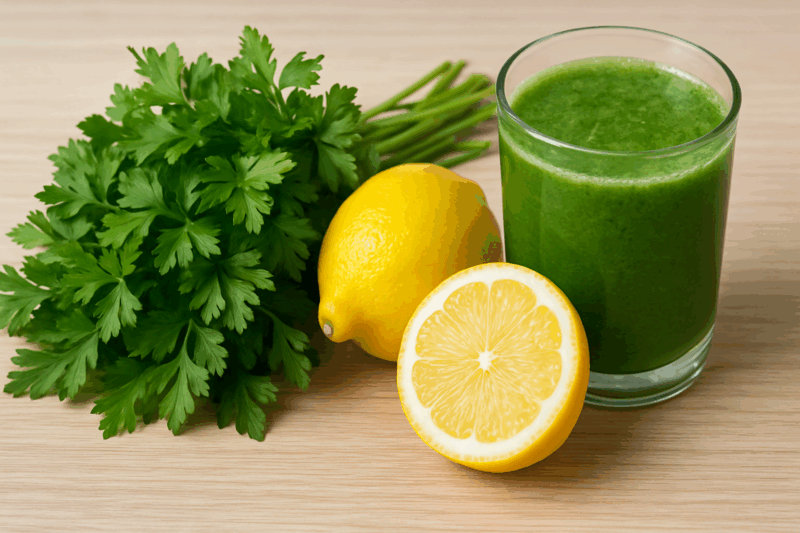
A simple yet powerful mixture of parsley and lemon has gone viral on the internet, being promoted as a true elixir for detoxification, weight loss, and the elimination of excess water from the body. Although it may seem trivial, this remedy is based on the active properties of ingredients with scientifically proven effects. However, it is not without strict rules: the preparation method, duration of administration, and contraindications must be known to avoid adverse effects.
How to correctly prepare this remedy
Ingredients:
1 large bunch of fresh parsley
1 organic lemon (untreated)
300 ml of still water
Preparation method:
Wash the parsley well and chop it finely.
Cut the lemon into cubes or squeeze it (according to preference, including the peel if it is organic).
Put all the ingredients in a blender and mix well.
Consume in the morning on an empty stomach for 5 consecutive days.
Take a 10-day break, then the treatment can be resumed.
Do not exceed the daily dose of 300 ml, and the treatment should not last more than 5 consecutive days without a break.
Benefits of the parsley + lemon remedy
1. Eliminates excess water from the body (powerful diuretic)
This mixture stimulates the kidneys to more effectively eliminate excess fluids from the body. Parsley contains apiol and myristicin, compounds with documented diuretic action, which increase urine volume without causing electrolyte imbalances. Lemon, rich in potassium and citric acid, supports the elimination of sodium, responsible for water retention. The synergistic action between the two ingredients helps the body lose weight accumulated through edema, not through dehydration. Additionally, this effect also helps reduce the feeling of swelling in the limbs.
2. Detoxifies the liver and cleanses the blood
Vitamin C and flavonoids in lemon stimulate the liver to produce detoxifying enzymes. Parsley, through its chlorophyll and volatile oils, has antioxidant effects, reducing hepatic oxidative stress. Studies show that parsley can reduce lead levels in the liver and blood, serving as an adjunct in detoxifying heavy metals. Regular consumption can contribute to better liver function and the regeneration of liver cells. Together, the two ingredients support a natural internal cleansing process.
3. Lowers blood pressure
Due to its diuretic effect, this remedy reduces circulating blood volume, which contributes to lowering blood pressure. Parsley contains potassium, an essential mineral in balancing sodium levels, the main culprit of hypertension. Lemon, in turn, has mild vasodilating properties due to its citrates and antioxidants. The reduction in blood pressure occurs gradually, and the effect can be felt as early as the third day of administration in some individuals. However, it does not replace antihypertensive treatment without medical advice.
4. Supports fat burning
Vitamin C plays a crucial role in converting fats into energy, and lemon is an excellent source. Parsley, through its diuretic and depurative effects, reduces bloating and helps with weight loss. The flavonoids and polyphenols present in the mixture accelerate the hepatic metabolism of lipids. The effect is especially felt in the abdominal area, where inflammation and water retention give the impression of a bloated stomach. However, this remedy should be combined with a balanced diet to have real effects.
5. Alkalizes the body
Although lemon is acidic, in the body, it has an alkalizing effect. This process helps balance the blood pH, thus supporting the immune system’s functioning and preventing chronic inflammation. Parsley, with its high content of magnesium, calcium, and chlorophyll, supports the same process. Alkalization is essential for individuals who consume many processed foods, meat, or sweets, which excessively acidify the internal environment. A balanced pH is associated with a better overall state, increased energy, and more efficient digestion.
What studies say about the parsley-lemon combination
A study published in the Journal of Renal Nutrition (2019) showed that parsley has a diuretic effect comparable to that of furosemide, a classic diuretic, without causing potassium imbalances. Participants who consumed concentrated parsley tea eliminated 25% more water than those in the control group, without significant side effects.
On the other hand, a study in Phytotherapy Research (2021) analyzed the effects of lemon juice on lipid profile and blood pressure. The results showed a significant decrease in total cholesterol, LDL, and systolic blood pressure after 4 weeks of daily administration. Researchers attributed these effects to the content of vitamin C and flavonoids.
The combination of the two plants was evaluated in a pilot experiment conducted by the University of Ankara (2022), which involved 40 overweight volunteers. After 10 days of controlled consumption, participants lost an average of 2.1 kg, with a visible reduction in edema. The level of inflammatory markers (CRP) was reduced by 15%, and renal function remained within normal limits.
Another observed aspect was the improvement in digestion and reduction of bloating, an effect attributed to the synergistic action on the liver and colon. Additionally, no major side effects were identified among participants who adhered to the recommended daily dose. The study also emphasized the need for a break after each 5-day treatment.
The researchers concluded that this combination can be used as an adjunct in detoxification and weight control but should not be viewed as a treatment in itself for chronic diseases. Long-term clinical studies are needed to confirm all the effects observed in the experimental phases.
Contraindications and strict rules
Not to be administered to pregnant or breastfeeding women. Large amounts of parsley can stimulate uterine contractions.
Prohibited for individuals with severe kidney conditions (renal failure, active kidney stones) due to the diuretic effect.
Individuals with low blood pressure should consult a doctor, as the remedy may further lower blood pressure.
It may interact with anticoagulant medications, as parsley is rich in vitamin K.
Do not consume for more than 5 consecutive days without a 10-day break.
Do not administer alongside other diuretic treatments to avoid electrolyte imbalances.
Avoid lemons treated with wax and pesticides, especially if using the peel.
Sources:
Journal of Renal Nutrition Diuretic activity of Petroselinum crispum in healthy volunteers
Phytotherapy Research Lemon juice reduces blood pressure and improves lipid profile
University of Ankara Combined effect of parsley and lemon juice on weight loss and fluid retention: a pilot study




