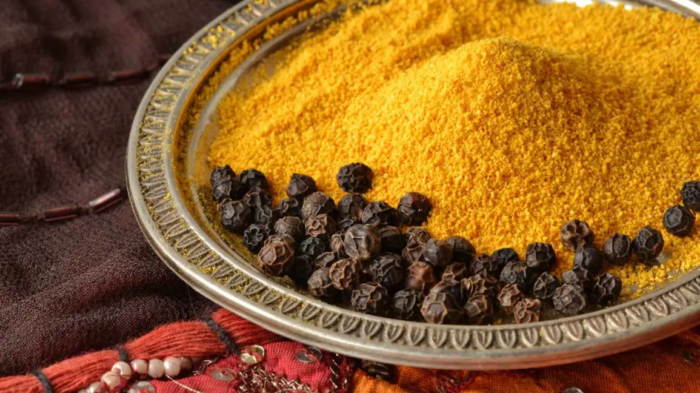
Among the most powerful natural remedies discovered by researchers in recent decades is the seemingly simple combination of turmeric (Curcuma longa) and black pepper. Taken together, these two ingredients enhance anti-inflammatory and antioxidant effects, becoming a true shield against chronic inflammation, pain, and premature aging. Below, we explore how this combination works, how to prepare it correctly, and what scientific studies say.
Benefits: How This Mixture Works in the Body
1. Reduction of Chronic Inflammation
Turmeric contains curcumin, an active compound with anti-inflammatory properties comparable to those of medications like ibuprofen, but without their side effects. However, curcumin has low bioavailability, meaning it is poorly absorbed by the body. This is where black pepper comes in, which contains piperine, a substance that increases the absorption of curcumin by up to 2000%.
This synergy makes it more effective in reducing inflammation in joints, intestines, and tissues. People suffering from arthritis, inflammatory digestive disorders, or muscle pain can benefit from this mixture naturally, without resorting to chemical analgesics.
2. Support for Liver Function and Detoxification
Curcumin stimulates bile production and supports the liver in detoxification processes. By combating oxidative stress and supporting the regeneration of liver cells, turmeric helps eliminate accumulated toxins. Piperine amplifies these effects, promoting deeper liver cleansing.
Regular consumption of this mixture can support bile drainage, reduce fat accumulation in the liver, and combat steatosis.
3. Improvement of Digestion and Reduction of Bloating
Both turmeric and black pepper have carminative action, meaning they reduce the formation of intestinal gas. Additionally, they stimulate digestive enzymes, contributing to better nutrient absorption. Turmeric protects the gastric mucosa, while piperine improves intestinal transit.
This remedy is useful in cases of dyspepsia, bloating, slow digestion, or irritable bowel syndrome.
4. Support for Immunity and Prevention of Infections
Curcumin also has antimicrobial effects, being active against certain bacteria, viruses, and fungi. In combination with piperine, its antiviral and antifungal activity is intensified. Therefore, this mixture is often used during the cold season to prevent colds and flu.
In the long term, it contributes to reducing oxidative stress, supporting cellular immunity, and protecting the body from recurrent infections.
5. Balancing Blood Sugar Levels
Several studies have shown that turmeric can reduce insulin resistance and help balance blood sugar levels. When taken with black pepper, the effects are amplified. This mixture is often used as an adjunct support for people with prediabetes or type 2 diabetes, but only with medical advice.
Piperine also contributes to reducing fat accumulation and improving glucose metabolism.
Scientific Studies: What Research Says
Study Published in Planta Medica: Influence of Piperine on the Pharmacokinetics of Curcumin in Animals and Human Volunteers
This study demonstrated that piperine increases the bioavailability of curcumin by 2000% in humans. In the absence of piperine, curcumin is rapidly metabolized and eliminated. When associated with black pepper, it is absorbed slowly and effectively, ensuring real therapeutic effects. These results laid the groundwork for the combined therapeutic use of these two spices.
Study Published in Biochemical Pharmacology: Curcumin: A Review of Anti-Cancer Properties
The authors concluded that turmeric, through curcumin, can inhibit inflammatory processes, angiogenesis, and cellular proliferation, being a potential adjunct in cancer prevention. The study emphasized that the effects are strongly enhanced by the presence of piperine.
Study Published in Journal of Traditional and Complementary Medicine: Combination of Curcumin and Piperine Enhances Bioavailability and Therapeutic Efficacy in Rheumatoid Arthritis
Research conducted on patients with rheumatoid arthritis showed a significant reduction in pain and joint stiffness after 8 weeks of regular consumption of the turmeric + black pepper combination, compared to the placebo group. The effects were comparable to those of anti-inflammatory medication, but without adverse reactions.
Recipe: Warm Water with Turmeric and Black Pepper
Ingredients:
- 250 ml warm water (not hot, 40-50°C)
- 1/2 teaspoon turmeric powder (organic)
- 1/8 teaspoon freshly ground black pepper
- (Optional) 1 teaspoon raw honey or a few drops of lemon juice
Preparation Method:
- Heat the water to about 45°C.
- Add the turmeric and mix well.
- Add the black pepper and mix again.
- If desired, add honey or lemon.
- Consume immediately, in the morning on an empty stomach or in the evening, 30 minutes before bedtime.
How to Consume and for How Long
- Frequency: Once a day, in courses of 21-30 days.
- Recommendation: Take a break of at least 10 days between courses.
- Precautions: Start with small doses (1/4 teaspoon turmeric) to test digestive tolerance.
Contraindications
- Pregnant or breastfeeding women: Not recommended without medical approval.
- People with gastric ulcers, duodenal ulcers, or severe gastritis: Turmeric may irritate the mucosa.
- Patients taking anticoagulants (e.g., Warfarin): There may be dangerous interactions.
- People with biliary disorders (stones, obstructions): Turmeric stimulates bile secretion.
- Children under 12 years old: Should be administered only with pediatric advice.
Nutritional Table for 1 Serving (250 ml Water + Turmeric + Black Pepper):
| Nutrient | Estimated Value |
|---|---|
| Calories | 12 kcal |
| Protein | 0.3 g |
| Fat | 0.2 g |
| Carbohydrates | 2.3 g |
| Fiber | 0.7 g |
| Iron | 1.2 mg |
| Manganese | 0.5 mg |
| Vitamin C | 0.3 mg |
| Curcumin | ~200 mg |
| Piperine | ~10 mg |




