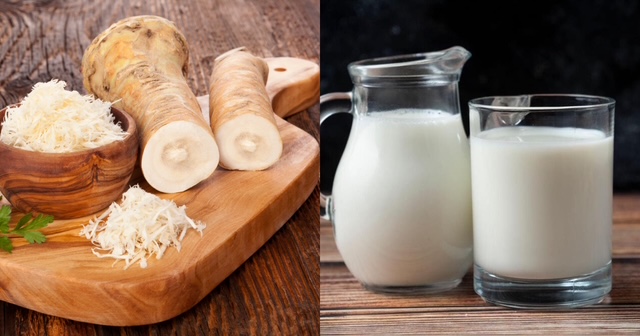
In Romanian folk medicine, there are simple yet surprisingly effective remedies passed down through generations. One of the most well-known is warm milk with grated horseradish, a natural remedy often used to soothe persistent coughs and support the respiratory system. Although it may seem like an unusual combination, the properties of these two ingredients work synergistically and can provide real support in cases of dry cough, bronchial congestion, or throat pain.
Ingredients
- 1 cup of warm milk (250 ml)
- 1 tablespoon of freshly grated horseradish (approx. 10-15 g)
- Optional: 1 tablespoon of honey (only after the milk has cooled slightly)
Preparation Method
- Heat the milk without boiling it.
- Add the grated horseradish and let it steep for 5-7 minutes.
- Strain the mixture, and if desired, add honey when the liquid is warm (below 40°C).
- Consume warm, 1-2 times a day, for 3-5 days.
Benefits of the Horseradish + Warm Milk Combination
1. Soothes Dry and Irritating Coughs
Horseradish contains compounds like sinigrin, which transform into isothiocyanates—substances with antibacterial and mucolytic effects. These help to thin mucus and clear the respiratory pathways. Warm milk has a soothing effect on the throat’s mucous membranes, reducing the burning sensation and irritation caused by coughing. The combination has a synergistic effect: horseradish stimulates the expulsion of secretions, while milk calms irritated tissues. Moreover, this remedy is particularly effective in the early stages of a cough, preventing the worsening of symptoms. It can also be used alongside conventional treatments, with a doctor’s approval.
2. Helps Clear Nasal Passages and Sinuses
The active substances in horseradish, especially the volatile oils, have a strong decongestant effect on the nasal passages and sinuses. Inhaling the vapors while drinking warm milk with horseradish can produce a similar effect to natural nasal sprays. These substances reduce inflammation of the nasal mucosa and promote sinus drainage, being useful in mild sinusitis or colds. On the other hand, the warmth of the milk helps to thin mucus, speeding up the healing process of the respiratory tract. Using the remedy in the evening can improve breathing during sleep.
3. Fights Bacterial Infections in the Throat
Isothiocyanates from horseradish have been studied for their antibacterial effects, particularly against streptococci—bacteria commonly involved in pharyngitis and tonsillitis. The combination with milk creates an environment that, while nutritious, acts indirectly by stimulating local immunity and calming irritation. Milk helps transport the active principles from horseradish to the throat’s mucosa, prolonging their effect. This combination is especially effective in mild forms of infection, sometimes avoiding the need for antibiotics. It can also be used as an adjunct in recovery from more severe infections.
4. Stimulates Respiratory Immunity
Horseradish is an important source of vitamin C and natural antioxidants. These compounds support the normal functioning of the immune system, especially during the cold season. Additionally, consuming milk provides a supply of proteins and essential amino acids, which contribute to cellular regeneration. Combining these foods supports the body’s natural defense mechanisms against viruses and bacteria. It is a remedy particularly recommended in the first days of a cold when the body needs a rapid and effective immune boost.
5. Relieves Throat Pain
Warm milk has a soothing effect on pain, while horseradish acts as a mild natural anti-inflammatory. This combination reduces the burning sensation, irritation, and difficulty swallowing. Due to its calcium and tryptophan content, milk supports the mineral balance of the mucous membranes, while horseradish, through its active compounds, stimulates local circulation. The effect achieved is one of soothing and regenerating the irritated tissue. Consuming it 1-2 times a day for a few days can bring significant relief without resorting to synthetic anti-inflammatories.
Study
A study published in the Journal of Applied Pharmaceutical Science analyzed the antimicrobial activity of horseradish extract against bacteria involved in respiratory infections. Researchers demonstrated that the isothiocyanates present in horseradish act effectively against strains of Staphylococcus aureus and Streptococcus pyogenes. In the study, alcoholic and aqueous extracts of horseradish were tested in the laboratory, yielding promising results regarding bacterial growth inhibition. The authors concluded that horseradish could serve as a viable natural alternative to conventional antimicrobial treatments. Although the research is in the preclinical stage, it provides important scientific support for the traditional use of horseradish in treating coughs and throat pain.
Nutritional Table (per 100 g of raw horseradish)
| Nutrient | Amount |
|---|---|
| Calories | 48 kcal |
| Protein | 1.2 g |
| Carbohydrates | 11 g |
| Sugars | 7.9 g |
| Dietary Fiber | 3.3 g |
| Fats | 0.7 g |
| Vitamin C | 24.9 mg (28% DV) |
| Calcium | 56 mg |
| Potassium | 246 mg |
| Iron | 0.4 mg |
Contraindications
- Gastritis or gastric ulcer – horseradish can irritate the stomach lining and worsen symptoms.
- Children under 5 years old – the spicy effect of horseradish is not well tolerated by young children.
- People with kidney conditions – excessive consumption can overload the kidneys.
- Pregnant or breastfeeding women – medical consultation is recommended before use.
- Food allergies – horseradish can trigger allergic reactions in some sensitive individuals.




