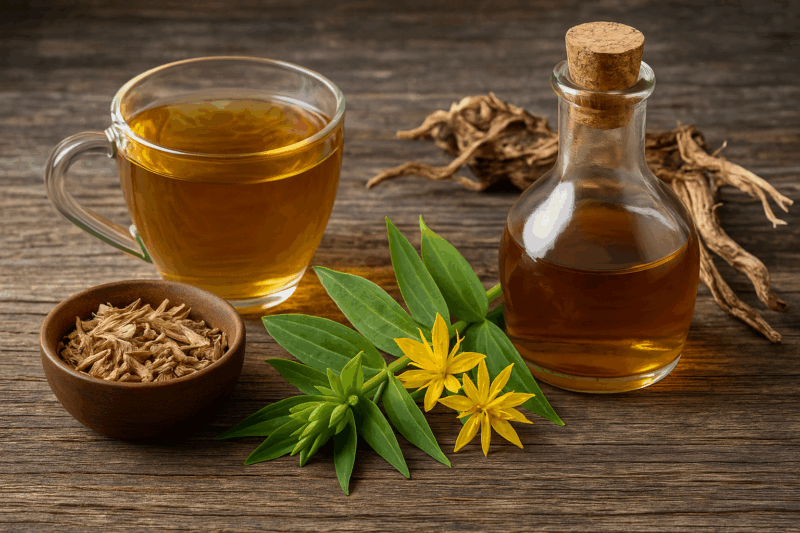
Maria Treben gave a special place to bitter plants, and among them, yellow gentian holds the top position. She wrote that this bitter root is a reliable aid for those with slow digestion, lack of appetite, tired liver, or lazy bile. Prepared correctly, gentian brings a rapid and visible revitalization of the body.
What Maria Treben said:
Gentian, this bitter root, is one of the best remedies for the stomach and liver. A teaspoon of tea before meals works wonders.
Maria Treben, Health from the Lord’s Pharmacy
Original Recipe from the Book
Gentian Tea
-
tablespoons of dried and crushed gentian root
-
250 ml cold water
Preparation:
The root is left to macerate in cold water for 8-10 hours, then it is gently heated and strained.
Administration:
-
Drink a small cup before main meals (lunch and dinner).
-
A course of 2-3 weeks is recommended, with breaks in between.
Benefits
Gentian:
-
Contains gentianine and amarogentin, among the most bitter natural substances known.
-
Stimulates gastric, pancreatic, and bile secretion.
-
Reduces appetite, being used in cases of unexplained weight loss or convalescence.
-
Supports the liver in detoxification and alleviates the feeling of nausea after meals.
-
Useful in bloating, biliary dyskinesia, and lack of digestive energy.
What do modern studies say?
-
Journal of Ethnopharmacology (2015): gentian stimulates the secretion of digestive juices by activating bitter taste receptors.
-
Phytochemistry Reviews (2013): bitter compounds from gentian root have hepatoprotective and choleretic effects.
-
Planta Medica (2010): gentian has demonstrated anti-inflammatory effects on the gastric mucosa.
Contraindications
-
Not to be administered in case of gastric or duodenal ulcers.
-
Contraindicated for pregnant women.
-
Should not be combined with medications that increase gastric secretion.
-
Should only be used in recommended quantities; large doses can cause nausea and abdominal pain.
Sources:
-
Maria Treben – Health from the Lord’s Pharmacy
-
Journal of Ethnopharmacology, Gentiana lutea and its digestive activity
-
Planta Medica, Anti-inflammatory potential of Gentiana lutea
-
Phytochemistry Reviews, Bitter iridoids and xanthones from Gentiana species




