The liver is a vital organ in the human body responsible for detoxifying the body, synthesizing proteins, and storing nutrients. Despite its regenerative capacity, the liver can be affected by various factors such as poor diet, excessive alcohol consumption, pollution, and stress. Liver diseases, such as cirrhosis and hepatitis, can have serious consequences for overall health.
In the fight against liver diseases and to maintain liver health, medicinal plants have played an important role throughout history. Certain plants have been recognized for their hepatoprotective properties and their ability to improve liver functions. In this article, we will focus on three beneficial plants for liver health:
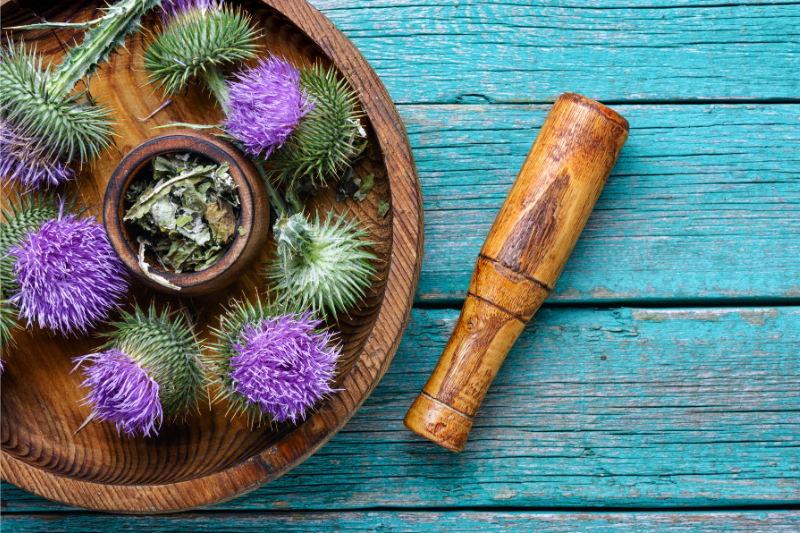
1. Milk Thistle (Silybum marianum)
Benefits for the liver:
Milk thistle, also known as silymarin, is recognized for its ability to support liver health. The main active substance in milk thistle is silymarin, a complex of flavonoids with strong hepatoprotective properties. Silymarin acts as a powerful antioxidant, protecting liver cells from oxidative damage caused by free radicals. It also aids in the regeneration of liver cells and can improve overall liver function. Milk thistle is often used to help treat liver conditions such as cirrhosis and hepatitis.
How to prepare and consume:
To benefit from the properties of milk thistle, you can prepare a tea from its seeds. Add a tablespoon of milk thistle seeds to a cup of boiling water and let it steep for 10-15 minutes. Drink milk thistle tea two or three times a day to support liver health. Additionally, milk thistle supplements are available in various forms, including capsules and liquid extracts.
2. Turmeric (Curcuma longa)
Benefits for the liver:
Turmeric, a plant from the ginger family, is recognized for its active compound, curcumin. Curcumin has strong antioxidant and anti-inflammatory properties, which are beneficial for liver health. It helps reduce liver inflammation and protects liver cells from oxidative damage. Additionally, curcumin can improve bile flow, facilitating the elimination of toxins from the liver and stimulating liver function.
How to prepare and consume:
To incorporate turmeric into your diet, you can use ground turmeric in various culinary preparations, such as curries, soups, and smoothies. You can also prepare tea or take turmeric supplements in the form of capsules or powder. To maximize the absorption of curcumin in the body, it is recommended to combine turmeric with a little black pepper.
3. Ginger (Zingiber officinale)
Benefits for the liver:
Ginger is an aromatic root with multiple health benefits, including for the liver. The main active compounds in ginger, gingerols and shogaols, have strong antioxidant and anti-inflammatory properties that help protect liver cells and reduce liver inflammation. Additionally, ginger can stimulate bile secretion and help eliminate toxins from the liver.
How to prepare and consume:
Ginger can be added to various culinary preparations or consumed as tea. To prepare ginger tea, slice a small piece of ginger root into thin slices and add them to a cup of boiling water. Let it steep for 5-10 minutes, then strain and drink. You can also take ginger supplements in the form of capsules or powder.
These plants are often used in traditional and alternative medicine to support liver health. However, it is important to always discuss with your doctor, especially if you have pre-existing medical conditions or are taking other medications.
3 Medicinal Plants for Protecting and Restoring Liver Health
29




