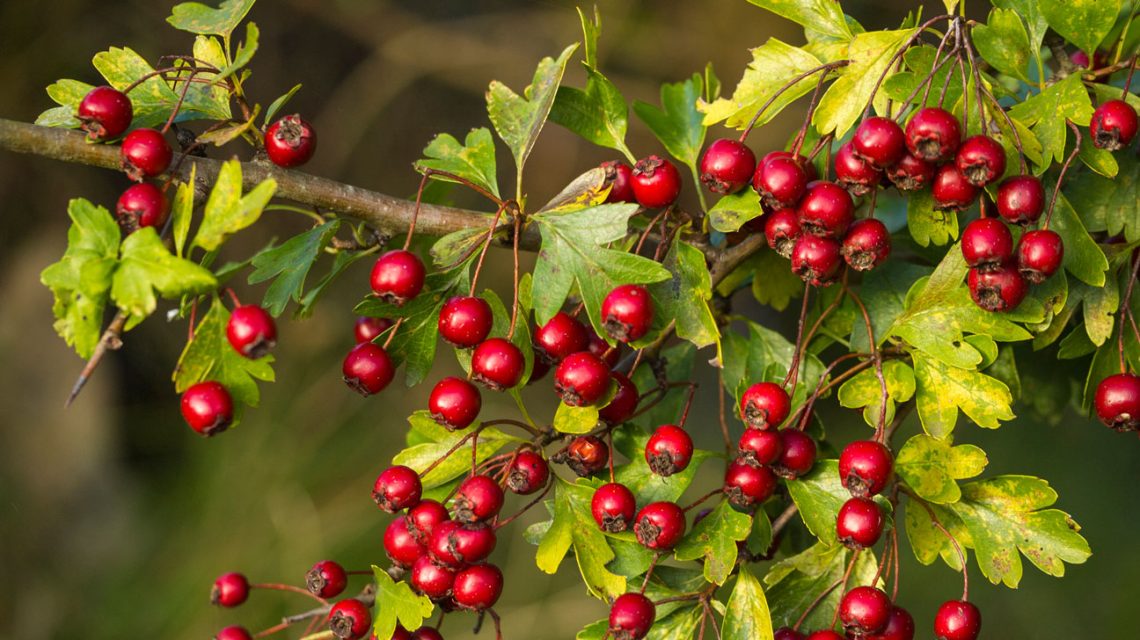
Hawthorn is often referred to as the heart plant due to its various cardio-protective abilities. Valued for its capacity to protect both the emotional and physical heart, hawthorn berries have been used for centuries as a natural remedy for various serious heart issues. These include angina pectoris, high blood pressure, arterial strengthening, irregular heartbeats, and even congestive heart failure.
In fact, hawthorn has been used to treat heart diseases since the first century!
The fruits, leaves, and flowers of hawthorn are all used today for medicinal purposes. The hawthorn fruits appear as small red berries. Native American tribes enjoyed eating them and used hawthorn to treat heart problems as well as gastrointestinal issues.
What makes hawthorn fruits so beneficial for health? It seems to be the numerous flavonoids they contain. Flavonoids are powerful antioxidants known to effectively reduce inflammation while boosting immune function. A diet rich in foods, drinks, and herbs high in flavonoids has been linked to the prevention of cardiovascular and neurodegenerative diseases, as well as cancer.
The hawthorn plant is packed with beneficial compounds for health. These compounds have been shown to genuinely improve heart health. The antioxidant flavonoids found in hawthorn enhance blood flow, protect against damage to blood vessels, and even help dilate blood vessels.
These flavonoids include OPCs. What are OPCs? OPC stands for oligomeric proanthocyanidins. OPCs are among the most widespread polyphenolic substances found in plants.
Here are just a few of the many chemical compounds and nutrients found in hawthorn:
- Flavonoids, including hyperoside
- Quercetin
- Vitexin
- Rutin
- Pentacyclic triterpenes
- Acacic acid
- Neotegolic acid
- Choline
- Acetylcholine
- Chlorogenic acid
- Caffeic acid
- Vitamin B1
- Vitamin B2
- Vitamin C
- Calcium
- Iron
- Phosphorus
Health Benefits
1. Major Heart Benefits
Hawthorn berries are best known for their beneficial tonifying effects on the heart. As a cardiotonic plant, hawthorn has proven to be impressively useful for various serious heart issues. These include heart failure, heart disease, angina pectoris, heart rhythm changes, and atherosclerosis. According to a study published in the journal Current Medicinal Chemistry, the strong benefits of hawthorn for the heart come from its high content of polyphenolic acids.
To date, research has shown that hawthorn may even have a beneficial effect on congestive heart failure (CHF). Several studies have indicated that supplementation with hawthorn has led to improvements in heart function based on a number of parameters. These parameters include blood pressure, heart rate, cardiac output, and exercise tolerance.
2. Blood Pressure
The fruits, flowers, and leaves of hawthorn are recommended as natural blood pressure reducers.
3. Chest Pain (Angina Pectoris) and Heart Pain
Reduced blood flow to the heart causes chest pain known as angina. Sometimes it is confused with indigestion. However, true angina can be a symptom of coronary artery disease. To date, research shows that hawthorn may be an effective natural remedy for preventing and treating angina pectoris.
According to a scientific article published in the Journal of Herbal Medicine and Toxicology, the bioflavonoids in hawthorn help dilate both peripheral and coronary blood vessels. This can improve blood flow to the heart, making hawthorn very useful for angina. It is also believed that the proanthocyanidins in hawthorn reduce the tension in the walls of blood vessels. Again, this is very helpful in discouraging angina pectoris.
4. High Cholesterol
Animal studies have shown that hawthorn fruit extract can be a useful natural remedy for reducing LDL (bad) cholesterol in the body. In China, hawthorn is called Shan-Zha. A study using animal subjects showed some truly impressive results from an ethanol extract of hawthorn Zhongtian, a wild variety of Shan-Zha that has larger hawthorn fruits.
This study revealed that the hawthorn fruit extract not only reduced overall high cholesterol levels but also significantly lowered LDL cholesterol, liver cholesterol, triglycerides, and body weight.
5. General Health Booster
Scientific research has shown that hawthorn fruit extract is excellent in reducing inflammation. This is huge for health, as we know that inflammation is at the root of most diseases.
Additionally, research shows that hawthorn berry extract is an enemy of free radicals. This is extremely beneficial for human health, as free radicals can cause cellular damage (including DNA damage) by stealing electrons through a process called oxidation.
Interesting Facts About Hawthorn
- The leaves, fruits, and flowers of hawthorn are all used for medicinal purposes.
- Species of Crataegus, such as hawthorn, are native to temperate regions of North America and Europe.
- Hawthorn has flowers that grow in small clusters of white, red, or pink.
- When Jesus was crucified, the crown of thorns on his head is believed to have been made from hawthorn.
- Early records indicate that hawthorn was a symbol of love.
- The sweet and tart red berries of the hawthorn plant are used to make jams, jellies, wines, and cordials.
- Many species of hawthorn are used to make bonsai trees.
How to Use
How can you incorporate hawthorn fruits into your diet? There are several options. You can opt for hawthorn fruit tea. Dried hawthorn berries can often be purchased in the bulk section of many health food stores. You can also take a hawthorn supplement in capsule form or a hawthorn extract in liquid tincture form.
So far, safe dosages of hawthorn seem to be between 160 and 1,800 milligrams per day for a period of three to 24 weeks. Visible improvement of symptoms may take up to 12 weeks.
Side Effects and Drug Interactions
You should not take hawthorn if you are pregnant or breastfeeding. Do not give hawthorn products to small children. Hawthorn supplementation is recommended for short-term use by adults. If any symptoms worsen when taking hawthorn, you should discontinue use and seek emergency medical assistance.
For some users, hawthorn may cause nausea, upset stomach, fatigue, sweating, headaches, dizziness, palpitations, nosebleeds, insomnia, agitation, and other adverse reactions.
While hawthorn is known for its heart benefits, it may interact with prescribed medications for heart conditions.
Medications for heart problems and high blood pressure are known to interact with hawthorn. Some specific medications that may interact with hawthorn include digoxin, beta-blockers, calcium channel blockers (CCBs), nitrates, phenylephrine, and phosphodiesterase-5 inhibitors. If you have heart disease or any other health condition or are currently taking medications, consult your doctor before taking a hawthorn fruit product or any other hawthorn supplement.
It is also important to note that heart failure is a very serious health condition. It is best not to self-treat with hawthorn supplements if you suffer from this condition.




