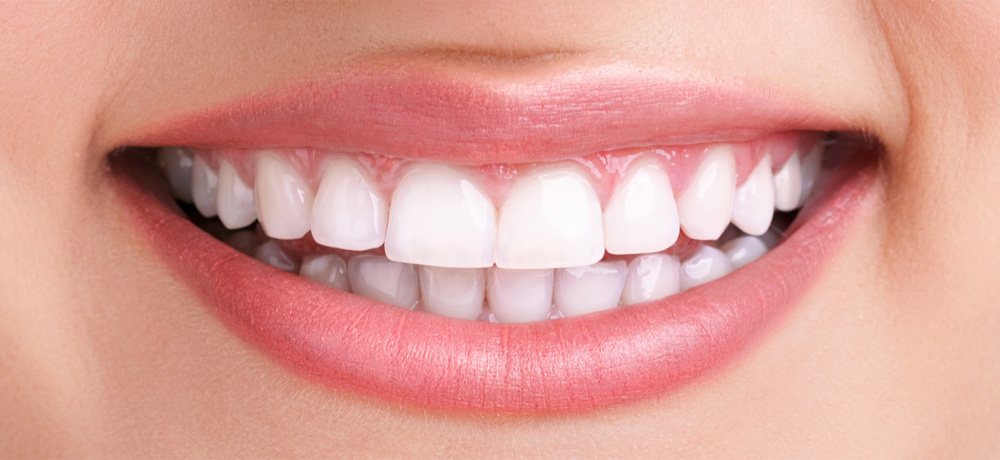
There are plenty of products to choose from when it comes to teeth whitening.
However, most whitening products use chemical substances to whiten teeth.
If you want whiter teeth but also want to avoid chemicals, this article lists many options that are both natural and safe.
What Makes Teeth Look Yellow?
Many factors cause teeth to lose their bright white shine.
Certain foods can stain the enamel, which is the outermost layer of the teeth. Additionally, the buildup of plaque on your teeth can make them appear yellow.
This type of discoloration can usually be treated with regular cleaning and whitening remedies.
However, sometimes teeth appear yellow because the hard enamel has eroded, revealing the underlying dentin. Dentin is a naturally yellow, bony tissue that lies beneath the enamel.
Here are 5 simple ways to naturally whiten your teeth:
1. Brushing with Baking Soda
Baking soda has natural whitening properties, which is why it is a popular ingredient in commercial toothpaste.
It is a mild abrasive that can help remove surface stains from teeth.
Additionally, baking soda creates an alkaline environment in the mouth, which prevents the growth of bacteria.
This is not a remedy that will whiten your teeth overnight, but you should notice a difference in the appearance of your teeth over time.
Research has not yet proven that brushing with plain baking soda will whiten teeth, but several studies show that toothpaste containing baking soda has a significant whitening effect.
One study found that toothpaste containing baking soda was significantly more effective at removing yellow stains from teeth than standard toothpaste without baking soda. The higher the concentration of baking soda, the greater the effect.
Furthermore, a review of five studies found that toothpaste containing baking soda removed plaque from teeth more effectively than toothpaste that did not contain baking soda.
To use this remedy, mix 1 tablespoon of baking soda with 2 tablespoons of water and brush your teeth with the paste. You can do this a few times a week.
You can buy baking soda at a grocery store or find it online.
2. Using Hydrogen Peroxide
Hydrogen peroxide is a natural whitening agent that also kills bacteria in the mouth.
In fact, people have been using hydrogen peroxide for years to disinfect wounds due to its ability to kill bacteria.
Many commercial whitening products contain hydrogen peroxide, although at a much higher concentration than you would use.
Unfortunately, no studies have investigated the effects of rinsing or brushing solely with hydrogen peroxide, but several studies have analyzed commercial toothpaste that contains peroxide.
One study found that a toothpaste containing baking soda and 1% hydrogen peroxide resulted in significantly whiter teeth.
Another study found that brushing with a commercial toothpaste containing baking soda and peroxide twice a day led to 62% whiter teeth in 6 weeks.
However, there are some concerns regarding the safety of hydrogen peroxide.
While strongly diluted concentrations seem safe, strong concentrations or excessive use can cause gum irritation and tooth sensitivity. There are also concerns that high doses may cause cancer, but this has not been proven.
One way to use hydrogen peroxide is to rinse your mouth before brushing your teeth. Make sure to use a 1.5% or 3% solution to avoid side effects.
The most common concentration of hydrogen peroxide at the pharmacy is a 3% solution. You can dilute this concentration to 1.5% by mixing equal parts hydrogen peroxide and water.
Another way to use hydrogen peroxide is to mix it with baking soda to make a toothpaste. Combine 2 tablespoons of hydrogen peroxide with 1 tablespoon of baking soda and gently brush your teeth with the mixture.
Limit the use of this homemade paste to a few times a week, as excessive use can erode tooth enamel.
3. Eating Fruits and Vegetables
A diet rich in fruits and vegetables can be good for both your body and your teeth.
While they are not substitutes for brushing, crunchy and raw fruits and vegetables can help scrub plaque while you chew.
Strawberries and pineapples are two fruits that are claimed to help whiten teeth.
Strawberries
Whitening teeth with a mixture of strawberries and baking soda is a natural remedy popularized by celebrities.
Proponents of this method claim that the malic acid found in strawberries will remove tooth discoloration, while baking soda will scrub away stains.
However, this remedy has not been fully supported by science.
While strawberries may help exfoliate your teeth and make them appear whiter, it is unlikely they will penetrate stains on teeth.
A recent study found that a mixture of strawberries and baking soda produced very little color change in teeth compared to commercial whitening products.
If you decide to try this method, limit its use to a few times a week.
Despite studies showing that a strawberry and baking soda paste had minimal effect on tooth enamel, excessive use could cause damage.
To use this remedy, mash a fresh strawberry, combine it with baking soda, and brush your teeth with the mixture.
Pineapple
Some claim that pineapple can whiten teeth.
One study found that a toothpaste containing bromelain, an enzyme found in pineapple, was significantly more effective at removing stains from teeth than standard toothpaste.
However, there is no evidence that consuming pineapple produces the same effect.
4. Prevent Tooth Stains Before They Happen
While teeth naturally yellow as you age, certain things can help prevent stains on teeth.
Limit colored foods and drinks
Coffee, red wine, soda, and dark berries are notorious for staining teeth.
This doesn’t mean you have to avoid them completely, but you should limit the time these substances are in contact with your teeth.
If possible, drink beverages known to stain teeth through a straw to prevent direct contact with your teeth.
Additionally, brush your teeth shortly after consuming any of these foods or drinks to limit their effects on tooth color.
Also, avoid smoking and chewing tobacco, as both can cause tooth discoloration.
Limit sugar intake
If you want whiter teeth, reduce your sugar intake.
A diet high in sugar promotes the growth of Streptococcus mutans, the main type of bacteria that causes plaque and gingivitis.
When consuming a sugary food, make sure to brush your teeth shortly afterward.
Get plenty of calcium in your diet
Some tooth discoloration is caused by the erosion of enamel and exposure of the underlying dentin, which is yellow. Therefore, anything you do to strengthen your tooth enamel will help keep your teeth white.
Calcium-rich foods, such as milk, cheese, and broccoli, can help protect your teeth from enamel erosion.
5. Don’t Underestimate the Value of Brushing and Flossing
While some tooth discoloration comes naturally with age, it is largely the result of plaque buildup.
Regular brushing and flossing can help keep your teeth white by reducing bacteria in the mouth and preventing plaque buildup.
Toothpaste gently scrubs away stains from teeth, while floss removes bacteria that lead to plaque.
Regular dental check-ups can also help you keep your teeth clean and white.
Other Unproven Methods
There are several other natural teeth whitening methods, but there is no scientific evidence to prove that they are safe or effective.
Some of the unproven methods include:
Activated charcoal. Brushing with activated charcoal is said to draw toxins from the mouth and remove stains from teeth.
Kaolin clay. Proponents of this method claim that brushing with clay helps remove stains from teeth.
Fruit peels. Rubbing orange, lemon, or banana peels on teeth is claimed to make them whiter.
Apple cider vinegar. There is no evidence that using vinegar as a mouthwash helps whiten teeth. On the contrary, it weakens enamel and promotes tooth decay.
Proponents of these methods claim they make teeth significantly whiter, but no studies have evaluated their effectiveness. This also means they have not been tested for side effects when used on teeth.