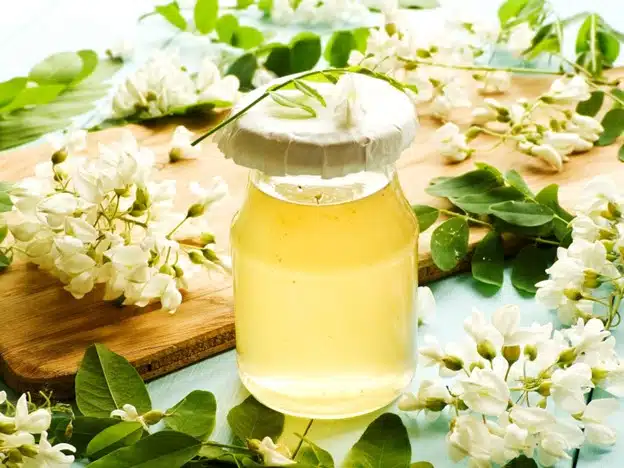
The flowers of the black locust (Robinia pseudoacacia), with their delicate fragrance and calming properties, have been used since ancient times in natural remedies for muscle, nerve, and joint pain. One of the most effective preparations is medicinal oil from acacia flowers, especially valued for relieving back pain and local inflammation. Here’s how to prepare it correctly, how it works, and when to avoid it.
Necessary Ingredients
- 1 glass jar (500 ml)
- Fresh acacia flowers (only fully bloomed flowers, no leaves or twigs)
- Cold-pressed oil (preferably extra virgin olive oil or organic sunflower oil)
Step-by-Step Recipe
- Gathering the flowers
Collect them in May-June, on sunny days, only the fully bloomed flowers, without spots or signs of insects. Leave them for 2-3 hours in the shade on paper to allow insects to escape. - Partial drying (optional but recommended)
To avoid fermentation, the flowers can be left to air for 24 hours in a thin layer, in a ventilated place, away from direct sunlight. - Preparing the oil
- Fill the jar three-quarters full with acacia flowers.
- Pour the oil over them until they are completely covered.
- Seal tightly and let it macreate for 2-3 weeks in a warm, dark place, shaking the jar daily.
- Straining and storage
After maceration, strain through cheesecloth or a fine sieve and store in dark glass bottles in a cool place. It can be used for up to 6 months.
How Acacia Flower Oil Works
Relieving Back Pain
The oil penetrates the tissues and reduces muscle tension and local inflammation. It is effective for lower back pain, muscle contractions, early disc herniation, or rheumatic pain.
Neuromuscular Relaxation
It contains compounds with mild sedative and antispasmodic effects (such as flavonoids and tannins), which help relax tense areas.
Slowing Inflammatory Processes
When applied regularly, it reduces local swelling and the sensation of burning or pressure, due to the gentle anti-inflammatory action of the flowers.
How to Use It
- Local massage: Apply a small amount of oil to the painful area and gently massage for 10-15 minutes, twice a day.
- Compresses: Soak a clean cloth in slightly warm oil and apply it to the back for 20 minutes, covering with plastic wrap and a towel.
- After a warm bath: For enhanced effect, apply after a relaxing bath when the skin pores are open.
Contraindications and Precautions
- Allergies to acacia: Avoid use if you know you have allergic reactions to acacia pollen or flowers.
- Pregnancy and breastfeeding: Frequent external use during these periods is not recommended without medical approval.
- Open wounds: Do not apply to injured skin, burns, or severe inflammation without medical advice.
- Children: Use only under supervision, in small doses.
Sources:
- Journal of Medicinal Plants Research: Phytochemical Composition and Antioxidant Properties of Robinia pseudoacacia Flowers
- Fitoterapia: Evaluation of Analgesic and Anti-inflammatory Activities of Selected Traditional Plants
- Planta Medica: Traditional Uses of Robinia pseudoacacia in European Herbal Medicine




