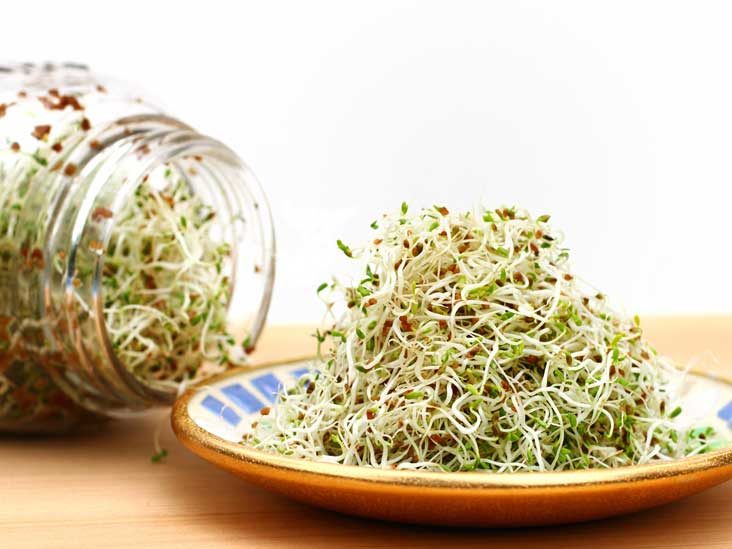
Studies show that due to their ability to fight free radicals, alfalfa sprouts can combat two of the most common health issues: cancer and diabetes.
Let’s find out how these sprouts can help prevent chronic diseases, along with all the other impressive benefits of alfalfa sprouts.
What are alfalfa sprouts?
Alfalfa sprouts come from the germinated seeds of the Medicago sativa plant. They are nutritious additions to many meals, including salads, soups, and sandwiches.
When alfalfa seeds germinate, they create shoots, which are then harvested before the plant fully matures.
Research has shown that sprouts are packed with many of the same nutrients found in seeds, but they are actually even healthier because the sprouting process unlocks many nutrients and enzymes.
Germinated seeds contain more bioavailable proteins, carbohydrates, vitamins, and minerals, as well as a lower proportion of starch compared to ungerminated seeds. The starches inside the seeds are converted into simple sugars once they are sprouted, making them easier to digest.
How long have people been eating sprouts?
The practice of sprouting seeds dates back 5,000 years when Chinese physicians used sprouts for medicinal purposes. In the 1700s, sailors discovered the ability of sprouts to prevent scurvy, which was the most common cause of death on long voyages.
During World War II, Dr. Clive McCay, a nutrition professor at Cornell University in the United States, introduced the idea of sprouts into Western food culture. During the war, McKay and his research team established that bean sprouts were a source of nutritious food that was easy to grow.
It’s amazing to think how valuable this discovery was at a time when resources were scarce and the need for nutritious food was high.
The alfalfa plant itself also has a long and rich history. We usually think of alfalfa as a plant used for animal feed, but it offers many benefits to humans as well.
Alfalfa is high in vitamins and is sometimes used as a nutritional supplement.
Nutritional Information
Are alfalfa sprouts a superfood? Many experts would say they are.
They provide a range of phytonutrients, such as phenolic compounds, isoflavones (especially daidzein and genistein), and saponins, as well as some vitamins and minerals, such as vitamin K and vitamin C.
This makes these sprouts a functional food, meaning they positively affect human health beyond basic nutrition. They are also animal feed for the same reasons, as they can promote growth, development, and digestive health.
They even contain some proteins (amino acids) and small amounts of healthy fats, such as omega-3.
100 grams of sprouted alfalfa seeds contain approximately:
23 calories
2.1 grams of carbohydrates
3.99 grams of protein
0.69 grams of fat
1.9 grams of fiber
30.5 micrograms of vitamin K (38% DV)
8.2 milligrams of vitamin C (14% DV)
36 micrograms of folate (9% DV)
0.2 milligrams of manganese (9% DV)
0.2 milligrams of copper (8% DV)
70 milligrams of phosphorus (7% DV)
27 milligrams of magnesium (7% DV)
0.1 milligrams of riboflavin (7% DV)
0.9 milligrams of zinc (6% DV)
1 milligram of iron (5% DV)
0.1 milligrams of thiamine (5% DV)
155 IU of vitamin A (3% DV)
Health Benefits
What are the benefits of consuming alfalfa sprouts? Here are more than eight reasons why incorporating alfalfa sprouts into your diet can benefit your immune system, heart, hormones, and more.
1. May help reduce the risk of certain types of cancer
Sprouts in general have free radical scavenging effects, which help protect against cancer formation.
Alfalfa sprouts are an excellent source of antioxidants, as well as isoflavones and other phytoestrogens, which are plant compounds that mimic human estrogen. Studies on the consumption of foods high in isoflavones have shown positive results in reducing the risk of death and recurrence in people with breast cancer.
The Nutrition Journal in the United States detailed some of the ways nutrition can reduce cancer, including nutrients from alfalfa sprouts and raw sprouts, by providing sulforaphane, chlorophyll, and antioxidants such as carotenoids and terpenes—especially types called medicarpin, melilotocarpan, millepurpan, tricin, and chrysoeriol—which induce apoptosis, a process that kills cancer cells and prevents tumor growth.
Additionally, there is evidence suggesting that polysaccharides (types of carbohydrates) and fibers found in alfalfa sprouts may have immune-protective effects, making sprouts potential pharmaceutical agents or functional foods.
2. Helps minimize menopause and premenstrual symptoms
Due to their high levels of vitamin K and phytoestrogens, the benefits of alfalfa sprouts include helping women minimize symptoms related to menopause as well as premenstrual syndrome.
Vitamin K is a vitamin that helps with blood clotting, so it may assist with excessive bleeding and cramps. The general anti-inflammatory effects of sprouts may also help reproductive health, potentially limiting some side effects such as mood swings and pain.
3. May help prevent osteoporosis
Vitamin K is essential for bone formation, which is why it is crucial in preventing and even helping to treat osteoporosis. The body needs vitamin K to properly utilize calcium, which strengthens bones and prevents fractures.
Alfalfa sprouts also contain manganese, an essential nutrient in preventing osteoporosis and inflammation. Overall, the nutrition from alfalfa sprouts provides many nutrients (such as fiber, protein, minerals, vitamins, and phenolic compounds) that help promote a healthy body composition and healthy aging.
4. May lower blood glucose levels and help manage diabetes
While there is no cure for diabetes, managing the disease naturally can be achieved through a diabetic diet. A 2015 study published in the Pakistan Journal of Pharmaceutical Sciences found that alfalfa sprouts are a successful anti-diabetic due to their ability to lower blood glucose levels.
Regulating blood sugar levels is essential in managing diabetes, and incorporating foods like alfalfa sprouts helps reduce insulin dependence.
5. Packed with antioxidants and anti-aging agents
Alfalfa sprouts are a proven food with a high content of antioxidants, which help protect our cells from damage caused by free radicals. Antioxidants and bioactive compounds found in sprouts promote better health and can prevent a range of diseases, including cancer and heart disease.
A study in the American Journal of Clinical Nutrition showed that the vitamin K levels in alfalfa sprouts not only combat vitamin K deficiency but also help prevent age-related diseases, including cancer, arterial hardening, bone loss, and more.
6. May help combat cholesterol
Alfalfa sprouts are a successful anti-hyperlipidemic, meaning they help reduce lipid levels in the blood. Lowering lipid levels can have an effect on reducing symptoms of coronary artery disease caused by high cholesterol.
A 1978 study conducted on monkeys showed that adding alfalfa to their diets reduced the negative effects of cholesterol, proving that alfalfa is one of the best foods for lowering cholesterol.
7. Great additional source of vitamin C
A large serving of alfalfa sprouts can provide up to 14% of the daily recommended value of vitamin C, a vitamin that benefits immune function, skin health, and more. Since vitamin C is water-soluble, we need to replenish our intake through diet.
8. May help with digestion and milk supply
Although more research is needed, many communities believe that alfalfa sprouts can also increase milk supply in breastfeeding mothers. There is also evidence that this plant can help treat kidney and bladder issues and may assist with stomach disorders, asthma, and arthritis.
How to Buy and Grow
Buying and Using:
Alfalfa sprouts are readily available in most supermarkets. When choosing them, look for freshness in the roots and stems. They should smell fresh and clean and appear bright green without dark spots.
Make sure to rinse them well when you bring them home and store the sprouts in the refrigerator. If they start to smell moldy, do not consume them.
Growing at Home
Growing alfalfa sprouts at home is easy and fun, and there are several ways to do it in the comfort of your own home.
First, make sure to buy organic seeds that have not been treated with fungicides or other chemicals. You should only use seeds intended for sprouting.
You can grow them in a jar, a clay tray, or other containers.
North Carolina State University recommends this method for growing sprouts at home:
Rinse the seeds (about 50 grams) and soak them in warm water for 6 to 8 hours or overnight at room temperature.
Then, place the seeds in a jar covered with cheesecloth after the soaking process.
Continue to keep the seeds moist by rinsing them with water at least 2 to 3 times a day. Rinsing can be done once early in the morning and again before going to bed at night. It helps to swirl the jar (container) during each rinse to allow the sprouts to grow until they are 5-10 cm long and ready to eat.
For best results, use only non-chlorinated water, such as spring water, well water, or distilled water, as chlorine in tap water can cause poor germination. Sprouting is best done at 21 to 26 degrees Celsius in a dark place. It will take 3 to 7 days to obtain mature sprouts, depending on the temperature.
Place the mature sprouts in a container filled with water and rinse to remove the seed hulls and fibrous roots. The seed hulls will float while the seed shoots will sink to the bottom. Gently remove the seed hulls by hand or with a fine mesh strainer. Let the sprouts drain.
Sprouts are best when used immediately after rinsing, but they can be stored for a few days in the refrigerator in sealed glass or plastic containers or freezer bags.
The size of mature sprouts can vary. Allowing the sprouts to grow too much (over 10 cm) can make them bitter.
How to Use:
Alfalfa sprouts can be added to almost any meal. For example, they are commonly found in Asian dishes, usually added to soups, on top of sandwiches, and in salads.
Risks and Side Effects
Alfalfa is generally well tolerated and is recognized as safe.
Although they are nutritious and easy to grow, there are some precautions that come with these seed sprouts, as they can be a perfect breeding ground for bacteria in some cases.
Sprouts have a reputation for being associated with certain foodborne illnesses. Because they are consumed raw or lightly cooked, they carry a risk of harboring harmful bacteria that can cause illness in some cases, although the risk is relatively low.
Sprouts require a warm and moist environment to grow, which is also the ideal environment for bacteria to thrive.
The bacterial issue with sprouts usually begins with the seeds. There are several techniques to kill harmful elements on alfalfa seeds, but nothing has been proven to eliminate all bacteria.
Additionally, growing sprouts at home does not guarantee they are safer, as the issue lies in the seeds.
It is recommended that children, the elderly, and individuals with weakened immune systems avoid consuming raw sprouts.
Also, due to the high levels of vitamin K, individuals taking blood thinners should avoid alfalfa sprouts.
There are concerns about how the levels of canavanine found in alfalfa sprouts affect the human body, especially the immune system. There is a warning regarding alfalfa sprouts for those suffering from autoimmune diseases: Alfalfa may cause the immune system to become more active, which could exacerbate symptoms of autoimmune diseases. There are two case reports of patients with lupus who experienced a flare-up after consuming alfalfa seed products long-term. If you have an autoimmune condition, it is best to avoid using alfalfa until more is known.
More studies are needed to determine exactly how and why certain disorders are affected by alfalfa sprouts, but the following individuals should avoid alfalfa sprouts until more is known:
Diabetics who are using other herbal supplements and medications known to lower blood sugar
Individuals using medications that increase sensitivity to sunlight
People using immunosuppressants
Conditions of estrogen sensitivity




