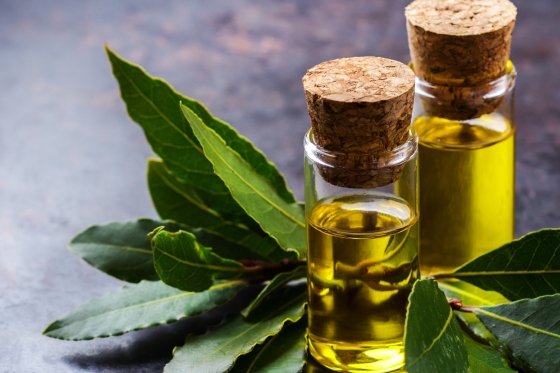
Bay leaf, known primarily as a flavorful ingredient in cooking, hides behind its aroma remarkable therapeutic properties. When combined with a cold-pressed vegetable oil, bay leaf becomes a valuable ally for digestive health and deep relaxation of the abdomen. The resulting preparation has been used for generations in abdominal massages, with anti-inflammatory, antispasmodic, and carminative effects.
Benefits of Bay Leaf Oil
1. Supports slow digestion and bloating
Bay leaf contains eugenol, cineole, and lauric acid—compounds that stimulate the secretion of gastric juices and calm the gastrointestinal tract. When used as an oil applied to the abdomen, it acts directly on the smooth muscles of the intestines, reducing cramps, eliminating gas, and facilitating transit.
2. Local anti-inflammatory for abdominal colic
Due to its content of linalool and flavonoids, bay leaf oil reduces inflammation in internal organs and calms discomfort caused by conditions such as colitis or irritable bowel syndrome.
3. Improves liver and gallbladder function
Through regular massage with bay leaf oil in the liver and gallbladder area, it promotes bile drainage and gentle hepatic detoxification. Its choleretic action (stimulating bile secretion) is supported by studies that attest to the beneficial effect of bay leaf on digestive functions.
4. Calming and muscle relaxing effect
Applied warm to the abdominal area, this oil helps to deeply relax the tense muscles in the stomach area, especially during periods of stress or after heavy meals. It is also effective in cases of menstrual pain.
Recipe: How to Prepare Bay Leaf Oil
Ingredients:
-
10 dried bay leaves (or 15 if fresh)
-
200 ml extra virgin olive oil (or grape seed oil)
-
Glass jar with a lid
Preparation method:
-
Gently crush the bay leaves between your fingers to release the essential oils.
-
Place them in the jar and pour the oil over them.
-
Let it macerate for 10 days in a warm, dark place, shaking daily.
-
After maceration, strain the oil through a fine sieve or cheesecloth and store it in a dark glass bottle.
For a more intense effect, you can warm the oil in a water bath for 30 minutes before straining.
Usage: Abdominal Massage and Digestion
-
Daily abdominal massage (after meals or in the evening): apply 1-2 tablespoons of warm oil to the abdomen and massage with circular motions for 10 minutes.
-
To stimulate digestion: gently massage the stomach area, then cover with a warm water bottle for 15-20 minutes.
-
In case of bloating or cramps: apply the oil to the abdomen and perform a gentle massage in a clockwise direction.
-
For children over 7 years: it can be applied in reduced amounts, only if there are no allergies.
Contraindications and Precautions
-
Do not apply to irritated skin, with lesions or eczema.
-
Contraindicated for pregnant women in the first trimester (due to mild uterine stimulating effect).
-
Avoid use in case of allergy to Lauraceae (laurel family).
-
Do not administer this homemade oil internally.
-
Do not apply to children under 7 years without medical advice.
Studies and Research
-
Essential oil composition and biological activity of Laurus nobilis Journal of Essential Oil Research (2022): demonstrated the antispasmodic and anti-inflammatory activity of volatile compounds from bay leaves.
-
Bay leaf oil and its gastroprotective effect in experimental models Phytotherapy Research (2020): research highlighted the beneficial effects of bay leaf oil in reducing symptoms of indigestion and colitis in animal models.
-
The impact of abdominal massage using aromatic oils on digestive disorders Complementary Therapies in Clinical Practice (2021): massage with aromatic oils (including bay leaf) significantly improved symptoms of digestive discomfort among participants.




