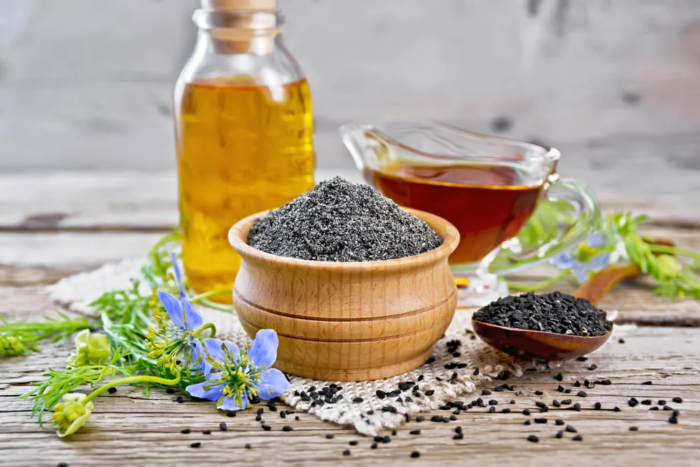
Black seed oil (Nigella sativa) is an ancient remedy used for centuries in Eastern and Ayurvedic medicine. Considered a true black gold for health, this oil is once again in the spotlight of researchers, especially for its beneficial effects on allergies, skin, and blood pressure. Due to its rich composition of thymoquinone, essential fatty acids, antioxidants, and vitamins, black seed oil acts deeply in the body and supports immune and cardiovascular balance.
Benefits of Black Seed Oil
1. Helps Reduce Allergic Symptoms
Black seed oil has natural anti-inflammatory and antihistamine effects, reducing the intensity of allergic reactions. It is effective in seasonal allergic rhinitis, allergic asthma, and urticaria.
The mechanism involves blocking the release of histamine, a substance produced by the immune system during exposure to allergens. By reducing inflammation of the mucous membranes, the oil helps to decongest the nose and improve breathing.
Additionally, thymoquinone reduces the sensitivity of the respiratory tract and the frequency of sneezing and coughing attacks. It can be taken internally or inhaled in a vaporizer.
It is also useful in chronic cases, being well tolerated even over longer periods, without the side effects of conventional antihistamines.
2. Hydrates and Heals Sensitive or Affected Skin
Black seed oil is an excellent emollient, soothing, and repairing agent for dry, irritated, or dermatitis-prone skin. It acts deeply due to its high content of essential fatty acids (omega-6 and omega-9) and vitamins (especially E and A).
It provides elasticity to the skin and reduces local inflammation. It is effective in eczema, psoriasis, inflammatory acne, and lesions caused by allergies or irritations.
Regular application reduces the appearance of redness, flaking, and pigmentation spots. It has an antimicrobial effect and prevents secondary infections of sensitive skin.
It can be used pure or diluted with lighter oils (jojoba oil, coconut oil) for a long-lasting soothing effect.
3. Contributes to Lowering Blood Pressure
Oral administration of black seed oil has been associated with a moderate but significant reduction in both systolic and diastolic blood pressure. The action is mainly attributed to thymoquinone, which promotes the relaxation of blood vessels and improves blood flow.
By reducing oxidative stress and vascular inflammation, the oil protects arterial walls and helps prevent chronic hypertension.
Studies suggest that daily administration for 6-8 weeks can have a stabilizing effect on blood pressure, without notable adverse reactions.
It is especially recommended for individuals with mild to moderate hypertension, as an adjunct to conventional treatment (with medical approval).
4. Supports Immune System Balance
Through its immunomodulatory effects, black seed oil balances the immune response, reducing the risk of exaggerated autoimmune or inflammatory reactions. It stimulates T helper lymphocytes and macrophage activity.
It is recommended during periods of increased immune effort, such as the cold season or during post-infectious recovery.
At the same time, it prevents overloading the immune system in allergic conditions or autoimmune diseases.
It is a valuable support for individuals with weakened immunity, chronic stress, or underlying inflammatory diseases.
5. Has Strong Antioxidant Effects
Black seed oil contains thymoquinone, carvacrol, tannins, and flavonoids—substances that neutralize free radicals and protect cells against oxidative stress.
This action is important in preventing chronic degenerative diseases, such as cancer, cardiovascular diseases, and neurodegenerative disorders.
By reducing inflammation and oxidative damage, it slows down the cellular aging process and supports tissue regeneration.
Relevant Studies
1. Study Published in Phytotherapy Research
A clinical study conducted on 66 patients with allergic rhinitis showed that administration of black seed oil for 2 weeks led to a significant reduction in nasal congestion, sneezing, and itching. Researchers concluded that the oil has effects comparable to antihistamines, but without their side effects.
Participants received 2 capsules per day (500 mg each), and efficacy was observed as early as the first week of treatment.
A decrease in inflammatory markers and a reduction in excessive nasal secretions were noted.
The results were promising, especially for patients who did not respond well to conventional treatments.
2. Study Published in Fundamental & Clinical Pharmacology
Iranian researchers investigated the effects of black seed oil on blood pressure in 70 patients with mild hypertension. After 8 weeks of daily administration (2.5 ml/day), a significant decrease in both systolic and diastolic blood pressure was recorded.
The study demonstrated that the effect is cumulative, and daily administration yields more stable results than occasional treatments.
Thymoquinone appears to be the key component acting on vasodilator receptors and vascular oxidative stress.
No significant adverse reactions were reported during the study.
3. Study from Journal of Dermatology & Dermatologic Surgery
This study tested the topical effects of black seed oil on patients with contact eczema. After 4 weeks of daily use, patients reported an improvement in symptoms by 82%, comparable to the use of betamethasone (a topical corticosteroid).
The inflammation and lesion scores significantly decreased in the group treated with the oil, and tolerability was much better.
This supports its use as a natural alternative in atopic and allergic dermatitis.
How to Use Black Seed Oil
Internal Administration:
- For allergies and blood pressure: 1 tablespoon (5 ml) in the morning, on an empty stomach. It can be mixed with honey for a more pleasant taste.
- For boosting immunity: 1 tablespoon/day for a minimum of 2-3 weeks.
External Application:
- For skin: apply a few drops to the affected area and gently massage. It can also be used in combination with other oils (jojoba, coconut).
- For irritated scalp: add a few drops to shampoo or massage the scalp with pure oil once a week.
Contraindications and Precautions
- Not recommended for pregnant women (may stimulate uterine contractions).
- Avoid internal administration in combination with anticoagulant medications (may increase the risk of bleeding).
- Individuals allergic to Nigella sativa seeds should avoid use.
- May lower blood sugar; diabetics should consult a doctor before use.
- Always test on a small area of skin before external application (possible contact reactions).
Sources:
- Phytotherapy Research Nigella sativa oil in allergic rhinitis
- Fundamental & Clinical Pharmacology Antihypertensive effect of Nigella sativa seed extract
- Journal of Dermatology & Dermatologic Surgery Topical black seed oil in eczema




