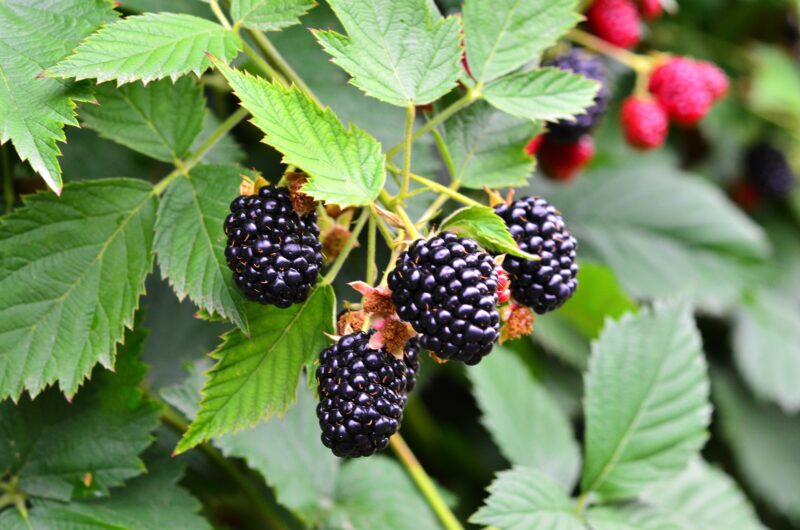
Blackberry leaves, often overshadowed by the popularity of the fruits, hide in their composition an arsenal of bioactive compounds with strong medicinal effects. Used for generations in teas, poultices, or gargles, they prove useful in a wide range of ailments, from mouth and throat inflammation to diarrhea, eczema, and wounds. In the following sections, we present the scientifically demonstrated benefits, methods of use, and contraindications of these seemingly simple leaves, but with remarkable properties.
Chemical Composition
Blackberry leaves are rich in:
- Tannins (over 10%) with astringent, anti-inflammatory, and healing effects
- Flavonoids with antioxidant and antimicrobial roles
- Vitamin C with immune-stimulating effects and support for collagen
- Gallic and ellagic acid with antioxidant and antitumor activity
- Mineral salts such as potassium, calcium, and magnesium
This combination of bioactive substances makes blackberry leaves recognized both in traditional medicine and in recent studies.
Benefits Supported by Scientific Studies
1. Combats Inflammation and Pain in the Throat
A study published in Journal of Ethnopharmacology (2022) analyzed extracts from blackberry leaves against Streptococcus pyogenes bacteria, involved in tonsillitis. A significant inhibition of bacterial growth was observed, comparable to the action of a natural antiseptic. This effect supports the traditional use of blackberry leaf infusion for gargling in cases of pharyngitis and oral inflammation.
2. Astringent Effect in Cases of Diarrhea
Due to their high tannin content, blackberry leaves have an astringent effect on the intestinal mucosa. An experiment on animal models (Phytotherapy Research, 2021) showed a reduction in the frequency of diarrheal stools after administration of leaf extract. In folk medicine, they are used in tea form for diarrhea, colitis, and mild enterocolitis.
3. Accelerates Healing of Wounds and Eczema
An in vitro study (Evidence-Based Complementary and Alternative Medicine, 2023) demonstrated that the application of blackberry leaf extract accelerated cell regeneration and collagen synthesis, supporting the recovery of damaged skin. The leaves are used in poultices for wounds, burns, dermatitis, and eczema.
4. Combats Pathogenic Bacteria and Fungi
A study in Molecules (2022) tested the antimicrobial capacity of blackberry leaves against several bacterial and fungal strains, including Candida albicans and Staphylococcus aureus. The extracts proved effective, opening the perspective for their use as an adjunct in skin treatments.
5. Supports Gum Health and Combats Halitosis
In dentistry, blackberry leaves are used as a natural mouthwash. They reduce gum inflammation and minor bleeding. A small clinical study on patients with mild gingivitis (University of Warsaw, 2020) reported significant improvements after rinsing with concentrated leaf infusion.
Methods of Use
- Internal Tea for Diarrhea and Digestion
- 1 tablespoon of dried leaves in 250 ml of boiling water
- Infuse for 10-12 minutes, drink 2-3 cups per day
- Gargle or Mouthwash
- Concentrated infusion (2 tablespoons in 250 ml of water)
- Rinse the mouth or gargle 2-3 times a day (do not swallow)
- Poultices for Skin
- Boil the leaves for 5 minutes and apply warm to the affected areas
- Secure with gauze, keep for 30 minutes
- Sitz Bath for Hemorrhoids or Irritations
- Boil 3 tablespoons of leaves in 1 liter of water, add to the local bath water
Contraindications
- Prolonged use (over 2 weeks) is not recommended due to the high tannin content, which can irritate the gastric mucosa.
- Contraindicated in acute gastritis, gastric ulcer, and irritable bowel syndrome in the active phase.
- Precaution in pregnancy and breastfeeding as there is insufficient safety data.
- Do not combine with supplements that dry the mucosa (e.g., clay, medicinal charcoal) without medical advice.
Blackberry leaves deserve a well-deserved place in the natural pharmacy, not only for tradition but also for the increasingly clear support from science. From stomatitis and pharyngitis to diarrhea or dermatological conditions, they offer natural, accessible, and effective solutions. With caution in use and adherence to guidelines, they can be a valuable support in numerous situations.
Sources:
- Journal of Ethnopharmacology Evaluation of Rubus fruticosus leaves against Streptococcus pyogenes
- Phytotherapy Research Antidiarrheal activity of Rubus fruticosus leaf extracts in animal models
- Molecules Phytochemical Composition and Antimicrobial Activity of Blackberry Leaf Extracts
- Evidence-Based Complementary and Alternative Medicine Wound healing potential of Rubus fruticosus extract in vitro
- Medical University of Warsaw Blackberry leaves infusion as adjunct treatment in mild gingivitis – a pilot study




