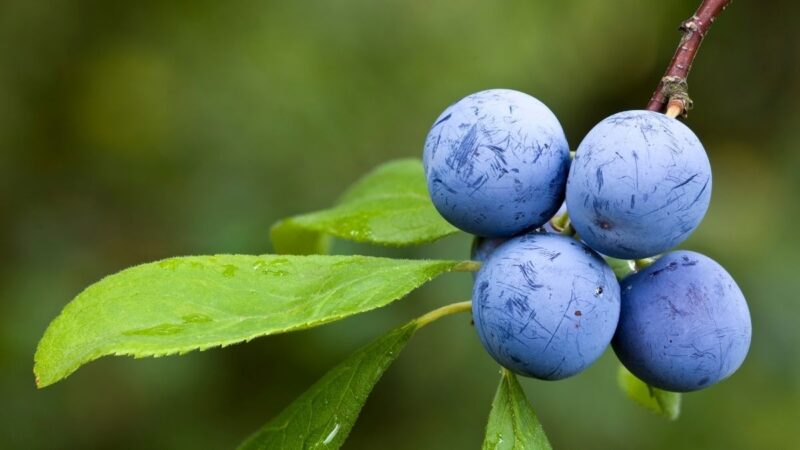
The blackthorn (Prunus spinosa) is a spiny shrub that grows in hilly and mountainous regions, valued since ancient times for its therapeutic properties. The entire plant—flowers, leaves, and fruits—has well-documented medicinal uses, but each part has different effects on the body.
Benefits of Blackthorn Flowers
- Strong and Mild Diuretic Effect
Blackthorn flowers stimulate the elimination of excess water from the body through the kidneys. They are used in natural treatments for edema, fluid retention, and renal hypertension. Their diuretic effect is considered mild, not irritating the urinary tract, making them suitable for detoxification cures aimed at eliminating toxins through urine. They are often recommended for lymphatic drainage in combination with other plants. - Mild Laxative for Occasional Constipation
The flowers contain substances that gently stimulate intestinal peristalsis without irritating the digestive mucosa. This action is particularly effective for mild constipation or that caused by stress. It is recommended in the form of an infusion, about 1 cup in the morning on an empty stomach. It does not create dependency and can be administered even to children over 7 years or elderly individuals. This laxative effect is often complemented by a mild sedative effect, useful in functional digestive disorders. - Regulates Blood Pressure
Through its diuretic and mild vasodilatory action, blackthorn flower infusion can help lower blood pressure. They are useful in essential hypertension of grade I, especially in combination with other calming plants. The flavonoids in the flowers help improve the elasticity of blood vessels. Regular use can have a beneficial effect on balancing the cardiovascular system. They can be administered as tea daily for 2-3 weeks.
Benefits of Blackthorn Leaves
- Liver and Lymphatic Detoxification
The leaves contain bitter principles, tannins, and flavonoids that stimulate liver and gallbladder function. They are effective in spring detoxification cures for eliminating toxins accumulated during winter. They are recommended for conditions such as hepatic steatosis, biliary dyskinesia, or chronic constipation. Additionally, they have a tonic effect on the lymphatic system, supporting natural drainage. They are administered in the form of an infusion, twice a day. - Antiseptic and Healing Effect Internally
Blackthorn leaves contain substances with antimicrobial effects, useful in treating mild infections of the gastrointestinal tract. They are recommended for diarrhea, fermentative colitis, or for restoring intestinal flora after antibiotic treatments. They can be combined with bilberry leaves or yarrow for a broader effect. The internal healing effect helps soothe irritated mucous membranes. Cures of 7-10 days are recommended.
Benefits of Blackthorn Fruits (Sloe Berries)
- Boosts Immunity and Protects the Body in Cold Seasons
Blackthorn fruits are extremely rich in vitamin C, anthocyanins, tannins, and organic acids. They strengthen the immune system and provide antioxidant protection against free radicals. They are successfully used in the prevention and treatment of respiratory viral infections. They can be consumed fresh (after frost), in the form of syrup, jam, or decoction. Their antioxidant properties also reduce the risk of cardiovascular or degenerative diseases. - Helps with Diarrhea, Colitis, and Intestinal Discomfort
The tannins in the fruits have an astringent and soothing effect on the intestinal mucosa. They are recommended for chronic diarrhea, especially in children or elderly individuals. They are used in the form of decoction (boiled for 10-15 minutes) or dried powder. The astringent effect also helps reduce intestinal inflammation. The fruits can be combined with bilberry leaves for a complete natural treatment. - Combats Anemia and Supports Blood Regeneration
Their high content of vitamin C and anthocyanins stimulates iron absorption and helps in the formation of red blood cells. They are useful in cases of chronic fatigue, iron deficiency anemia, or convalescence. In combination with elderberries or black currants, the revitalizing effect is even more pronounced. Regular consumption is recommended, especially at the beginning of autumn. They can be consumed in the form of sweetened jam or diluted syrup.
How to Use Blackthorn Flowers
Infusion
- Ingredients: 1 tablespoon of dried flowers in 250 ml of boiling water
- Preparation: Let it steep covered for 10 minutes, then strain
- Administration: 2-3 cups per day, 30 minutes before meals
- Duration: Cures of 10-14 days, followed by a break of one week
- Indications: diuretic, mild laxative, blood pressure regulation
Steam Inhalation (for facial or respiratory use)
- Prepare a concentrated infusion (2 tablespoons of flowers in 500 ml of water)
- Inhale the steam for 10 minutes
- Useful in rhinitis, sinusitis, or inflammatory acne
How to Use Blackthorn Leaves
Infusion
- Ingredients: 1 tablespoon of crushed dried leaves in 250 ml of boiling water
- Preparation: Steep for 10-12 minutes
- Administration: 2 cups per day, one in the morning, another in the evening
- Duration: Cures of 14-21 days
- Indications: hepatic detoxification, slow digestion, mild colitis
Combined Infusion (with birch or nettle leaves)
- Mix blackthorn leaves with other depurative plants
- Use 1 tablespoon of the mixture in 250 ml of water
- Helps in lymphatic drainage and blood cleansing
How to Use Blackthorn Fruits (Sloe Berries)
Decoction
- Ingredients: 1 tablespoon of dried fruits in 300 ml of water
- Preparation: Boil for 10-15 minutes on low heat, then strain
- Administration: 2 cups per day, between meals
- Indications: diarrhea, intestinal inflammation, detoxification
Blackthorn Syrup
- Prepared from boiled and mashed fruits, sweetened with honey or a little sugar
- Administration: 1-2 tablespoons per day for immunity or in colds
- Duration: Up to 3 weeks
- Use: strengthens the immune system, vitamin supplementation
Fresh Consumption (after frost)
- Raw fruits, harvested after being touched by frost, become sweet and easier to digest
- Can be consumed as is, in a quantity of 10-15 berries per day
- Not recommended in excess due to tannins
Dried Powder
- Dried fruits are ground and consumed 1 tablespoon per day, mixed in yogurt or water
- Ideal for combating diarrhea or as a general tonic
Comparative Table of Uses for Blackthorn Flowers, Leaves, and Fruits
| Part Used | Form of Administration | Recommended Conditions | Main Properties |
|---|---|---|---|
| Flowers | Infusion | Water retention, constipation, blood pressure | Diuretic, laxative, hypotensive |
| Leaves | Infusion | Steatosis, dyskinesia, colitis | Liver detoxifier, antiseptic |
| Fruits | Decoction, syrup, raw consumption | Diarrhea, low immunity, anemia | Astringent, vitamin-rich, antioxidant |
Relevant Studies
A study published in the Journal of Medicinal Plants Research (2021) analyzed the content of bioactive compounds in blackthorn flowers and fruits. It was found that the flowers contain high amounts of flavonoids such as quercetin and rutin, associated with anti-inflammatory and diuretic effects. The fruits, on the other hand, were rich in anthocyanins (cyanidin-3-glucoside) with strong antioxidant properties. The study concluded that the plant has significant therapeutic potential in chronic inflammatory diseases and in the prevention of cardiovascular diseases. Additionally, the analysis demonstrated that blackthorn extracts have significant antimicrobial activity against certain strains of E. coli and Staphylococcus aureus.
Another study published in Plants (MDPI, 2022) evaluated the antidiabetic potential of extracts from blackthorn fruits. Researchers identified natural inhibitors of the enzyme alpha-glucosidase, which regulates postprandial blood sugar levels. These results suggest that blackthorn extracts could be used as an adjunct in type 2 diabetes. The study also confirmed the extracts’ ability to reduce oxidative stress and protect the liver in experimental models. This supports the use of blackthorn in detoxification cures or in cases of hepatic steatosis.
Contraindications
- Excessive consumption of unripe fruits is not recommended as they may irritate the digestive tract.
- Flowers and leaves should not be used during pregnancy or breastfeeding without medical advice.
- Individuals with severe hypotension should avoid flower infusion.
- Allergic individuals to plants from the Rosaceae family (such as plums, cherries) may experience adverse reactions.
- Concentrated preparations may cause nausea or diarrhea if not dosed correctly.




