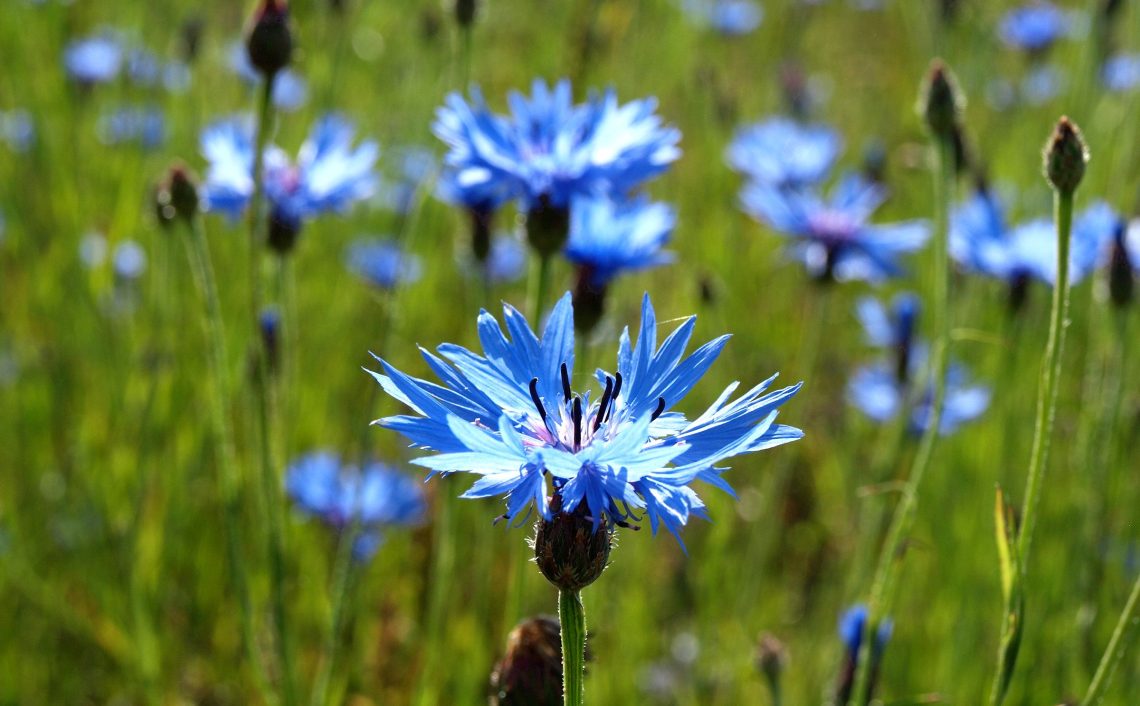
Blue cornflower petals are successfully used as natural remedies for various ailments, both internally as infusions, decoctions, or tinctures, and externally in the cosmetic industry, having calming and tonifying properties. Let’s see what properties these blue cornflower flowers have, how they can be used, and what contraindications exist.
Blue cornflowers (Centaurea cyanus) are plants with small, blue or blue-gray flowers that belong to the Asteraceae family. They are cultivated but also grow wild in various regions of the world and are used as ornamental flowers, as well as for medicinal and cosmetic purposes. They are often grown in gardens for their natural charm and to attract bees.
Blue cornflower flowers have been used since ancient times in traditional medicine to treat various ailments. They contain active compounds such as flavonoids, including cyanidin and quercetin, which give them antioxidant, anti-inflammatory, and astringent properties.
From flowering in June until September, if you have access to green spaces where cornflowers grow, you can exclusively collect the blue flowers, avoiding buds, stems, leaves, or roots. You can dry them on newspapers or sheets of paper, then store them in paper bags or cloth sacks. Alternatively, you can buy them pre-packaged from health stores or certain pharmacies.
What beneficial substances are found in blue cornflowers?
The beneficial effects are due to the substances contained in these flowers and their derivatives, such as tannins, flavonoids, potassium, magnesium, manganese, cyanidin, cynarin, and chicory, anthocyanins, and mucilages.
What benefits can remedies with blue cornflowers have?
Blue cornflower infusions have a diuretic effect and at the same time are antidiareic. They moderate secretions, aid in healing, and stimulate tissue contraction and healing, treating eczema, burns, colds, bronchitis, ocular conditions, renal issues, helping to combat dark circles and irritations in the facial area, calming headaches, and apparently assisting in increasing milk production in breastfeeding women. Infusions and combinations with various other plants have a fine taste, with relaxing and calming effects. The petals are used both in combination with black tea and green tea, for example, having a delicate taste and a slightly recognizable aroma.
They are antioxidants and anti-inflammatory
Blue cornflowers contain antioxidant compounds such as flavonoids, which help combat oxidative stress in the body. Some studies suggest that blue cornflower extract has significant antioxidant activity, protecting cells against oxidative damage.
Flavonoids and other compounds from blue cornflowers also have anti-inflammatory properties. A study showed that blue cornflower extract reduces inflammation and pain in an experimental model of inflammation in rats. These flowers have beneficial effects on ocular health, with a study indicating that blue cornflower extract can reduce inflammation and irritation in the eyes, providing a calming effect.
They have antimicrobial properties
Blue cornflowers also have antimicrobial properties, being helpful in combating certain infections. A study showed that blue cornflower extract has antimicrobial activity against common pathogenic bacteria. Recent research indicated that the ethyl acetate extract of the plant at a concentration of 5 mg/mL exhibited strong antibacterial activity against S. aureus (food isolate), E. coli (clinical isolate), S. aureus (clinical isolate), and L. monocytogenes (clinical isolate).
They have calming and anxiolytic effects
Consuming blue cornflower tea can have calming and anxiolytic effects. A study found that blue cornflower-based supplements significantly reduced anxiety levels in participants and improved mood among individuals with anxiety.
They treat wounds
If you are walking in green spaces and accidentally cut yourself or get scratches and there are blue cornflowers nearby, place fresh flowers on the wound. You can crush them beforehand, and if you have a handkerchief or a cloth, you can try to make poultices. You can do this, of course, after you get home, after you have collected them. They will calm the bleeding and provide a cooling sensation.
Useful in constipation
Blue cornflower infusion can also be helpful in digestive issues. You can use it in combination with bilberry leaves against diarrhea or in combination with aloe against constipation.
They stimulate appetite
Blue cornflowers can also be used in appetite-stimulating cures, as they increase the desire to eat. A decoction is prepared from the petals, using two tablespoons per liter of water. Boil them together for ten minutes, then let them cool and strain. The liquid should be consumed throughout the day for at least a week.
How to use blue cornflowers for skin care?
In the cosmetic industry, oils, powders, and extracts of blue cornflowers are used, either alone or added to various creams and lotions. Cleansing products with blue cornflower extract also have a calming role. For tired eyes, blue cornflower decoction compresses are effective, while infusions are used for colds and kidney diseases. They have calming, anti-inflammatory, emollient, and moisturizing effects.
Compresses for the eyes
Compresses with blue cornflower infusion (used at room temperature or cold) reduce and prevent the appearance of wrinkles, calm irritated eyes, and regenerate the skin, which remains smoother and softer after using this type of natural treatment.
Steam baths
If you are used to making steam baths at home for facial treatments, you can use blue cornflower flowers in the water, and if you prefer a multi-action, also add chamomile and calendula flowers. You can also add lavender or linden flowers, which help with the aromatherapy effect. Do not expose the skin to steam for more than 10 minutes, which is enough time to open the pores, making it easier to extract blackheads afterward.
Infusion
Blue cornflowers are often used in combination with other plants. Together with aloe, for example, blue cornflower powder or infusion can calm various types of eczema. When you have dry skin, you can apply blue cornflower infusion mixed with flaxseed, then apply olive oil to the area.
How to prepare blue cornflower tea?
To make blue cornflower tea, boil 250 ml of water in a kettle, and when it comes to a boil, add about a teaspoon of blue cornflowers and turn off the heat. Cover the kettle and let it steep for about 5-10 minutes. This steeping time allows the release of the aroma and medicinal properties of the blue cornflowers into the water. After the steeping time has passed, strain the tea to remove the blue cornflower flowers. You can sweeten the tea with honey or add a little lemon juice for a more tart flavor.
Contraindications of blue cornflowers
Here are some aspects to be aware of if you want to use remedies with blue cornflowers:
Allergies
People allergic to pollen should be cautious when trying various plant-based treatments, including blue cornflowers. Individuals allergic to plants in the Asteraceae family may also experience allergic reactions to blue cornflowers. Allergic symptoms may include rashes, itching, swelling, or difficulty breathing.
Drug interactions
Blue cornflowers may interact with certain medications, especially anticoagulants (blood-thinning medications). Excessive intake of blue cornflowers could intensify the effect of these medications and increase the risk of bleeding. Additionally, blue cornflowers may interact with sedative medications, increasing the risk of drowsiness or central nervous system depression.
Gastrointestinal issues
Excessive consumption of blue cornflower tea may cause gastrointestinal discomfort, such as nausea, vomiting, diarrhea, or abdominal cramps. It is important not to use excessive amounts of blue cornflowers and to adhere to recommended dosages.
Pregnancy and breastfeeding
Due to insufficient data to establish the safety of blue cornflower consumption during pregnancy and breastfeeding, it is advisable to avoid their use during these periods, as there may be potential risks for the fetus or the breastfeeding newborn.
Pre-existing medical conditions
Individuals suffering from certain conditions, such as blood clotting disorders, high blood pressure, or kidney issues, should consult their healthcare provider before using blue cornflowers to ensure they do not negatively interact with these conditions.
In conclusion, blue cornflowers have properties that can make them a suitable remedy for various ailments and can be used both internally, in the form of tea or tincture, and externally, in baths or as compresses. When used according to guidelines and recommended dosages, remedies with blue cornflowers are safe for health, but certain individuals should be cautious in their use.
Although many people believe that herbal remedies are perfectly safe in any quantity, this is not true: even if they are natural, they can interfere with various medications or actions and thus may do more harm than good. Therefore, it is advisable to follow the instructions on packaging or the advice of a herbalist if they have recommended remedies with blue cornflowers. Especially patients with various chronic diseases who take daily medications should seek their doctor’s advice before taking any herbal remedies.




