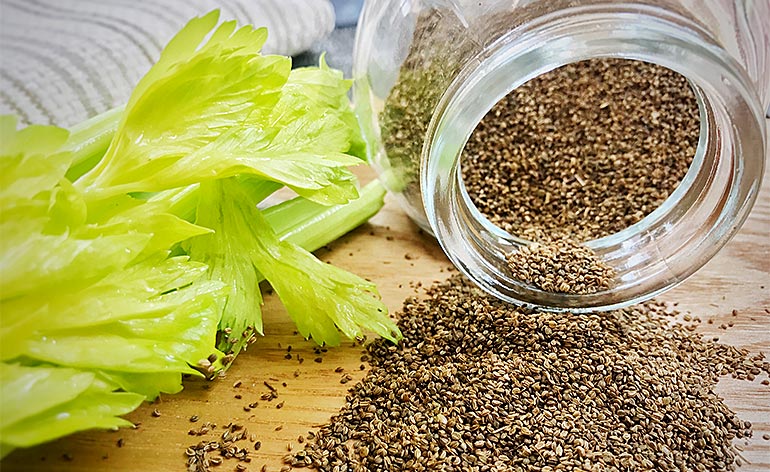
Used in Ayurvedic medicine to treat colds, flu, water retention, poor digestion, arthritis, and bone diseases, celery seeds have been part of holistic remedies for thousands of years. What are they used for today? They are commonly used to help the body eliminate water through urination, treat arthritis and gout, reduce menstrual cramps, and lower inflammation and blood pressure.
Can you eat celery seeds? Benefits of celery seeds
1. Helps regulate blood pressure
According to a study conducted at Mashhad University of Medical Sciences in Iran, the effects of various extracts from celery seeds on blood pressure showed positive results. In the study, blood pressure and heart rate were monitored in rats that were administered extracts from celery seeds. The results indicated that the celery seed extract helped lower blood pressure. It also increased heart rate in hypertensive rats. Ultimately, the researchers concluded that celery seed extract has antihypertensive properties and could benefit those struggling with blood pressure regulation.
2. Provides antiseptic properties to help preserve food
If there is a natural preservative, why not use it instead of unhealthy options? Celery seeds may be the perfect answer. India is a country that knows this well, as people in India have used this spice, among others, for hundreds, if not thousands, of years to preserve food.
The Department of Biochemistry at the University of Science in India analyzed 35 common Indian spices. Among the spices studied were celery, cloves, cinnamon, chili pepper, horseradish, cumin, tamarind, black cumin, pomegranate seeds, nutmeg, garlic, onion, and ginger.
Researchers found that these common Indian spices have strong antimicrobial activities against test organisms Bacillus subtilis (ATCC 6633), Escherichia coli (ATCC 10536), and Saccharomyces cerevisiae (ATCC 9763). The results also establish the traditional use of spices as food preservatives, disinfectants, and antiseptics.
3. May alleviate symptoms of arthritis and gout
The aim of a study in Australia was to determine whether the use of natural remedies could help reduce inflammation associated with arthritis and gout. Celery seed extract was administered to rats. The results found it helpful in reducing inflammation in those rats with arthritis and gout.
According to another study published in Progress in Drug Research, celery seed extract was found to be as effective as ibuprofen and aspirin in reducing arthritis that causes inflammation. Additionally, the study considers celery seeds a positive option, as they do not seem to interact with any existing medications; therefore, they may be an excellent therapeutic choice for many inflammation-related diseases.
4. Provides antibacterial benefits and combats infection
Celery seeds, scientifically known as Apium graveolens, have been used for centuries due to their antibacterial benefits. Researchers at the Biomedical Research Center at Sheffield Hallam University in the UK examined a crude alcoholic extract of celery seeds to test its effects against H. pylori and other bacteria. These laboratory results showed that the extract exhibited strong antibacterial effects, leading researchers to conclude that it could be suitable for further investigation as a potent agent for treating H. pylori infections.
5. May help reduce pain associated with menstrual cramps
Celery seeds may help alleviate muscle spasms and premenstrual symptoms. Some studies indicate that celery seeds, anise, and fennel may help reduce pain and the duration of discomfort during menstruation.
What do celery seeds contain?
A teaspoon (approximately 5 grams) of celery seeds contains approximately:
25.5 calories
2.7 grams of carbohydrates
1.2 grams of protein
1.6 grams of fat
0.8 grams of fiber
0.5 milligrams of manganese (25% DV)
2.9 milligrams of iron (16% DV)
115 milligrams of calcium (11% DV)
28.6 milligrams of magnesium (7% DV)
35.6 milligrams of phosphorus (4% DV)
0.1 milligrams of copper (4% DV)
0.1 milligrams of vitamin B6 (3% DV)
91 milligrams of potassium (3% DV)
0.5 milligrams of zinc (3% DV)
Celery seeds also contain small amounts of vitamin C, niacin, and selenium.
Side effects of celery seeds
Are celery seeds safe to eat? For most, yes, but be aware that they are not far behind the sensitivities often caused by peanuts. Celery can cause some quite severe allergic reactions, so be cautious if you think you may have a sensitivity. For those who may be affected, it can potentially cause life-threatening anaphylaxis.
Celery root or celery may contain more allergens than the stalk, but the seeds contain the highest allergen content. Additionally, an allergic reaction could be triggered by consuming foods that have been processed with hands that previously handled celery. This seems to be a bigger issue in areas that produce celery seeds, such as Central Europe, and they are required to include this information on labels.
If you are pregnant or breastfeeding, take extra precautions. While celery is not harmful to you, some substances, such as celery seeds, can be. Stay away from celery seeds; they may lead to uterine bleeding and potentially contractions earlier than desired.




