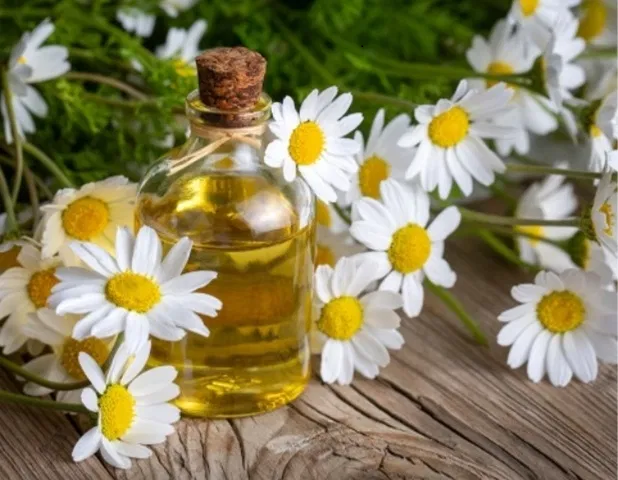
Sensitive skin requires gentle yet effective care, and chamomile oil is one of the most suitable natural solutions. This oil has anti-inflammatory, soothing, and regenerative effects, making it recommended for redness, irritations, dermatitis, or reactive skin.
Chemical Composition of Chamomile Oil
- Alpha-bisabolol: a powerful anti-inflammatory that soothes irritations
- Chamazulene: a pigment with anti-allergic and calming properties
- Flavonoids: antioxidants that reduce skin sensitivity
- Essential fatty acids: restore the skin’s lipid barrier
- Vitamin E: protects against free radicals
How Does It Act on Sensitive Skin?
- Immediately soothes irritated or reddened skin
Thanks to bisabolol and chamazulene, it reduces inflammation and discomfort. - Hydrates without clogging
Easily penetrates the skin, providing hydration without blocking pores. - Improves skin tolerance to external factors
The antioxidants in chamomile decrease reactivity to wind, cold, or pollution. - Helps regenerate skin affected by eczema or atopic dermatitis
Recipe for Chamomile Oil (Cold Maceration)
Ingredients:
- 1 cup of dried chamomile flowers (preferably organic)
- 250 ml of vegetable oil (sweet almond, grape seed, or jojoba)
Preparation Method:
- Place the flowers in a dark glass jar.
- Completely cover with the chosen oil.
- Let it macerate for 10-14 days in a warm, dark place. Shake daily.
- Strain through cheesecloth and store in a sterilized container, protected from light.
Usage Instructions
- For soothing the face: apply a few drops in the evening after cleansing, with gentle massage.
- In case of dermatitis: apply locally, twice a day.
- After sun/wind exposure: use as a soothing mask (10-15 minutes).
Contraindications
- Individuals allergic to plants from the Asteraceae family (chamomile, marigold, echinacea) should perform a local test before use.
- Do not apply to open wounds.
- Not recommended in cases of severe acne (as it is still an oil).
Benefits Explained in Detail
- Smoother and less reactive skin: regular use leads to reduced redness and minor spots.
- Supports cellular regeneration: helps damaged skin to recover naturally.
- Gentle alternative to synthetic products for sensitive skin.
- Can be used as a cleansing oil for dry and irritated skin.
Sources and References
- European Medicines Agency Chamomilla recutita monograph
- Journal of Clinical and Aesthetic Dermatology, 2010 Topical use of chamomile oil for inflammatory dermatoses
- NCBI Alpha-bisabolol and its skin-calming properties, 2019
- Dr. Axe Chamomile oil benefits for skin and digestion
- WebMD Chamomile topical use for skin conditions