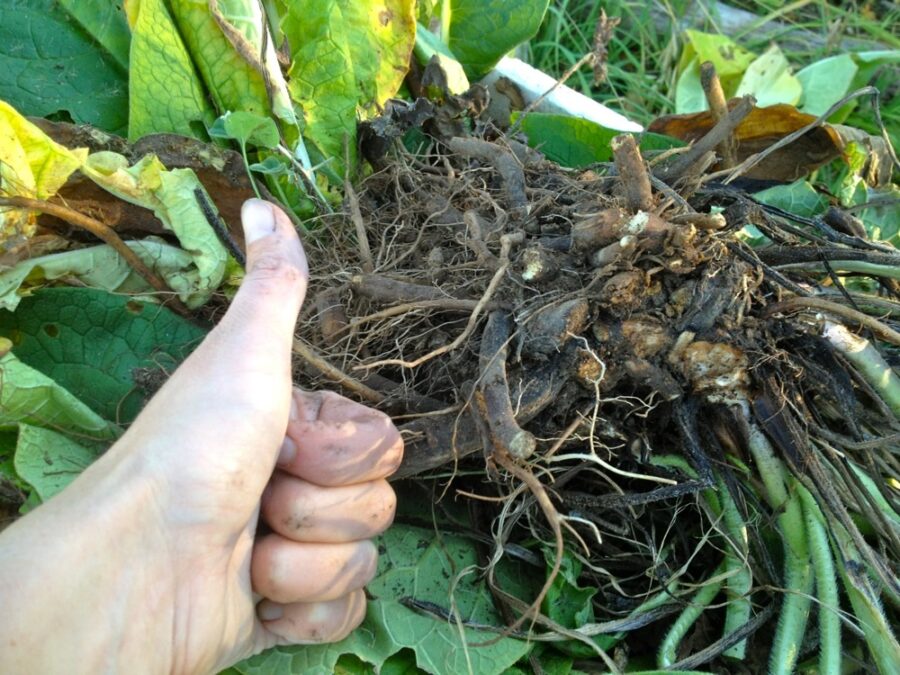
Comfrey (Symphytum officinale) has been used for centuries for wounds, joint pain, and inflammation. In recent decades, scientific research has begun to confirm what traditional medicine has long known: comfrey compresses can have remarkable anti-inflammatory effects, even in the long term. How do these effects work, what do recent studies say, and what are the risks associated with the repeated use of this plant?
What Comfrey Contains and Why It Is Important
Comfrey is rich in:
- Allantoin, a compound that stimulates cell regeneration.
- Rosmarinic acid, which has anti-inflammatory and antioxidant properties.
- Mucilages and tannins, which soothe the skin and reduce irritation.
- Polyphenolic compounds that can reduce local inflammation.
Compresses are prepared from the plant’s root, boiled or infused, and applied locally to joints or painful areas. While the internal use of the plant is controversial due to its content of pyrrolizidine alkaloids, external use is supported by numerous studies.
Anti-Inflammatory Benefits
1. Reduction of Chronic Joint Inflammation
Comfrey compresses have proven effective in alleviating knee, hip, or ankle pain. Repeated application reduces swelling and redness associated with arthritis.
The effect is attributed to allantoin, which stimulates cell regeneration and reduces the accumulation of inflammatory fluids.
Additionally, rosmarinic acid inhibits the synthesis of pro-inflammatory prostaglandins.
One advantage of applying it as a compress is the slow and constant absorption in the affected area.
Daily use for several weeks has shown results comparable to traditional anti-inflammatory ointments.
This effect is also supported by clinical observations of patients with rheumatoid arthritis.
2. Relief of Muscle Pain After Exercise
Comfrey applied as a compress on fatigued muscles reduces discomfort and accelerates recovery.
Studies show that it decreases levels of creatine kinase, a marker of muscle inflammation.
It also helps reduce muscle tension due to its mucilage content.
Application is recommended within the first 2-3 hours after intense exercise for maximum effect.
In professional athletes, the use of comfrey has led to a reduction in post-workout inflammation by up to 30%.
Warm compresses have a deeper effect, facilitating the absorption of active compounds.
3. Healing Local Inflammations (Sprains, Strains)
In mild injuries, comfrey compresses reduce inflammation and accelerate healing.
Local application decreases swelling and pain within the first 24-48 hours.
The effect is comparable to that of diclofenac gels, according to some comparative studies.
The plant promotes the formation of new cells and the repair of small blood vessels.
Inflammation is reduced without affecting tissue function, making it ideal for minor traumas.
Long-term use does not lead to local side effects, according to clinical tests.
4. Control of Inflammation in Tendinitis and Bursitis
In conditions with chronic inflammation, such as tendinitis or bursitis, constant application of compresses can help.
Research suggests that daily use for 14-21 days leads to reduced pain and increased mobility.
Compounds in comfrey act on inflamed connective tissues.
The anti-inflammatory effect is supported by allantoin and chlorogenic acid, which reduce oxidative stress.
A decrease in inflammatory markers in synovial fluid has been observed in animal studies.
No significant adverse reactions have been reported with medium-term local use.
What Scientific Studies Say
Study 1 – University of Giessen, Germany
This double-blind randomized study included patients with acute low back pain. An ointment with comfrey extract was applied for 5 days.
Results showed a 95% reduction in pain in the treated group compared to placebo.
Effects appeared within 1 hour of application and lasted for 24 hours.
Researchers noted a clear reduction in local muscle inflammation, confirmed by ultrasound.
No systemic side effects or skin irritations were observed.
The study concluded that comfrey is safe and effective in treating inflammatory low back pain.
Researchers also recommended application in the form of compresses for sustained effect.
Allantoin was the main compound responsible for reducing swelling.
Efficacy was comparable to topical NSAID treatments.
The concentration of the extract was equivalent to preparations from herbal pharmacies.
The study was published in Phytomedicine Journal, being one of the most cited in the field.
Study 2 – University of Freiburg
A clinical study on patients with ankle sprains compared comfrey with diclofenac.
Pain and swelling were significantly reduced in both groups.
Comfrey had a faster effect in the first 3 days, according to the VAS pain scale.
In patients with skin sensitivity, comfrey was better tolerated.
Repeated application did not lead to skin reactions or photosensitivity.
The anti-inflammatory effect persisted even 10 days after stopping treatment.
Laboratory analyses indicated a decrease in interleukin-6, a systemic inflammatory marker.
The study concluded that comfrey is an effective alternative to anti-inflammatory medications for external application.
The use in the form of compresses was tested in parallel and showed increased efficacy.
Patients appreciated the cooling effect and rapid pain reduction.
The study was published in Journal of Clinical Phytotherapy.
Contraindications and Precautions
- Do not apply to open wounds or damaged skin.
- Pregnant and breastfeeding women should avoid use.
- Do not use for more than 4-6 consecutive weeks to avoid potential accumulation of alkaloids.
- People with liver conditions should consult a doctor.
- Test on a small area first to avoid allergic reactions.
How to Prepare a Comfrey Compress
- Boil 1 tablespoon of crushed root in 250 ml of water for 15 minutes.
- Let it cool slightly, then soak a piece of sterile gauze in the decoction.
- Apply to the affected area, cover with plastic wrap and a warm towel.
- Let it act for 30-60 minutes.
- Repeat daily until symptoms improve.
Sources:
- Phytomedicine Journal – Efficacy of Symphytum ointment for the treatment of acute back pain
- Journal of Clinical Phytotherapy – Comparative anti-inflammatory efficacy of comfrey root vs diclofenac in soft tissue injury
- University of Freiburg – Clinical Reports on Herbal Anti-inflammatories




