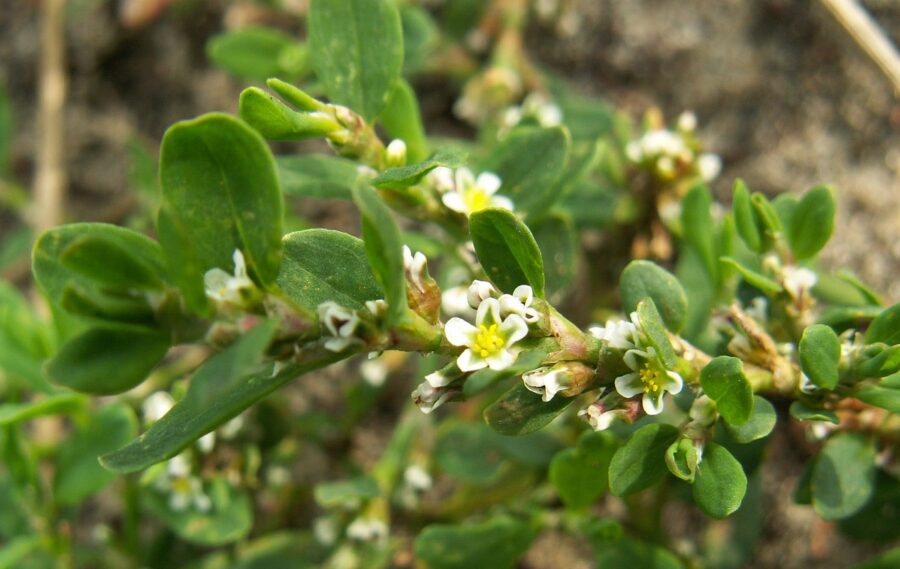
Common Knotgrass (Polygonum aviculare), also known as hericic, chicken grass, troac, troscov, troscoel, is a small herbaceous plant with an impressive therapeutic profile. It is widespread throughout Romania, especially in rocky or dry places. Although often considered a weed, common knotgrass has remarkable properties for the kidneys, circulation, and connective tissue.
Chemical Composition
- Flavonoids: avicularin, hypericin, quercetin
- Tannins
- Organic silicon (in soluble form)
- Gallic acid, caffeic acid
- Volatile oil
- Mucilages and resins
- Minerals: potassium, magnesium, calcium
Benefits Supported by Research
1. Natural Diuretic and Kidney Protector
Common knotgrass is one of the most effective natural diuretics, stimulating the elimination of excess water and toxins through urine. It is used in kidney stones, kidney sand, and mild urinary infections.
Study: An article published in Journal of Ethnopharmacology (2012) demonstrated that the extract of Polygonum aviculare has a diuretic effect comparable to furosemide, but without major electrolyte imbalances.
2. Support for Connective Tissue and Bones
Due to its high content of organic silicon, common knotgrass helps in the restoration and strengthening of tissues (tendons, bones, skin, cartilage). It is useful in rheumatism, arthritis, and bone fractures.
Study: The publication Biological Trace Element Research (2015) highlighted the role of silicon in common knotgrass in stimulating collagen synthesis and bone mineralization.
3. Vasoprotective and Vascular Anti-inflammatory
The flavonoids in common knotgrass reduce capillary fragility, support peripheral circulation, and may contribute to the prevention of varicose veins and hemorrhoids.
4. Antioxidant and Antibacterial
It has antimicrobial effects on pathogenic intestinal bacteria and protects cells against oxidative stress.
5. Adjuvant in Pulmonary Conditions
It is traditionally used to soothe coughs, especially in wet coughs, bronchitis, and irritation of the respiratory mucosa.
Recommended Usage Methods
Diuretic and Anti-inflammatory Tea
Ingredients:
- 1 teaspoon dried plant (crushed common knotgrass)
- 250 ml boiling water
Preparation:
Infuse the plant for 10-15 minutes. Drink 2-3 cups a day, between meals.
Knotgrass Tincture
Preparation Method:
- 50 g dried plant is macerated in 250 ml of 40% food alcohol for 10-14 days.
- Strain and store in a cool place.
Administration:
20-30 drops in a little water, 3 times a day.
Powder for Tissue Strengthening
Grind the dried plant very finely. Take 1/2 teaspoon twice a day on an empty stomach, with water or honey.
Contraindications and Precautions
- Contraindicated in cases of severe hypotension (due to diuretic effect).
- Not to be administered during pregnancy, due to the content of tannins.
- May reduce mineral absorption if taken in excess or for a very long time (due to oxalic acid content).
- Avoid in individuals with oxalic lithiasis.
Scientific Sources and Studies
- Diuretic activity of Polygonum aviculare in rats Journal of Ethnopharmacology, 2012
- Silicon and bone health: benefits of plant-based sources Biological Trace Element Research, 2015
- Polygonum aviculare: Phytochemistry and therapeutic potential Asian Journal of Pharmaceutical and Clinical Research, 2018
- Antioxidant and antimicrobial activity of Polygonum aviculare extract Molecules, 2020




