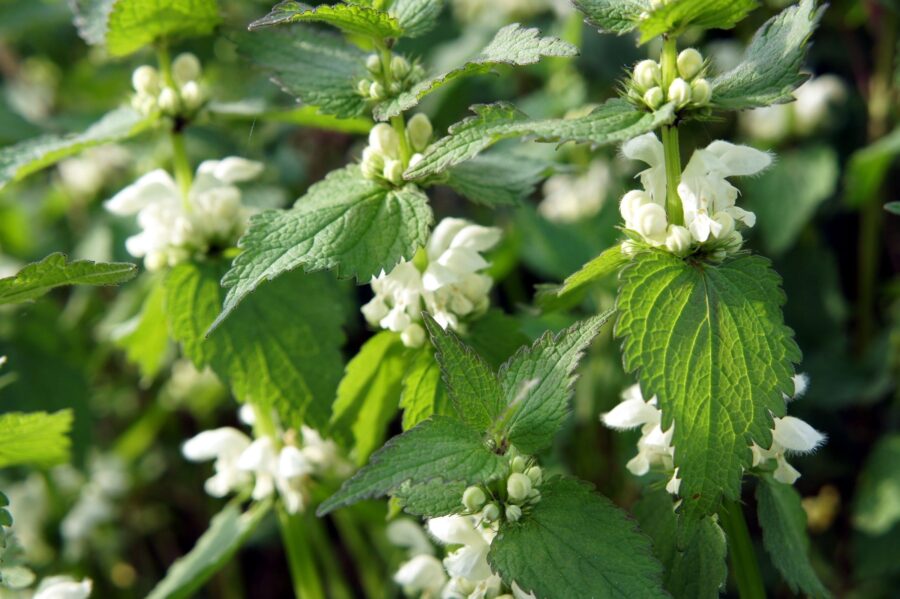
Despite its name, Dead Nettle (Lamium album) does not irritate the skin like common nettle. Botanically, it belongs to the same family (Lamiaceae), but it is distinguished by its soft leaves, white flowers, and lack of stinging hairs. Nevertheless, its medicinal properties are remarkable, being considered a reliable ally in treatments for urinary, respiratory, gynecological, and dermatological conditions.
Composition
Dead nettle contains a wide range of active substances with therapeutic effects:
- Flavonoids (kaempferol, quercetin) with antioxidant and anti-inflammatory effects
- Tannins with astringent and healing properties
- Mucilages useful for soothing irritated mucous membranes
- Saponins that are expectorant and detoxifying
- Choline useful in regulating the autonomic nervous system
- Essential oils, phenolic acids, and traces of vitamin C
Benefits
1. Urinary System Health
Dead nettle has a gentle diuretic and urinary antiseptic effect, being useful in cases of cystitis, kidney inflammation, or toxin elimination through urine. Mucilages protect the epithelium of the urinary tract.
2. Support for Gynecological Health
It is traditionally used for painful menstruation, leucorrhea (vaginal discharge), and inflammation of the genital area. In the form of infusion or sitz bath, it soothes the vaginal mucosa and reduces excessive secretions.
3. Soothing the Respiratory Tract
Due to the saponins and mucilages it contains, dead nettle thins mucus and soothes cough, being useful in bronchitis, laryngitis, and pharyngitis.
4. Detoxifying the Body
It has mild purifying effects, helping to eliminate toxins and supporting liver and kidney function. It can be included in spring detoxification regimens.
5. Dermatological Conditions
In the form of poultices or local baths, it is used to soothe irritated skin in cases of eczema, bruises, or minor wounds. Tannins contribute to tissue regeneration.
Usage and Recipes
Infusion for Internal Use
- Ingredients: 1 tablespoon of dried dead nettle flowers, 250 ml boiling water
- Preparation: Infuse for 10 minutes, then strain
- Administration: 2-3 cups/day, in courses of 2 weeks, for urinary, respiratory, or gynecological conditions.
Poultices for Skin
- The flowers are slightly crushed and applied directly to the affected area (wounds, bruises, inflammation), covered with a clean bandage.
Sitz Bath
- Prepare 2 liters of concentrated infusion (4 tablespoons of flowers/liter) and add to warm water for the sitz bath. Recommended for genital inflammation or hemorrhoids.
Tincture
- Prepared from fresh flowers and 40% alcohol, in a ratio of 1:5, left to macerate for 14 days. Take 20-30 drops, 2-3 times/day, in short courses.
Contraindications and Precautions
- Should not be administered long-term without breaks.
- Contraindicated in pregnancy (internally), due to possible mild emmenagogue effects.
- Individuals with very low blood pressure should avoid it in large quantities due to its relaxing effect.
- May interact with diuretic or antihypertensive medications; medical advice is recommended.
Sources:
- Anti-inflammatory activity of Lamium album flower extract Journal of Ethnopharmacology, 2013
- Expectorant properties of Lamium species Pharmaceutical Biology, 2017
- Maria Treben: Health from the Lord’s Pharmacy
- Medicinal and Aromatic Plants of Romania, Volume II, Academy Publishing House




