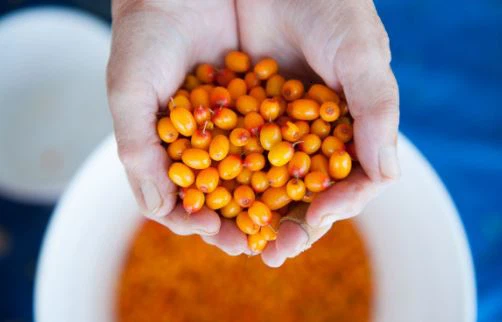
Dry sea buckthorn powder is an extremely rich natural concentrate in vitamins, antioxidants, and essential fatty acids, recognized for its tonic effects on the nervous system. Although sea buckthorn is often associated with immunity and physical vitality, recent studies place it at the center of neuroprotective research. Due to its high concentration of vitamin C, flavonoids, omega fatty acids, and polyphenolic compounds, sea buckthorn powder has become a surprising ally in improving memory, protecting the brain, and preventing cognitive decline.
1. Stimulates Short and Long-Term Memory
Dry sea buckthorn powder contains a valuable combination of omega-3 and omega-7 fatty acids, flavonoids, and vitamin C, which support neuronal communication. These compounds help increase the level of acetylcholine, a crucial neurotransmitter for memory processes. Studies show that supplementation with sea buckthorn extracts improves the ability to recall and update information. Additionally, sea buckthorn powder helps protect the hippocampus, the part of the brain responsible for consolidating memories. When taken consistently, it can contribute to clearer and faster memory, especially in the elderly.
2. Supports Neuronal Regeneration and Neuroplasticity
Another key benefit of sea buckthorn is its ability to stimulate neurogenesis—the process by which new neurons are formed in the brain. This effect is primarily due to the presence of flavonoids and palmitoleic acid (omega-7), which activate neurotrophic pathways, such as BDNF (Brain-Derived Neurotrophic Factor). Neuroplasticity is essential for learning, adaptation, and recovery after neurological injuries. By activating these mechanisms, sea buckthorn powder can contribute to improving overall cognitive performance. Moreover, these effects may slow down neuronal degradation associated with aging.
3. Has a Strong Antioxidant Effect on the Brain
Sea buckthorn is one of the richest natural sources of vitamin C, beta-carotene, and quercetin—substances recognized for their role in combating oxidative stress. The brain is extremely vulnerable to oxidative damage, and the accumulation of free radicals is a major factor in the development of Alzheimer’s and Parkinson’s diseases. By regularly consuming sea buckthorn powder, antioxidants penetrate brain tissue and protect neurons from oxidative stress. This protection contributes to maintaining mental clarity, concentration ability, and a balanced mood.
4. Improves Cerebral Circulation
Another important mechanism by which sea buckthorn influences brain health is by improving blood circulation. The flavonoids and vitamin P in sea buckthorn powder help tone blood vessels and reduce vascular inflammation. This allows for better oxygen and nutrient flow to the brain, essential for optimal cognitive function. Good cerebral oxygenation is directly associated with mental alertness, reaction speed, and learning capacity. Additionally, efficient cerebral circulation reduces the risk of strokes and vascular dementia.
5. Regulates the Cortisol-Brain Axis: Combats the Effects of Chronic Stress
Sea buckthorn powder helps regulate cortisol, the stress hormone, which in excess can have toxic effects on nerve cells. Studies show that administering sea buckthorn extract reduces serum cortisol levels and normalizes the HPA (hypothalamic-pituitary-adrenal) axis. This adaptogenic effect translates into indirect protection for the prefrontal cortex—a region responsible for decision-making, planning, and self-control. Additionally, it reduces feelings of mental fatigue, irritability, and insomnia, which over time affect memory and attention. By balancing hormones, it increases mental resilience and long-term concentration ability.
Recipe for Dry Sea Buckthorn Powder (for internal use)
Ingredients:
-
500 g fresh sea buckthorn, well-ripened (organic, if possible)
Preparation Method:
-
Wash the sea buckthorn well and remove any damaged or moldy fruit.
-
Dry the berries:
-
If you have a dehydrator: place the sea buckthorn in a single layer and dry at 40-45°C for 12-18 hours.
-
If using an oven: spread the sea buckthorn on a tray and dry at very low heat (below 50°C) with the door slightly open, for 5-7 hours, until the berries become hard and brittle.
-
-
After completely cooling, grind the dried berries in a coffee grinder or high-speed blender until you obtain a fine powder.
-
Store the powder in an airtight glass jar, away from light and moisture. Shelf life: 6 months.
Daily Usage for Memory and Brain:
Recommended dose: 1 heaping tablespoon (approx. 35 g) per day
Administration: in the morning, on an empty stomach or after breakfast
Consumption Variants:
-
Mixed in a glass of warm water + 1 tablespoon of honey + lemon juice
-
In smoothies with banana, blueberries, almonds, and plant-based milk
-
Sprinkled over yogurt with flax or hemp seeds
-
In combination with honey (1:1), obtaining an energizing paste for memory stimulation
For visible cognitive effects, a course of at least 30 days is recommended, followed by a break of 2-3 weeks.
STUDY 1: Neuroprotective Effects of Sea Buckthorn Extract Against Oxidative Stress (Journal of Ethnopharmacology, 2021)
A study conducted on laboratory mice demonstrated that the extract of Hippophae rhamnoides (sea buckthorn) has a clear protective effect on the brain subjected to artificially induced oxidative stress. Researchers administered a standardized dose of sea buckthorn extract to the mice for 21 days. The results showed a significant reduction in lipid peroxidation in the brain and an increase in levels of endogenous antioxidant enzymes (SOD, catalase). Additionally, the level of glutamate—a neurotoxin at high concentrations—significantly decreased. The structure of neurons in the hippocampus was maintained in the group treated with sea buckthorn, unlike the untreated group. The study concluded that sea buckthorn extract has a strong neuroprotective role due to its antioxidant and anti-inflammatory capabilities. These findings open promising perspectives for its application in preventing neurodegenerative diseases.
STUDY 2: Sea Buckthorn and Improvement of Cognitive Function in Elderly Adults (Phytotherapy Research, 2022)
A randomized clinical study on participants aged between 60 and 75 years received sea buckthorn powder (500 mg/day) or a placebo for 12 weeks. Cognitive tests applied at the beginning and end of the study highlighted significant improvements in the group that consumed sea buckthorn. The most visible progress was in the areas of episodic memory, sustained attention, and reaction time. Participants also reported a decrease in feelings of mental fatigue and an overall better state. Blood analyses showed a decrease in biomarkers of systemic inflammation and an increase in total antioxidant capacity. Researchers concluded that sea buckthorn powder could be a safe and effective supplement for maintaining cognitive health in the elderly.
Contraindications and Precautions
Sea buckthorn powder is generally well tolerated but may interact with certain medications, such as anticoagulants (warfarin) or immunosuppressants. Individuals with gallbladder stones or hyperacid gastritis should avoid excessive consumption. Additionally, pregnant women and those who are breastfeeding should consult a doctor before use. In some individuals, excessive consumption may lead to diarrhea or abdominal pain. High doses are not recommended without the advice of a specialist.
Recommended Administration Method
Sea buckthorn powder can be consumed in doses of 1 tablespoon per day (approximately 35 g), preferably in the morning, mixed in a smoothie, yogurt, juice, or water. For cognitive effects, courses of at least 30 days are recommended, repeated 2-3 times a year.
Sources
- Journal of Ethnopharmacology: Neuroprotective effects of Hippophae rhamnoides extract against oxidative stress in mice
- Phytotherapy Research: Sea buckthorn powder supplementation improves cognitive function in elderly adults: a randomized controlled trial
- Frontiers in Aging Neuroscience: Oxidative stress and neuroinflammation in Alzheimer’s disease
- Medical News Today: How omega-7 fatty acids may benefit brain health
- National Library of Medicine: The role of BDNF in neuroplasticity and brain regeneration




