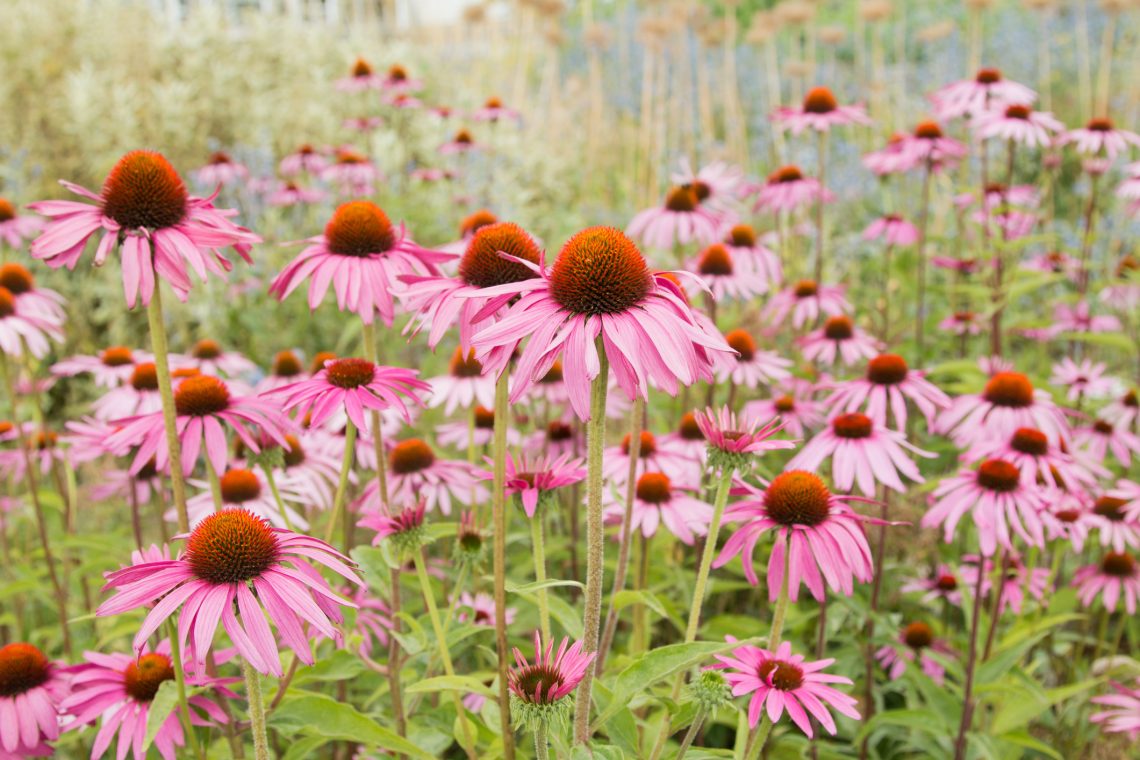
Echinacea is a popular medicinal plant, used for centuries for its therapeutic properties. It is native to North America. There are three main types of echinacea commonly used: Echinacea purpurea, Echinacea angustifolia, and Echinacea pallida. These are used in various forms, including teas, supplements, tinctures, and creams.
Health Benefits of Echinacea
1. Boosts the Immune System
Echinacea is known for its antiviral and antibacterial properties, which help increase the body’s immunity. It can be useful in preventing and treating respiratory infections and colds.
2. Reduces Inflammation
Echinacea contains anti-inflammatory compounds that help reduce inflammation and pain. Therefore, it is often used to treat sore throats and inflammation of the upper respiratory tract.
3. Improves Skin Health
Echinacea can be used externally in creams and ointments to treat various skin issues, such as acne, eczema, and psoriasis. A recipe for such a cream can be found below at the end of the article.
4. Supports Respiratory Health
Echinacea can be helpful in treating bronchitis, pneumonia, and asthma due to its antiviral and antibacterial properties.
5. Reduces Anxiety and Stress
Echinacea contains compounds that may help reduce stress and anxiety levels and improve sleep.
6. Reduces Pain
Echinacea may help reduce pain and inflammation associated with arthritis, headaches, and other conditions.
Ways to Use Echinacea
Echinacea is available in several forms, including capsules, tablets, teas, tinctures, and creams. To achieve the best results, it is important to follow the dosage instructions on the packaging and to consult with your doctor before starting to use any form of echinacea.
The way echinacea is used depends on the form in which it is available and the therapeutic indications for which it is used. Below are some examples of how to use echinacea:
Echinacea Tea: To prepare echinacea tea, pour hot water over a tea bag or a tablespoon of dried echinacea and let it steep for 5-10 minutes. Echinacea tea can be consumed 2-3 times a day.
Echinacea Tincture: Echinacea tincture is obtained by macerating the plant in alcohol. It can be taken in drops in water or sublingually. It is important to follow the dosage instructions on the product packaging.
Echinacea Supplements: Echinacea supplements are available in the form of capsules, tablets, or powder. It is important to follow the dosage instructions on the product packaging.
Echinacea Creams and Ointments: Echinacea can be applied topically in the form of cream or ointment to treat various skin issues, such as acne, eczema, and psoriasis.
It is important to consult with your doctor before starting to use any form of echinacea to ensure it is safe and effective for your health needs. Additionally, it is important to follow the dosage instructions and not exceed the recommended dose without consulting your doctor.
Here is a simple recipe to make an echinacea cream:
Ingredients:
2 tablespoons of coconut oil
1 tablespoon of beeswax
1 tablespoon of jojoba oil
2 tablespoons of echinacea infusion (made by placing 1 tablespoon of dried echinacea in a cup of boiling water and letting it cool and infuse for 15-20 minutes)
10 drops of lavender essential oil (optional)
Preparation Method:
Melt the coconut oil and beeswax in a heavy-bottomed pot over low heat until the beeswax is completely melted.
Add the jojoba oil and echinacea infusion and mix well.
Remove the pot from heat and add the lavender essential oil (if using).
Transfer the cream into a clean container and seal it tightly.
This echinacea cream can be used to treat various skin issues, such as acne, eczema, and psoriasis. It is important to perform a patch test before using the cream on your skin and to use it only externally. If irritation or allergic reactions occur, discontinue use immediately and consult your doctor.




