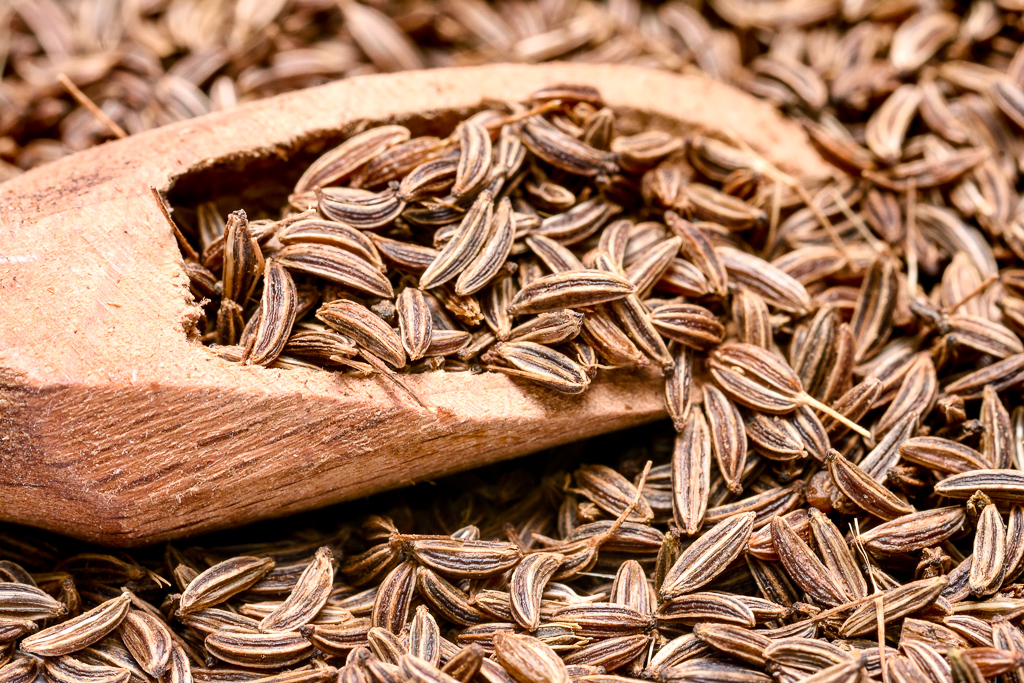
The constituent elements that give cumin its distinctive taste are also responsible for its antioxidant, digestive, carminative, and anti-flatulence properties.
Cumin contains several essential oils and many antioxidant flavonoids, such as lutein, carotene, cryptoxanthin, and zeaxanthin. These eliminate harmful free radicals, protect against cancer and neurological diseases.
These seeds are an excellent source of iron, calcium, copper, potassium, manganese, selenium, zinc, and magnesium. Copper and iron are necessary for the production of red blood cells. Zinc helps in the functioning of several enzymes that regulate growth and overall development, while potassium helps control heart rhythm and blood pressure.
Cumin contains many vital vitamins such as A, C, E, and several B-complex vitamins, as well as being a rich source of dietary fiber. The fiber in cumin plays an anti-carcinogenic role and reduces LDL cholesterol levels.
A tablespoon of cumin provides a quarter of the daily iron requirement for an active adult. Anemia is one of the most common nutritional deficiencies encountered in both children and adults.
Both the seeds and the oil of cumin strengthen the stomach and kill intestinal worms. It is an excellent carminative (relieves intestinal gas and soothes abdominal pain).
Cumin seeds are excellent for the heart, strengthen muscles, prevent atherosclerosis, and reduce blood pressure and cholesterol levels.
The oil has disinfectant and antiseptic properties, effective for healing infections anywhere in the body. Oral administration of the oil is useful for getting rid of bad breath and gum diseases.
Cumin seeds help in cases of gastritis. The administration of cumin seeds protects the gastric epithelium (the protective tissues that line the stomach) from the action of acidic gastric secretions, as well as from the action of irritating substances such as concentrated sodium chloride solution, pure ethyl alcohol, etc. Thus, although the administration of cumin increases the secretion of digestive juices, treatment with the infusion made from its seeds is effective for gastritis, having soothing and anti-inflammatory effects, protecting the gastric mucosa. It is administered as 2-3 cups of infusion per day, in courses of 3 weeks, followed by a 10-day break, after which it can be resumed.
A medical study showed that a treatment lasting 15 weeks with cumin powder inhibits the development of tumors in the large intestine. Interestingly, the anti-tumor effect of cumin was enhanced by the introduction of peanut oil into the diet, which is indicated for those suffering from tumors in the digestive tract. It is recommended to administer 7 grams of cumin seed powder per day (the exact dose is 0.06 grams/kg body weight), in courses lasting four months, followed by a 2-month break.
Cumin seeds contain volatile oils, mucilage, albuminoid substances, carbohydrates, resins, tannins, minerals, and phytosterols. Additionally, cumin seeds are rich in iron and play a very important role in detoxifying the body. Cumin seeds can be used in the form of infusion or tincture. To prepare the infusion, pour hot water over a tablespoon of crushed seeds and let it steep for 15 minutes. In the case of using tincture, it is recommended to take between 1 and 4 ml of tincture three times a day.
Attention! Cumin may lower blood sugar levels, which is why some experts believe that this effect may interfere with diabetes medications that also lower blood sugar levels.




