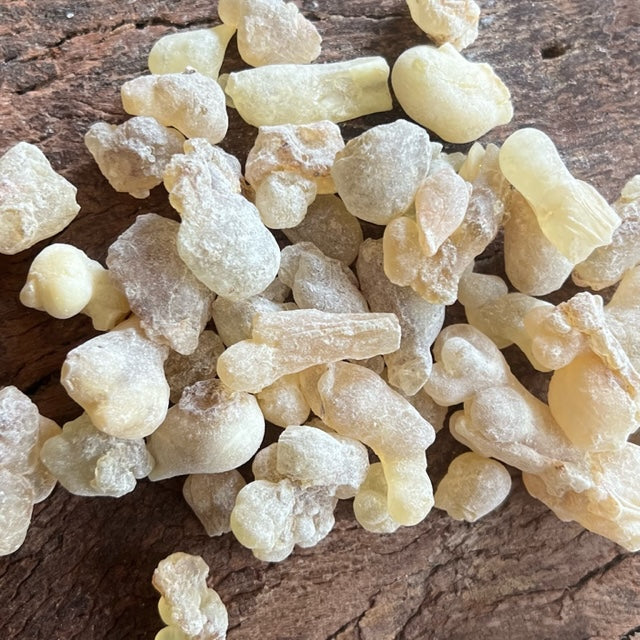
Frankincense, known since ancient times as a gift to the gods, is not only a sacred symbol of spiritual purification but also a valuable remedy in natural medicine. Extracted from the resin of the Boswellia tree, this miraculous substance has scientifically proven healing properties and is today rediscovered by doctors and researchers for its ability to support the body against serious and chronic diseases.
What is medicinal frankincense (Boswellia)?
Medicinal frankincense primarily comes from the species Boswellia serrata or Boswellia carterii, a tree native to the arid regions of India, Somalia, and Oman. The resin is extracted by incisions in the bark and, after drying, is transformed into powder, capsules, or essential oils, used both internally and externally.
Benefits of frankincense: Detailed explanations and demonstrated effects
Reduction of chronic inflammation
The active substances in frankincense, especially boswellic acids, inhibit enzymes involved in inflammation, such as 5-lipoxygenase. Studies have shown a significant reduction in joint pain in patients with osteoarthritis and rheumatoid arthritis after 4-8 weeks of treatment with Boswellia serrata extract.
Relevant study: Efficacy of Boswellia serrata extract in the treatment of osteoarthritis Phytomedicine, 2003.
Support for brain health and memory
Frankincense has the ability to protect neurons against oxidative stress and inflammation that can lead to cognitive decline or Alzheimer’s disease. Some research indicates improvements in memory and concentration in older adults.
Study: Boswellia improves memory dysfunction in diabetic rats Journal of Ethnopharmacology, 2011.
Cardiovascular protection
Frankincense extract reduces LDL cholesterol levels and prevents the formation of atheromatous plaques, providing real support in the prevention of cardiovascular diseases.
Support in the fight against cancer
Some concentrated forms of frankincense can induce apoptosis (programmed cell death) of tumor cells. Boswellic acids have been tested in the laboratory against colon, prostate, brain cancer, and leukemia, with promising results.
Study: Frankincense oil derived from Boswellia carterii induces cell death in breast cancer cells BMC Complementary and Alternative Medicine, 2009.
Improvement of respiratory health and lung function
In conditions such as bronchial asthma, chronic bronchitis, or sinusitis, frankincense has a decongestant and anti-inflammatory effect on the respiratory pathways.
How to use medicinal frankincense
Internally:
-
Capsules with standardized extract of Boswellia serrata 300-500 mg 2-3 times/day.
-
Pure frankincense powder, sublingually 100-200 mg/day, for a maximum of 30 days.
Externally:
-
Essential frankincense oil added to anti-inflammatory creams or for massage (diluted in vegetable oil).
-
Inhalations a few drops of essential oil in hot water.
Diffusion in the air for a calming, antiseptic, and purifying effect in the space.
Contraindications and precautions
-
Not to be administered during pregnancy and breastfeeding.
-
Individuals with autoimmune diseases or under immunosuppressive treatment should consult a doctor.
-
May interact with anti-inflammatory and anticoagulant medications.
-
Essential oil should not be used undiluted on the skin or internally without medical advice.
Remedy for the body and soul
Frankincense remains not only a bridge between worlds but also a complete remedy that heals our body through the natural chemistry of plants and calms our mind through the sacred vibration of its scent. It is a gift that brings us closer to the essential: peace, balance, and health.
Sources:
-
Phytomedicine: Efficacy of Boswellia serrata extract in the treatment of osteoarthritis
-
BMC Complementary and Alternative Medicine: Frankincense oil induces apoptosis in breast cancer cells
-
Journal of Ethnopharmacology: Boswellia improves memory dysfunction in diabetic rats
-
Healthline: Boswellia: Uses, Benefits and Side Effects
-
WebMD: Boswellia Serrata Uses and Risks




